Journal
Are Lapland Glass Igloos Worth It? An Honest 2027 Review
Is sleeping in a glass igloo really the ultimate Lapland experience? We break down the costs, the realities, and whether it's truly worth your money.
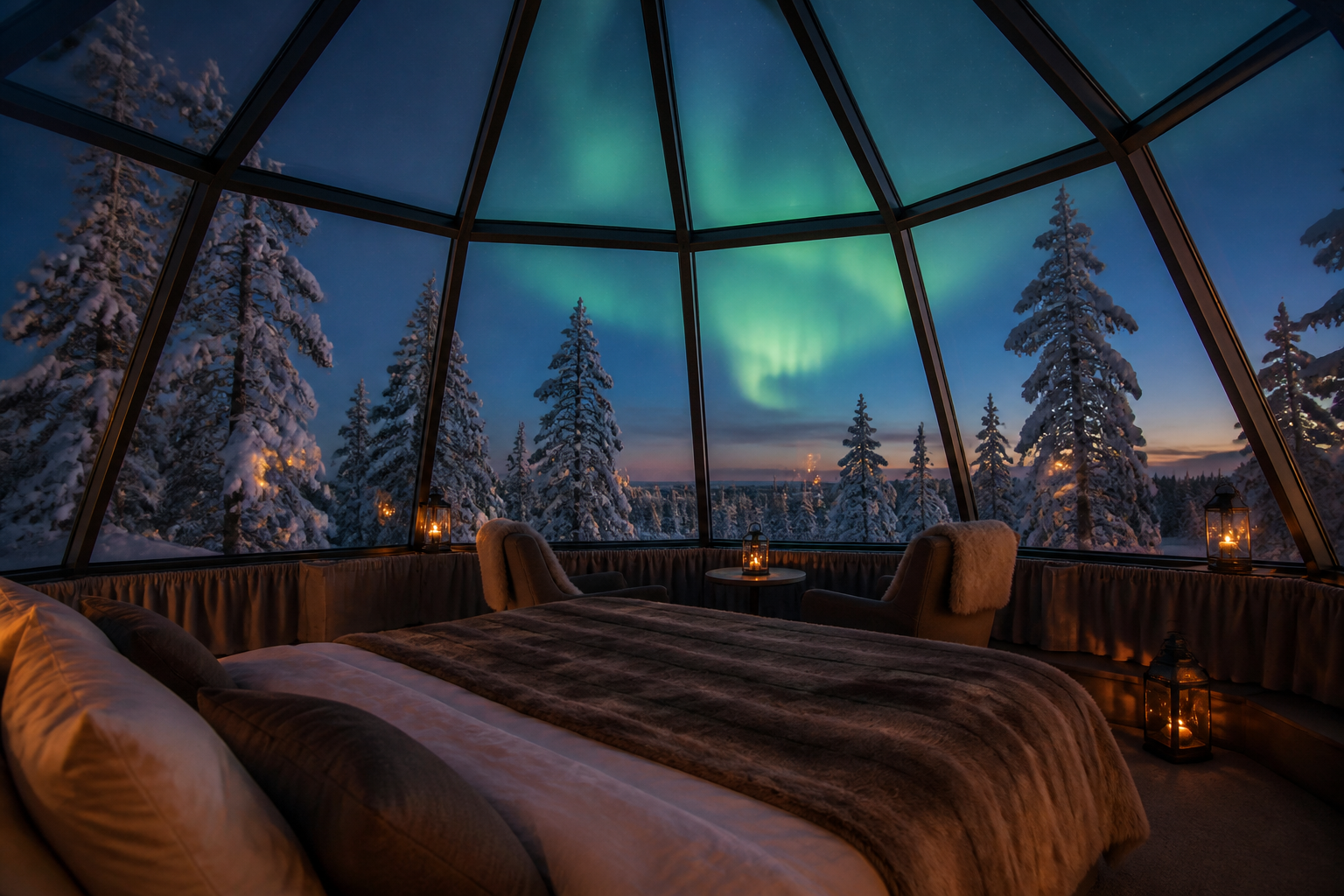
It’s the image that’s all over Instagram and travel magazines: you, tucked into a warm, cozy bed, gazing up through a glass ceiling as the Northern Lights dance across the Arctic sky. It’s the ultimate Lapland dream, and the glass igloo is the five-star theatre for this natural performance. We locals see the brochures, we see the social media posts, and we know exactly what you’re imagining.
But we also know the reality. That magical night comes with a very hefty price tag, and it’s a big-ticket item you’ll book months, or even years, in advance. So the question we get asked all the time is a simple one: is it really worth it? As your local guides, we’re here to give you the brutally honest, practical truth about staying in a Lapland glass igloo in 2027. Let’s break down the magic, the money, and the must-knows.
What Exactly IS a "Glass Igloo"?
First, let's clear up some confusion. The term "glass igloo" has become a catch-all, but there are a few different types. The original, classic igloos, like those at Kakslauttanen Arctic Resort, are small, dome-shaped pods made almost entirely of thermal glass. They are primarily for sleeping and sky-gazing.
Over the years, the concept has evolved. Now you'll find:
- Luxury Igloos: These are more like hotel suites. They have more space, a private bathroom and shower inside the unit, and often a kitchenette. Think of places like Levi Iglut which offer a premium experience.
- Aurora Cabins: This is our favourite compromise. These are often beautiful wooden cabins with a large, panoramic window or a section of the roof made of glass. You get the cozy cabin feel with a dedicated viewing area.
- Glass-Roofed Suites: Some hotels offer rooms or suites on their top floor that have a glass ceiling or a large skylight over the bed.
When booking, look closely at the description. Does it have a private shower, or do you have to use a communal sauna/shower building a short (and cold!) walk away? How much space is there for luggage? Knowing the specifics will manage your expectations.
The Big Question: The Price Tag in 2027
Let’s not beat around the bush: glass igloos are the most expensive way to sleep in Lapland. For a standard glass igloo during the main season (December-March), you should expect to pay between €600 and €1,200 per night. For the more luxurious versions or during peak holiday weeks like Christmas and New Year, that price can easily soar to €1,500 – €2,500+ per night.
Why so expensive? It's a mix of huge demand, unique and complex construction (that thermal glass isn't cheap!), high heating and maintenance costs, and the short, intense tourist season. For comparison, a lovely, high-quality hotel room in Rovaniemi might cost €200–€400 during the same period. You're paying a premium of €400 to €1000+ for the glass roof. For indicative prices by resort and by month, see our Lapland glass igloo price guide. If you are choosing between resorts, compare the best glass igloo hotels.
Your Real Chance of Seeing the Aurora from Bed
This is the most important, and most misunderstood, part. A glass igloo does not guarantee you will see the Northern Lights. We can't say this enough. The aurora is a natural phenomenon that requires two things: clear skies and sufficient solar activity.
The glass roof is simply a window. If it's cloudy—which happens often, especially in the heart of winter—your expensive glass roof will only show you a blanket of grey. You have the exact same chance of seeing the aurora on a cloudy night as someone in a log cabin: zero.
On a clear night, you then need the aurora to actually show up. Sometimes the show is a faint, barely-there green smudge. Sometimes it's an explosive, dancing corona across the entire sky. Most resorts are built to minimize light pollution, which helps, but the sun's activity is the ultimate decider. Staying for 3-4 nights in Lapland significantly increases your odds, but spending all of them in a pricey igloo is financially impossible for most.
Let's Talk About Privacy (Or Lack Thereof)
Imagine a goldfish bowl. Now imagine you're the goldfish. While resorts are cleverly designed to maximize views of the sky and nature, this often means they're arranged in rows or clusters. During the day, you'll likely see your neighbours walking past. At night, when it's dark outside and you have your lights on inside, you are perfectly visible to anyone looking your way.
Most igloos have curtains you can pull around the lower portion for changing, but the whole point is the glass roof. The romance can fade a little when you're worried about who might be watching. If you are a very private person, the classic igloo design might feel a bit exposed. Newer, more spread-out resorts or aurora cabins often offer a much better sense of seclusion.
Comfort and Practicality: More Than Just a Bed
Beyond the view, how practical is it to live in a glass bubble? The classic, smaller igloos are just that: small. There’s a bed, maybe a tiny table, and very little room for two large suitcases. As mentioned, many of the originals require a trip to a separate building for a shower.
The heating is excellent—you won't be cold. In fact, sometimes they can get a bit too warm from solar gain if the sun is out. The bathrooms in the units that have them are often tiny, aeroplane-style cubicles to save space.
It’s a unique and memorable environment, but it’s not always the most comfortable or practical for a multi-night stay. Many visitors find it’s perfect for one special night, but they prefer the space and amenities of a traditional hotel room or cabin for the rest of their trip.
The Best Time to Book a Glass Igloo
If you're set on the igloo experience, timing is everything. For the absolute best chance of seeing the aurora, we recommend the periods around the autumn and spring equinoxes: September-October and late February-March. The weather is often less cloudy, and solar activity tends to be higher.
December-January is peak season for the Christmas magic and snowy landscapes. It's beautiful, but the weather can be very stable and cloudy, and daylight is extremely limited. You’ll be paying the highest prices for a potentially lower chance of seeing the lights.
As for booking, the rule is simple: the earlier, the better. For prime dates (weekends, holidays) at popular resorts, you need to book 12 to 18 months in advance. No, that is not an exaggeration. If you want to stay in a glass igloo in December 2027, you should be booking it right now.
Smart Alternatives: The Aurora Experience for Less
So what if a €1000/night gamble on the weather doesn't appeal to you? Welcome to how most of us locals think! Here are some much more practical (and affordable) ways to experience the magic.
- Stay in a Hotel with an Aurora Alarm: This is our top recommendation. Stay in a comfortable and reasonably priced hotel room. Most good hotels offer a free "Aurora Alarm" service—an app or a front-desk call that will wake you up when the Northern Lights appear. You can quickly throw on your winter gear and head outside. You get a good night's sleep if they don't show, and you save a fortune.
- Book an "Aurora Cabin": As we mentioned, these are a fantastic middle ground. You get the comfort and space of a cabin with a large viewing window, often for half the price of a full igloo (€400-€700). It's a great blend of comfort and magic.
- Prioritize a Guided Aurora Hunt: The absolute best way to see the Northern Lights is to get away from all light pollution with an expert guide. A Northern Lights tour will take you to the best viewing spots based on that night's cloud cover and forecast. Combine a standard hotel stay with one or two of these tours for the highest probability of a fantastic sighting. To truly immerse yourself in the winter wonderland, you can also browse other Lapland activities.
Practical FAQ
Q: Do all glass igloos have their own bathrooms and showers? A: No, they do not. The original, more basic models often have a toilet but require you to use a separate communal sauna and shower facility. Newer, luxury igloos have full en-suite bathrooms. Always read the room description carefully before booking.
Q: Is it cold inside a glass igloo? A: Absolutely not. They are built with special thermal glass and are well-heated. You'll be perfectly warm in just your pyjamas. If anything, direct sun during the day can sometimes make them a little too warm.
Q: Can you see the Northern Lights through a cloudy sky from an igloo? A: No. A glass roof is just a window. If the sky is covered in clouds, you will not see the aurora, no matter how much you paid for your room. This is the biggest risk of booking an igloo.
Q: How far in advance should I book a glass igloo for winter? A: For peak season (December-February) and popular resorts, you need to book 12-18 months in advance. For shoulder seasons (October-November, March), 6-9 months might be enough, but earlier is always safer.
Q: What if we book an igloo and don't see the aurora? A: This is a very real possibility. Try to enjoy the experience for what it is: a unique night under the Arctic stars (or snowflakes). Waking up to a snowy forest landscape from your bed is still magical. But it's also why we suggest booking just one night in an igloo and spending the rest of your budget on other activities.
Buddy's Take
So, what's our final verdict? A glass igloo is an incredible, once-in-a-lifetime experience, but it is not a practical or guaranteed way to see the Northern Lights. We think it's worth it for a single, special night—a splurge for a honeymoon, an anniversary, or a milestone birthday—as part of a longer Lapland trip. For that one night, the magic is undeniable. But for most travellers, for most of your trip, your money is far better spent on a comfortable hotel or cabin combined with a dedicated Northern Lights tour that takes you far from the lights and into the wild. That way, you get the best of both worlds: comfort, value, and the very best chance of witnessing the Arctic's greatest show. Don't hesitate to check hotel availability in Lapland for your visit, or explore things to do in Pyhä-Luosto or even check out our full Ivalo Finland travel guide.
Book your Lapland trip
- 🏨 Stay — Compare hotels, cabins and glass igloos in Lapland
- 🦌 Do — Browse husky, reindeer and aurora tours
Some links on this page are affiliate links. Booking through them costs you nothing extra and helps keep Lapland Buddy free.
Frequently asked questions
Do all glass igloos have their own bathrooms and showers?
No, they do not. The original, more basic models often have a toilet but require you to use a separate communal sauna and shower facility. Newer, luxury igloos have full en-suite bathrooms. Always read the room description carefully before booking.
Is it cold inside a glass igloo?
Absolutely not. They are built with special thermal glass and are well-heated. You'll be perfectly warm in just your pyjamas. If anything, direct sun during the day can sometimes make them a little too warm.
Can you see the Northern Lights through a cloudy sky from an igloo?
No. A glass roof is just a window. If the sky is covered in clouds, you will not see the aurora, no matter how much you paid for your room. This is the biggest risk of booking an igloo.
How far in advance should I book a glass igloo for winter?
For peak season (December-February) and popular resorts, you need to book 12-18 months in advance. For shoulder seasons (October-November, March), 6-9 months might be enough, but earlier is always safer.
What if we book an igloo and don't see the aurora?
This is a very real possibility. Try to enjoy the experience for what it is: a unique night under the Arctic stars (or snowflakes). Waking up to a snowy forest landscape from your bed is still magical. But it's also why we suggest booking just one night in an igloo and spending the rest of your budget on other activities.