Journal
Lapland Packing List 2026-2027: What to Pack for Winter
Wondering what to pack for your Lapland winter adventure? We're local guides, and this is our practical list of essentials to bring versus gear you should rent.
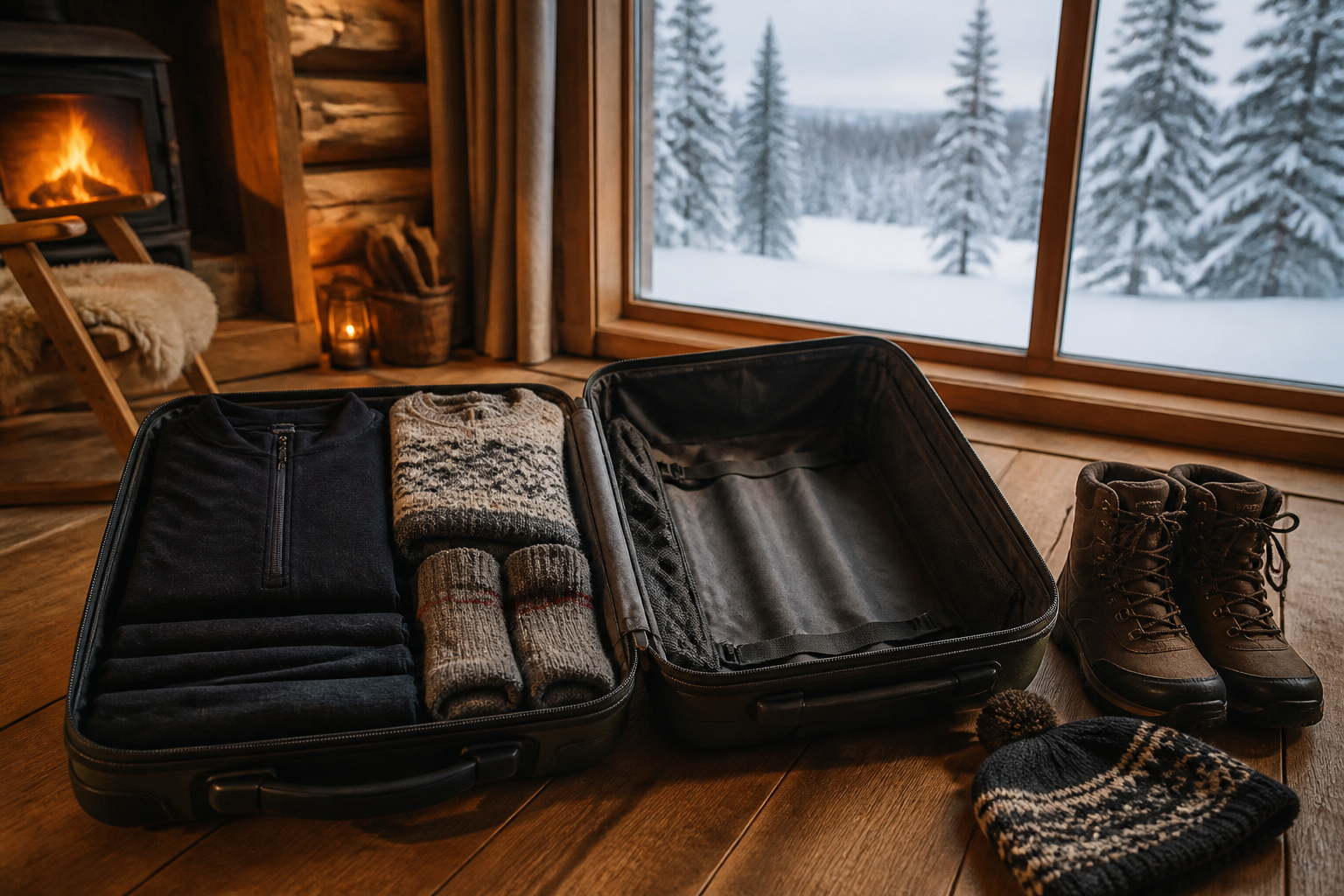
So, you’ve booked your dream trip to Lapland! You’re picturing the silent, snowy forests, the dance of the Northern Lights, and maybe a cozy chat with the big man himself at Santa Claus Village. It’s going to be magical. But then, a creeping thought enters your mind as you look at the forecast: -25°C (-13°F). What on earth do you pack for that?
Don’t panic! We live here, and we promise that with the right gear, you won’t just survive the Arctic cold; you’ll be perfectly comfortable and able to enjoy every single moment. The secret isn't about bringing a huge suitcase full of bulky ski jackets. It's about a smart strategy: layering what you bring with the heavy-duty gear you can easily rent here. This is our definitive guide on what to pack for Lapland in winter 2026-2027.
The Golden Rule: Layering is Everything
If you remember one thing from this guide, let it be this: three layers are your best friend. This system traps air between each layer, creating insulation that keeps you far warmer than one single, thick jacket ever could. It also lets you adjust easily when you go from the frosty outdoors to a warm café.
- Layer 1: The Base Layer. This is your second skin. Its job is to wick moisture (sweat) away from your body. Getting wet is what makes you cold. This is the most important layer to invest in.
- Layer 2: The Mid-Layer. This is your insulation layer. Its job is to trap your body heat. Think fleece or light down.
- Layer 3: The Outer Shell. This is your shield. It protects you from wind, snow, and moisture. This is the layer you’ll most likely rent.
Critically, avoid cotton at all costs, especially for your base layer. Cotton absorbs moisture and holds it against your skin, making you feel cold and clammy. Wool is the undisputed champion of the Arctic.
What to Buy & Bring: Your Essential Base and Mid-Layers
These are the items you should purchase before your trip and pack in your suitcase. They are personal, foundational, and you'll wear them every single day.
For your Base Layer (Top & Bottoms):
- Material: 100% Merino wool. It's breathable, moisture-wicking, and naturally odour-resistant. It’s an investment, but worth every penny. If your budget is tight, a synthetic blend (polyester/polypropylene) is the next best choice.
- Brands We Trust: For top-tier merino, look at Icebreaker, Smartwool, or Kari Traa (for women). For excellent value, check out Decathlon’s own merino wool line.
- Quantity: We recommend packing at least two sets. This allows you to wear one while the other airs out overnight.
For your Mid-Layer (Top):
- Material: A fleece jacket is the most common and effective choice. Look for brands like Patagonia, The North Face, or again, Decathlon for budget-friendly options. A light down or synthetic insulated vest can also work well.
- Fit: It should fit comfortably over your base layer without being tight.
For your Socks:
- Material: Again, wool is king. Get thick, warm wool socks. Not cotton sports socks. Not ankle socks. You want mid-calf length hiking or ski socks.
- Quantity: Bring at least two pairs per person, per day. One pair might get damp from snow, and having a dry pair to change into is pure bliss. Brands like Darn Tough and Smartwool are fantastic.
What to Rent: The Bulky Outer Layers
Here’s the best travel hack for Lapland: you do not need to buy and lug expensive, bulky snowsuits and boots across the globe. Nearly every activity provider (husky sledding, snowmobiling, reindeer sleigh rides) includes the necessary outer gear in the price of the tour.
This typically includes:
- A full-body thermal overall (snowsuit)
- Heavy-duty, insulated winter boots
- Thick woollen outer socks
- Warm outer mittens or gloves
- Sometimes a balaclava and helmet (for snowmobiling)
If you have days without organised tours where you just want to explore Rovaniemi or build a snowman, you can rent this gear separately. Expect to pay around €25–€40 per adult per day or €100-€150 for a full week for a complete set. This saves a huge amount of money and luggage space. Rental shops are easy to find in all major tourist hubs like Rovaniemi, Levi, and Saariselkä.
Keeping Kids Warm (and Therefore Happy)
Kids get cold faster than adults, so dressing them properly is the key to a successful family trip. The same three-layer principle applies, but with a few extra tips:
- One-Piece Suits are Best: For younger children, a one-piece overall is superior to a two-piece jacket and pants set. It completely prevents snow from getting up their back when they inevitably fall over or roll around.
- Check for Fit: Avoid the temptation to buy gear with “room to grow.” If boots, gloves, or snowsuits are too big, the gaps will let cold air in and render the insulation useless. A snug fit is a warm fit.
- Hand and Foot Warmers are Your Secret Weapon: These small, air-activated disposable packets are a lifesaver. Pop a pair in their mittens and boots before you head out. They provide hours of extra warmth and can prevent a meltdown. You can buy them in supermarkets and sports shops here in Finland.
- Practice at Home: Getting a toddler into three layers of clothing can be a struggle. Have a few practice runs at home so it’s not a surprise on your first morning here.
Don't Forget Your Extremities: Hats, Gloves & Scarves
You lose a significant amount of heat through your head, hands, and feet. Don’t skimp here.
- Hat: A warm beanie that fully covers your ears is non-negotiable. A wool or fleece-lined hat is ideal.
- Gloves/Mittens: Mittens are warmer than gloves because they keep your fingers together. The best system is a thin pair of liner gloves (merino or a synthetic material that’s touchscreen-compatible) worn inside a thick, waterproof pair of outer mittens. You can rent the outer mittens, but bring your own liners.
- Neck Gaiter/Buff: A fleece or merino wool neck gaiter (often called a Buff) is far more practical than a traditional long scarf. It won’t unravel or get caught on anything, and you can pull it up over your chin and nose for extra protection against the wind.
Footwear: What to Wear When You're Not in Rented Boots
While you’ll live in the huge, insulated rental boots during outdoor activities, you won't want to wear them to dinner at a nice place like Nili Restaurant. You need a comfortable, practical pair of shoes for indoors, travel days, and walking around town.
Bring one pair of your own waterproof, insulated winter boots with good grip. Think brands like Sorel, Merrell, or Columbia. Make sure they are comfortable and broken-in. Absolutely do not rely on sneakers or fashion boots—they will have zero grip on icy pavements and your feet will freeze.
Protecting Your Electronics from the Cold
The Arctic cold is brutal on batteries. Your phone can go from 80% to dead in a matter of minutes if left exposed.
- Bring a Power Bank: A portable battery charger is essential. Keep it fully charged and with you at all times.
- Keep Your Phone Warm: The best place for your phone is in an internal pocket of your jacket, close to your body heat. Don’t leave it in an outer pocket.
- Camera Care: If you're a photographer, bring at least one extra camera battery and keep it in a warm pocket. When coming inside from the extreme cold, condensation can form on and inside your lens and camera body. To prevent this, put your camera inside a sealed plastic bag before you go indoors. Let it warm up to room temperature inside the bag for an hour or so before taking it out.
The 'I Never Would Have Thought of That' List
Finally, here are a few small items that make a huge difference:
- Lip Balm with SPF: The cold, dry air is harsh on lips. The sun reflecting off the bright white snow can also cause sunburn, even in winter.
- Moisturiser: Your skin will get very dry from the cold outdoors and the dry, centrally heated air indoors. A good face and hand cream is a must.
- Sunglasses: On a sunny winter day, the glare from the snow is incredibly bright. Sunglasses are essential for comfort and safety, especially if you’re driving.
- Swimsuit: Don't forget this! Almost every hotel and many cottages have a sauna. A post-sauna roll in the snow is a Finnish tradition you have to try at least once.
- Headlamp: In December and January, the sun is up for only a few hours. A small headlamp is very useful for walking around in the evening, especially if you’re staying in a cabin outside of the main Lapland tourist hubs.
Practical FAQ for Packing
--- END ---
Book your Lapland trip
- 🏨 Stay — Compare hotels, cabins and glass igloos in Lapland
- 🚗 Drive — Compare rental cars for Lapland winter roads · winter tyres included by law in Finland
- 🦌 Do — Browse husky, reindeer and aurora tours
Some links on this page are affiliate links. Booking through them costs you nothing extra and helps keep Lapland Buddy free.
Frequently asked questions
Can I just wear jeans in Lapland in winter?
Absolutely not. Denim is made of cotton, which offers zero insulation and freezes stiff when it gets even slightly damp. You will be dangerously cold. Stick to fleece-lined trousers or wear wool long johns under a pair of waterproof shell trousers.
Is it really better to rent winter boots?
For heavy-duty activities, yes. The boots provided by tour operators are rated for temperatures down to -30°C or -40°C. They are incredibly warm but also very bulky and heavy. It's much more practical to rent these and bring your own pair of lighter, waterproof winter boots for walking around town and for travel days.
How many layers do my kids actually need?
Always start with the three-layer system: a merino or synthetic base layer, a fleece mid-layer, and a waterproof/windproof outer layer (snowsuit). On very cold days (below -15°C), you might add a second thin fleece. The key is to check on them—feel their neck or back to see if they are warm but not sweaty.
Do I need special gear for a Northern Lights tour?
You don't need 'special' gear beyond the standard warm layers, but you will be standing still for long periods. This is when you get coldest. We highly recommend using disposable hand and foot warmers. Also, if you plan to photograph the aurora, a tripod is essential because you'll be using long exposure times.
What's the one thing people always forget to pack for Lapland?
It's a tie between a portable power bank for their phone and a good quality lip balm with SPF. The cold drains batteries incredibly fast, and the dry air combined with sun reflecting off the snow wreaks havoc on your lips. Pack both!