Päiväkirja
12 Lapland Foods You Must Try (& Where to Find Them)
Discover the true taste of Finnish Lapland with our guide to the 12 must-try traditional foods, including where to find them and what they really taste like.
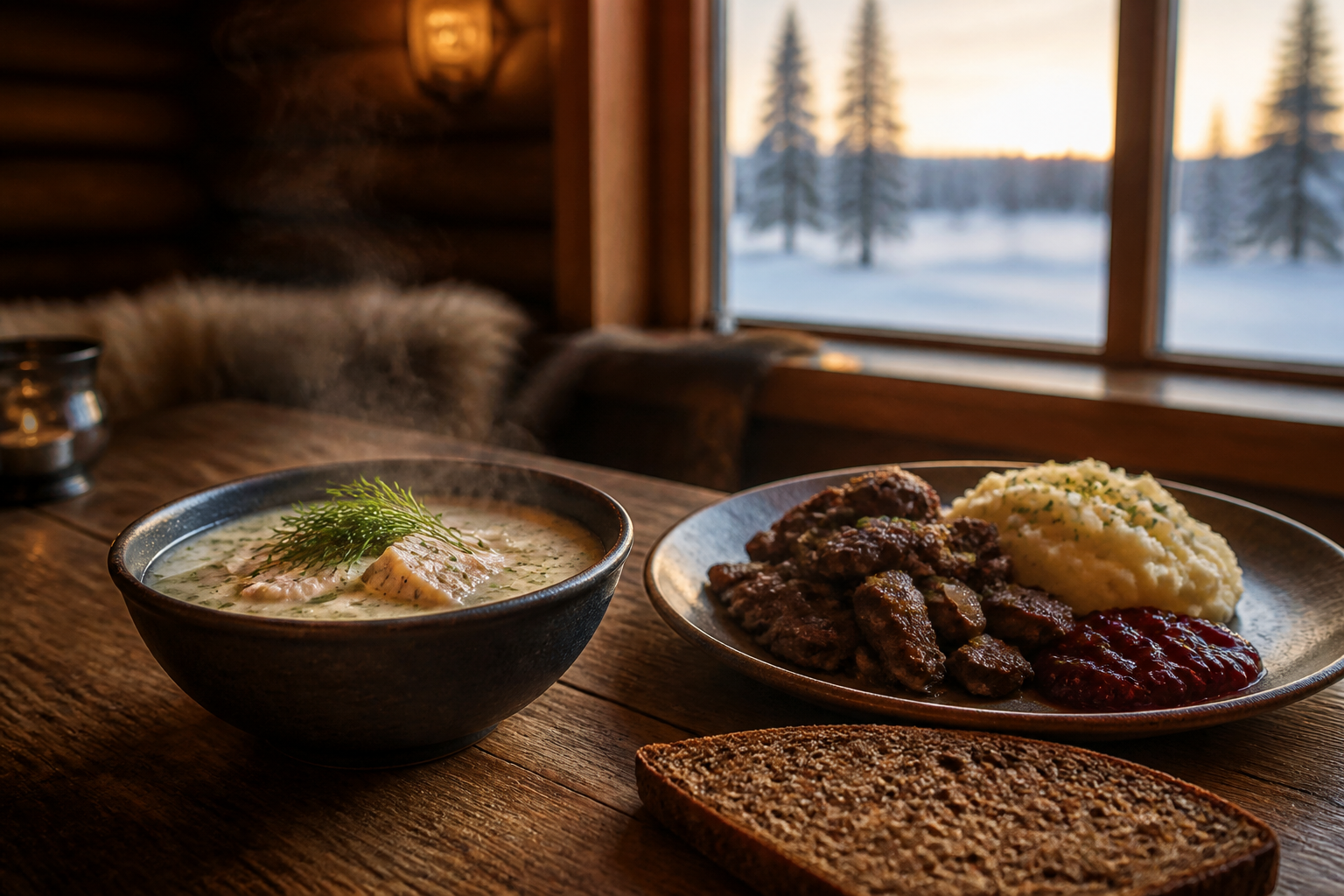
When you picture Lapland, what comes to mind? Snow-dusted forests, the dance of the Northern Lights, and maybe a herd of reindeer crossing a frozen field. But have you thought about what Lapland tastes like? Here, our food isn't just for fuel; it's a story of survival, purity, and living in harmony with the eight seasons of the Arctic.
Forget bland tourist fare. We want you to experience the real flavours that have warmed us through polar nights for generations. This isn't just a list; it's your guide to understanding our culture through your taste buds. So, pull up a chair, get cozy, and let's talk about what to eat in Lapland.
1. Sautéed Reindeer (Poronkäristys)
This is the quintessential Lapland dish, and for good reason. Poronkäristys is not just a meal; it's a tradition. We take thinly shaved slices of reindeer meat (traditionally from a frozen block, which allows for paper-thin cuts) and quickly sauté it in a hot pan with butter or fat. The result is incredibly tender, savoury, and has a mild gamey flavour that’s rich but not overpowering.
It’s almost always served with creamy mashed potatoes (made from our local puikula potatoes), a tart lingonberry jam, and lightly pickled cucumbers. The combination is magical: the savoury meat, the creamy mash, the sweet-sour pop of the berries, and the acidic crunch of the pickle. It’s a perfect plate of balance.
- Where to Find It: Nearly every traditional Lappish restaurant (
ravintola) will have this as their star dish. In Rovaniemi, places like Restaurant Nili or Ravintola Roka are famous for it. - Price: Expect to pay between €28 and €40 for a main course. It's a premium dish, but worth every cent.
- Buddy's Tip: The best Poronkäristys comes from the back or fillet of the reindeer. Don’t hesitate to ask about the cut of meat.
2. Creamy Salmon Soup (Lohikeitto)
Lohikeitto is the hug in a bowl you need after a day out in the snow. This isn't a thin, watery soup. It's a rich, hearty, and deeply comforting soup made with a creamy broth, chunks of fatty salmon, soft potatoes, carrots, and a generous amount of fresh dill. The dill is key—it cuts through the richness and gives it that distinct Finnish flavour.
We often eat this as a main course for lunch, served with a side of dark, dense rye bread (ruisleipä) for dipping. It's simple, satisfying, and showcases the fantastic quality of our local salmon.
- Where to Find It: Very common in cafes (
kahvila) and as a lunch special in restaurants across Lapland. It's a staple at the lunch buffet at Santa Claus Village. - Price: A large, filling bowl will cost around €14–€20, often including bread and coffee at lunchtime.
3. Squeaky Cheese (Leipäjuusto) with Cloudberries
Yes, it really squeaks! Leipäjuusto, which translates to “bread cheese,” is a fresh cheese made from cow's milk (or sometimes richer reindeer or goat milk). It's pressed into a flat disc and baked, giving it a toasted, spotted surface. The texture is firm, dense, and makes a signature squeaky sound against your teeth when you chew.
The flavour itself is very mild and slightly salty. That's why we always serve it warm, either pan-fried in butter or warmed in an oven, with a spoonful of golden cloudberry jam (lakkahillo). The warm, mild cheese and the sweet, aromatic, and slightly tart jam are a match made in heaven. It's the most common dessert you'll find here.
- Where to Find It: On the dessert menu of almost any restaurant. You can also buy it in all supermarkets (look in the cheese section) and warm it up yourself—a perfect souvenir to take home!
- Price: €8–€15 as a dessert in a restaurant. A 200g block from a supermarket costs about €5–€8.
4. Cured & Smoked Fish (Graavilohi & Savukala)
With our thousands of pristine lakes and rivers, fish is a cornerstone of our diet. You’ll find it prepared in many ways, but two of the most popular are cured and smoked. Graavilohi is raw salmon cured in salt, sugar, and dill. It's silky, delicate, and melts in your mouth. Savukala (smoked fish) can be salmon, whitefish, or our local favourite, Arctic char (nieriä). The fish is hot-smoked, giving it a firm texture and a wonderful, woodsy aroma.
We eat these on rye bread with butter, as part of a breakfast buffet, or as a starter (alkupala) with new potatoes and a dill sauce.
- Where to Find It: On appetizer menus, breakfast buffets, and in the deli section of supermarkets. For a real treat, visit a local market hall.
- Buddy's Tip: Try smoked Arctic char if you see it on a menu. It's a local delicacy with a finer, more delicate flavour than salmon.
5. Reindeer Sausage (Poromakkara)
While Poronkäristys is the star of the restaurant, Poromakkara is the hero of the campfire. These are hearty, flavourful sausages made with a mix of reindeer and pork or beef meat, seasoned with spices like juniper and black pepper. They have a distinct gamey taste that is absolutely delicious when grilled over an open fire.
This is our go-to food for outdoor adventures. After a few hours of snowmobiling or husky sledding, there’s nothing better than grilling a reindeer sausage at a lean-to shelter (laavu) and eating it with a dollop of sweet Finnish mustard (sinappi).
- Where to Find It: Many tour operators, like those near the Arctic Circle Husky Park, include a sausage grilling session in their safaris. You can also buy them in supermarkets to grill yourself.
- Price: Included in many tour packages. In a store, a pack of 4-6 sausages is about €6–€10.
6. The Berries: Cloudberry, Lingonberry, and Blueberry
Our forests are our pantry. In late summer, they burst with wild berries that are free for everyone to pick, thanks to our 'Everyman's Right'.
Cloudberry (Lakka/Hilla): The 'Gold of Lapland'. These amber-coloured berries grow in bogs and are notoriously difficult to find. They have a unique tart, sweet, and aromatic flavour. We mostly enjoy them as the jam served with Leipäjuusto.
Lingonberry (Puolukka): These small, red, and intensely tart berries are the perfect partner for savoury meat dishes like sautéed reindeer or meatballs. They cut through the fat and add a burst of freshness.
Blueberry (Mustikka): Our wild blueberries are smaller, darker, and have a much more intense flavour than cultivated ones. They are the star of our beloved Blueberry Pie (Mustikkapiirakka), a simple, rustic pie that is a staple in every Finnish home.
Where to Find It: As jams, sauces, juices, and desserts everywhere. If you visit in late July or August, you might find fresh berries at a market square (
tori).
7. Karelian Pies (Karjalanpiirakka)
Though originally from the Karelia region, these little savoury pies are a beloved national snack you'll find all over Lapland. They consist of a thin rye crust filled with rice porridge (the most common) or mashed potatoes. The magic happens when you warm them up in an oven and top them with Munavoi—a simple but decadent spread made of chopped hard-boiled eggs and butter.
- Where to Find It: In every cafe, supermarket, and on many hotel breakfast buffets. They are the perfect quick, cheap, and filling snack.
- Price: Usually €1–€3 per pie.
8. Rye Bread (Ruisleipä)
Don't leave Lapland without trying our rye bread. It comes in many forms, from dense, dark loaves to thin, crispy crackers (näkkileipä). It has a characteristic sour and earthy flavour that we Finns grow up with and adore. A simple slice of rye bread with a thick layer of real butter is a national treasure. It's the perfect vessel for salmon soup, cured fish, or just a slice of cheese.
- Where to Find It: Everywhere. Served with every meal and available in every shop.
- Buddy's Tip: Look for
reikäleipä, a large, flat, round rye bread with a hole in the middle. It's an old-school classic.
Practical FAQ
Q: Is eating reindeer meat ethical? A: Yes, it is. Reindeer herding is a cornerstone of the indigenous Sámi culture and a sustainable livelihood in Lapland. The animals are semi-wild, roaming free in the fells for most of the year. The industry is tightly regulated, and consuming reindeer meat supports a traditional and ethical way of life.
Q: What are the options for vegetarians in Lapland?
A: It's much easier than it used to be! Most restaurants in Lapland now offer vegetarian dishes. Look for creamy mushroom soup (sienikeitto), root vegetable steaks, broad bean patties (härkis), and risotto. Don't be afraid to ask; chefs are usually very accommodating.
Q: What is a typical Lapland breakfast?
A: A typical hotel breakfast is a generous buffet. Expect to find porridge (puuro), various cereals and yogurts, a selection of rye and other breads, cheeses, cold cuts like ham and smoked reindeer, pickled herring, and of course, Karelian pies with egg butter. You can also check hotel availability in Lapland for your trip.
Q: Can I drink the tap water in Finnish Lapland? A: Absolutely! We have some of the cleanest and best-tasting tap water in the world. Save your money and help the environment by bringing a reusable water bottle and filling it straight from the tap.
Q: What local drinks should I try besides coffee?
A: In winter, you must try Glögi, our version of mulled wine, spiced with cinnamon, cardamom, and ginger, often served with almonds and raisins. Also, try berry juices like lingonberry (puolukkamehu) or bilberry (mustikkamehu). For the adventurous, there are spirits flavoured with Salmiakki (salty liquorice). If you're looking for more to do while you're here, you can also browse Lapland activities.
Buddy's Take
Eating in Lapland is a direct connection to our environment. The flavours are pure, honest, and shaped by the extreme seasons. Our cuisine isn't about overly complex techniques; it’s about letting a few high-quality, local ingredients shine. Whether it's the comforting warmth of a salmon soup on a dark winter's day or the sweet reward of a cloudberry dessert, our food tells the story of this land. We hope you'll be adventurous and try it all, because tasting Lapland is a huge part of understanding its soul. Hyvää ruokahalua—enjoy your meal!
Book your Lapland trip
- 🏨 Stay — Compare hotels, cabins and glass igloos in Lapland
- 🦌 Do — Browse husky, reindeer and aurora tours
Some links on this page are affiliate links. Booking through them costs you nothing extra and helps keep Lapland Buddy free.
Usein kysyttyä
Is eating reindeer meat ethical?
Yes, it is. Reindeer herding is a cornerstone of the indigenous Sámi culture and a sustainable livelihood in Lapland. The animals are semi-wild, roaming free in the fells for most of the year. The industry is tightly regulated, and consuming reindeer meat supports a traditional and ethical way of life.
What are the options for vegetarians in Lapland?
It's much easier than it used to be! Most restaurants now offer vegetarian dishes. Look for creamy mushroom soup (`sienikeitto`), root vegetable steaks, broad bean patties (`härkis`), and risotto. Don't be afraid to ask; chefs are usually very accommodating.
What is a typical Lapland breakfast?
A typical hotel breakfast is a generous buffet. Expect to find porridge (`puuro`), various cereals and yogurts, a selection of rye and other breads, cheeses, cold cuts like ham and smoked reindeer, pickled herring, and of course, Karelian pies with egg butter.
Can I drink the tap water in Finnish Lapland?
Absolutely! We have some of the cleanest and best-tasting tap water in the world. Save your money and help the environment by bringing a reusable water bottle and filling it straight from the tap.
What local drinks should I try besides coffee?
In winter, you must try **Glögi**, our version of mulled wine, spiced with cinnamon, cardamom, and ginger, often served with raisins and almonds. Also, try berry juices like lingonberry (`puolukkamehu`) or bilberry (`mustikkamehu`). For the adventurous, there are spirits flavoured with Salmiakki (salty liquorice).