Päiväkirja
What to Eat in Lapland: 10 Must-Try Foods for 2026
Wondering what to eat in Lapland? We're diving into the 10 traditional dishes you simply can't miss, from hearty reindeer stew to the famous 'squeaky cheese'.
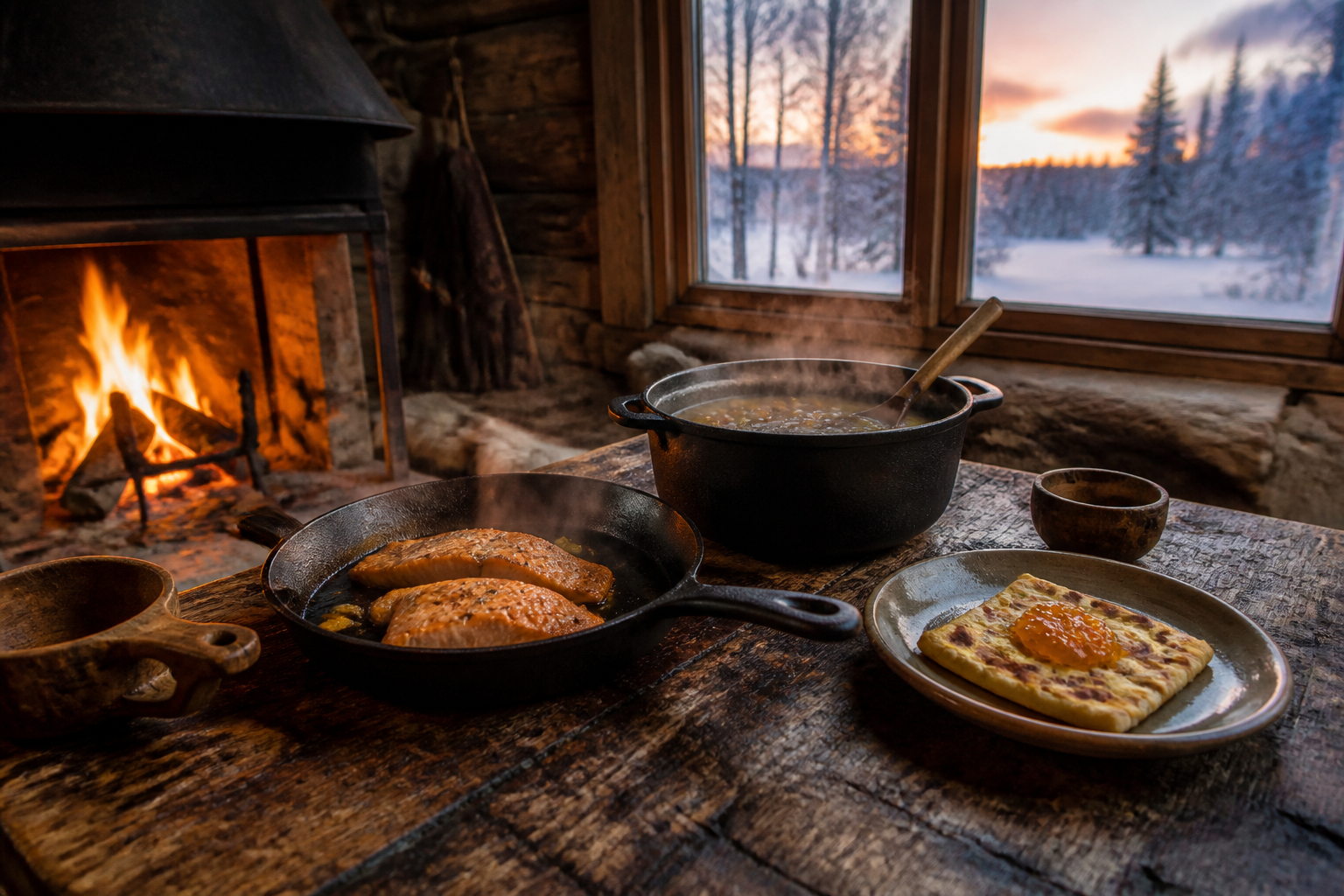
Hello from the heart of the Arctic! We're often asked what makes a trip to Lapland so magical. While the Northern Lights and snowy landscapes steal the show, the real soul of this place is often found on your plate. Our cuisine is a direct reflection of our nature: pure, honest, and shaped by the seasons. It’s about surviving and thriving in the Arctic, using ingredients foraged from the forests and fished from the icy lakes.
So, if you're wondering what to eat in Lapland, you've come to the right place. Forget generic tourist fare. We're going to share the 10 dishes that we locals grew up with and still savour today. This is your guide to eating like a true Laplander in 2026, complete with tips on where to find these authentic flavours right here in Rovaniemi.
1. Reindeer Sauté (Poronkäristys)
This is the quintessential dish of Lapland. Poronkäristys is a hearty, flavourful stew made from thinly sliced reindeer meat, sautéed in fat (traditionally reindeer fat, but often butter now), and gently simmered in beer or stock until incredibly tender. It’s pure comfort in a bowl.
- How it's served: Always with creamy mashed potatoes (pottumuusi), a side of lingonberry jam for a sweet and tart kick, and pickles. The combination is a perfect balance of savoury, sweet, and acidic.
- Local Tip: Don't be shy with the lingonberries! The tartness cuts through the richness of the meat perfectly. This isn't a garnish; it's a key part of the flavour profile.
- Where to find it: For a truly traditional experience, head to Ravintola Nili in central Rovaniemi. It’s a local institution. Expect to pay around €32-€38 for a generous portion in 2026. Almost every traditional restaurant will have it on their menu.
2. Glow-Fried Salmon (Loimulohi)
This is as much a spectacle as it is a meal. Loimulohi involves nailing a large salmon fillet to a wooden plank and slow-cooking it vertically next to the radiant heat of an open fire. The result is unbelievably moist, flaky salmon with a subtle smoky flavour that campfire smoke provides.
- The Experience: The magic is in the process. Watching the flames lick the air next to the glistening salmon is a core Lappish memory for many of us. The fish cooks slowly, allowing the fat to render and baste the fillet naturally.
- Honest Trade-off: It’s not a quick meal. Proper loimulohi takes time, so it's best enjoyed when you aren't in a rush. It’s an experience to be savoured.
- Where to find it: The absolute best and most famous place is Santa's Salmon Place in the Santa Claus Village. Cooked fresh in a traditional kota hut, it’s an unforgettable lunch. A portion with a side salad and bread will cost around €28 in 2026.
3. 'Squeaky Cheese' with Cloudberries (Leipäjuusto ja Lakka)
Meet leipäjuusto, or “bread cheese.” This fresh cheese is made from cow's milk (or sometimes reindeer or goat milk) and is pan-fried or baked, giving it a slightly browned, caramelized crust. When you bite into it, it makes a distinct squeaking sound against your teeth!
- The Golden Pairing: We almost always serve it warm, either as a dessert or a coffee accompaniment, topped with cloudberry jam (lakkahillo). Cloudberries, the “gold of Lapland,” are a rare, wild berry with a unique sweet-tart flavour that is the perfect match for the mild, rich cheese.
- Where to find it: Most cafés and restaurants offer it as a dessert. We recommend trying it at Cafe & Bar 21 in Rovaniemi for a cozy afternoon treat. Expect to pay €10-€14 for a dessert portion. You can also buy a block of leipäjuusto from any supermarket (look in the cheese section) and fry it yourself in a pan with a little butter!
4. Creamy Salmon Soup (Lohikeitto)
On a cold, dark winter's day, nothing warms you up like a bowl of lohikeitto. This isn't just any fish soup. It’s a rich, creamy broth filled with chunks of salmon, potatoes, and leeks, and always finished with a generous handful of fresh dill. It’s simple, but when done right, it’s sublime.
- Lunch vs. Dinner: It's a popular lunch dish across Finland. Many restaurants offer it as a lunch special with a side of dark rye bread. It can be a starter or a main course for dinner.
- Local Tip: The best lohikeitto has a broth that is creamy but not overly thick, letting the flavour of the salmon shine. The potatoes should be tender but not mushy. Ask for extra rye bread to mop up every last drop.
- Where to find it: Rovaniemi's Kauppahalli (Market Hall) often has a small café serving an excellent, no-frills lohikeitto for around €12-€15 for a hearty lunch bowl. For a restaurant version, check out the lunch menu at Roka Kitchen & Wine Bar.
5. Smoked Reindeer (Savuporo)
While poronkäristys is the most famous reindeer dish, savuporo (smoked reindeer) is arguably more versatile. The meat is cold-smoked, giving it a deep, intense flavour. You'll find it sliced thinly like prosciutto or diced into other dishes.
- How we use it: It’s fantastic on rye bread with a bit of butter, as a topping for pizza, or mixed into creamy pasta sauces. A classic starter is smoked reindeer soup (savuporokeitto), a velvety, rich soup that's a must-try for foodies.
- Where to find it: Ravintola Nili serves a fantastic smoked reindeer soup as a starter for around €16. You can also buy vacuum-packed smoked reindeer at the airport or local supermarkets to take a taste of Lapland home with you.
6. Lappish Flatbread (Rieska)
Rieska is our humble, unleavened flatbread, traditionally made with just barley flour, water, and salt, and cooked quickly at high heat. There are many variations, but the most common one in Lapland is potato rieska (perunarieska), which is soft, slightly chewy, and utterly delicious with a knob of real butter.
- How it's served: It’s the perfect accompaniment to soups like lohikeitto or simply enjoyed as a snack with butter and a slice of cheese or cold-smoked salmon.
- Local Tip: Eat it fresh and warm if you can. It doesn’t keep well and is best on the day it's baked. Supermarkets sell it, but bakery-fresh is on another level.
- Where to find it: Look for it in local bakeries in the morning. Any good supermarket like K-Supermarket or S-Market will have fresh packs delivered daily. A pack of 4-6 will cost around €3-€4.
7. Vendace Fried in Butter (Voissa paistetut muikut)
Muikku, or vendace, are small, silvery freshwater fish from our many clean lakes. The classic way to prepare them is to dredge them in rye flour, fry them in a generous amount of butter until golden and crispy, and serve them with a squeeze of lemon and a dollop of garlic mashed potatoes.
- How to eat them: You eat them whole—head, tail, and all! They are small and the bones are so tiny they become brittle and edible when fried. It might seem strange, but trust us, it's delicious.
- Seasonality: This is typically a summer and autumn dish, best enjoyed when the fish are freshly caught. You'll find them at summer markets and festivals, but some restaurants serve them year-round using frozen fish.
- Where to find it: This is more of a summer staple, but a few traditional restaurants like Restaurant Nili might have it on their menu. Expect to pay around €25 for a main course.
8. Bilberry Pie (Mustikkapiirakka)
When late summer arrives (July-August), our forests turn blue with bilberries (mustikka). They are smaller, wilder, and more intensely flavoured than their cultivated blueberry cousins. We forage them by the bucketload and turn them into mustikkapiirakka, a simple pie with a sweet crust and a jammy bilberry filling, often topped with a sour cream or quark layer.
- Local Tradition: Nearly every family has their own recipe. It's the taste of late summer and the sign that autumn is on its way. We enjoy it with coffee or a glass of cold milk.
- Where to find it: During the right season, every café will have its version. Cafe & Bar 21 usually has a great one. Outside of the season, it will be made with frozen berries. A slice will cost around €6-€8.
9. Karelian Pies (Karjalanpiirakka)
Okay, a small geography lesson! As the name suggests, these pastries originate from Karelia, a region in eastern Finland. However, they have been wholeheartedly adopted across the country and are a beloved staple here in Lapland. They feature a thin rye crust filled with rice porridge or mashed potatoes.
- The Secret: The magic is in the topping: munavoi, a simple spread of chopped hard-boiled eggs mixed with butter. Don't eat one without it!
- When to eat: They are a perfect grab-and-go breakfast or snack. We warm them up in the oven or toaster before slathering on the egg butter.
- Where to find it: Everywhere! Supermarkets, cafes, market stalls. They are an inexpensive and authentic snack, usually costing €1.50-€3 each.
10. Star-shaped Christmas Pastries (Joulutorttu)
If you're visiting between November and late December, you are in for a treat. Joulutorttu are star-shaped puff pastries filled with a dollop of prune jam and dusted with powdered sugar. Their shape is meant to resemble a star or a pinwheel, and their aroma fills every Finnish home during the Christmas season.
- Seasonal Delight: You will not find these in July. They are strictly a Christmas-time food, which makes them all the more special. They are light, flaky, and not overly sweet.
- Where to find it: During the holiday season, every single café and supermarket bakery will be selling them. They are a must-try with a cup of glögi (mulled wine) to get into the festive spirit. They are cheap and cheerful, about €2-€4 each.
Book your Lapland trip
- ✈️ Fly — Find flights to Rovaniemi and Lapland · compare dates and airlines
- 🦌 Do — Browse husky, reindeer and aurora tours
- 🏨 Stay — Compare hotels, cabins and glass igloos in Lapland
Some links on this page are affiliate links. Booking through them costs you nothing extra and helps keep Lapland Buddy free.
Usein kysyttyä
Is reindeer meat common in Lapland?
Yes, absolutely. Reindeer husbandry is a traditional livelihood here, and reindeer meat is a staple of our diet. It's lean, rich in flavour, and very healthy. You'll find it on almost every restaurant menu in various forms, from sautéed stew (poronkäristys) to smoked slices.
What is a typical breakfast in Finnish Lapland?
A typical Finnish breakfast is quite hearty. It often includes dark rye bread or Karelian pies with butter and cheese, porridge (puuro) with berries, cold cuts, and of course, coffee! Many hotels offer a fantastic buffet breakfast where you can try all of these things.
Are there good vegetarian or vegan options in Lapland?
Yes, but it requires a little planning. While traditional cuisine is very meat and fish-heavy, most restaurants in Rovaniemi now offer dedicated vegetarian and vegan dishes. You can often find delicious root vegetable steaks, mushroom risottos, or broad bean patties. Always check the menu online or call ahead if you have specific dietary needs.
What are cloudberries and when can I try them fresh?
Cloudberries (lakka) are a wild amber-coloured berry that grows in Arctic bogs. They have a unique sweet, tart, and slightly floral flavour. The fresh season is very short, typically from late July to mid-August. The rest of the year, you'll find them as jam, in sauces, or as a liqueur, which are all delicious.
Is tap water safe to drink in Rovaniemi?
Yes, 100%! Finland has some of the cleanest and best-tasting tap water in the world. There's no need to buy bottled water; just fill up your bottle straight from the tap. It's free, safe, and delicious.