Journal
Ruska Lapissa: A Guide to Lapland's Autumn Colours 2026
Forget snow for a moment; we're sharing our local secrets for experiencing 'ruska', the breathtaking, fiery, and fleeting autumn season in Finnish Lapland.
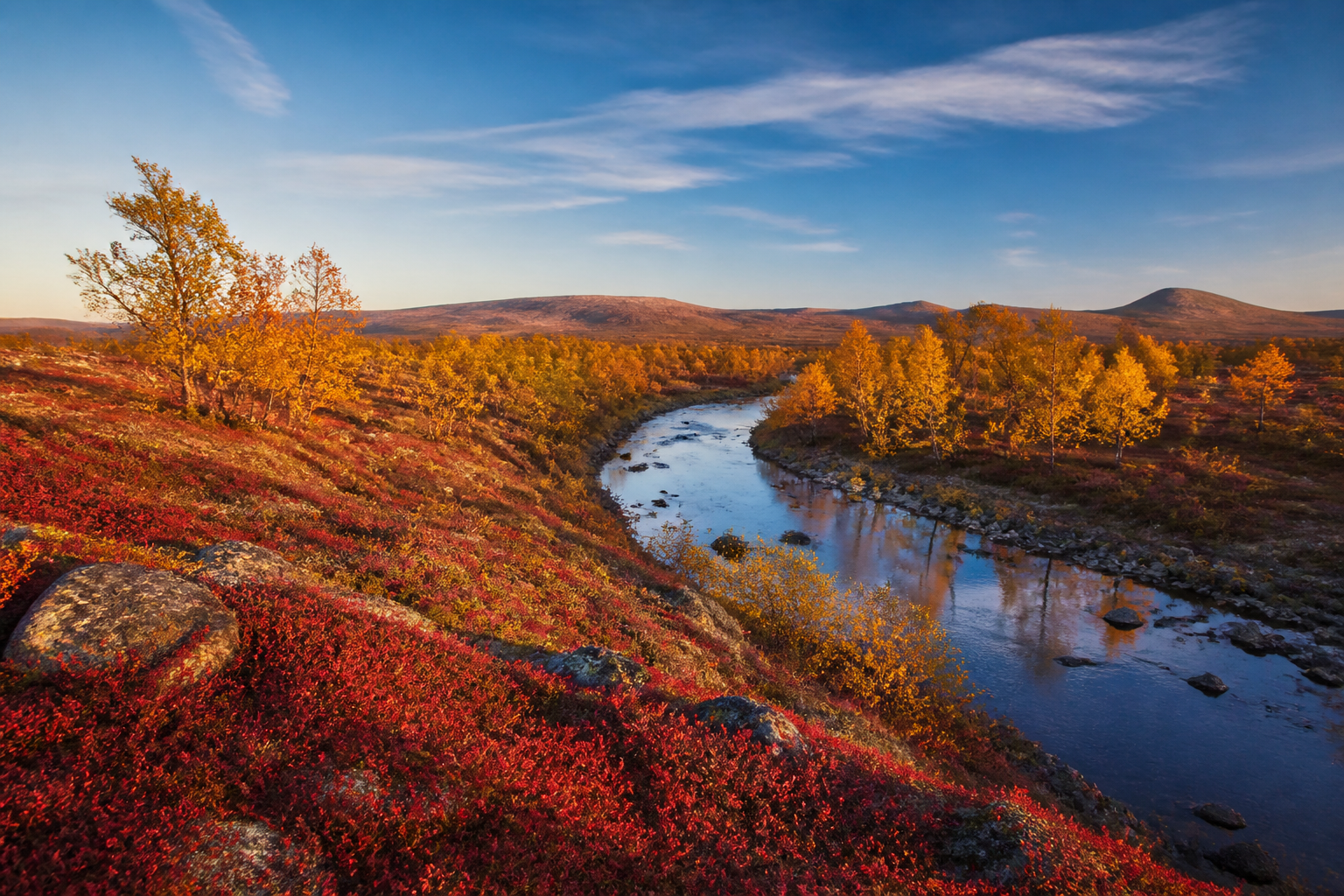
Here in Lapland, we live by the seasons. While winter gets all the fame with its deep snow and dancing auroras, locals know a secret: there’s a short, magical period that is perhaps even more beautiful. We call it ruska. It’s a time when the fells and forests explode into a mind-blowing spectacle of yellow, orange, and fiery red. It lasts only a few weeks, and if you blink, you might miss it.
Ruska lapissa (ruska in Lapland) isn't just 'autumn'. It's an event. The air turns crisp, the mosquitoes vanish after the first frost, and the entire landscape puts on a final, vibrant show before the long, white winter sleep. For hikers, photographers, and anyone seeking peace, it's the best time of year. So, let’s talk about how you can experience this incredible natural phenomenon for yourself.
What Exactly is "Ruska Lapissa"?
Ruska is the Finnish word for the intense blaze of autumn foliage. It’s not just a few trees changing colour; it’s the entire ecosystem. The stars of the show are the fell birches (Betula pubescens subsp. czerepanovii), which turn a brilliant, shimmering gold. Aspens add splashes of brighter yellow, but the real magic happens on the ground.
The forest floor and open fell-tops become a carpet of fire. Dwarf birch, blueberry, and lingonberry leaves turn a deep, crimson red, while bearberry leaves (arctostaphylos uva-ursi) create patches of stunning scarlet. This ground cover, what we call maarusk, is what makes Lapland's ruska so unique compared to autumn elsewhere. The contrast between the evergreen pines, the golden birches, and the fiery red ground is something you’ll never forget.
The Best Time for Ruska in 2026: A Narrow Window
This is the most important question, and the answer is all about timing and location. Ruska is a wave of colour that sweeps down through Lapland from north to south. It doesn't happen everywhere at once. The peak lasts only about 10-14 days in any single location.
Based on typical patterns, here is our 2026 forecast:
- First & Second Week of September (Sept 1-14): This is peak time for the most northern parts of Lapland. Think Utsjoki, Kilpisjärvi, and the northern areas of the Urho Kekkonen National Park. If you want the most intense, expansive colours, this is your time and place.
- Second & Third Week of September (Sept 8-21): This is the sweet spot for the popular fell areas like Levi, Ylläs, and Saariselkä. The fells around Pallas-Yllästunturi National Park will be at their absolute best. This is our recommended window for most visitors.
- Fourth Week of September & First Week of October (Sept 22 - Oct 5): The colours move south. The areas around Rovaniemi and national parks like Pyhä-Luosto National Park will be peaking. By this time, the leaves in the far north will have already fallen. The first permanent snow (ensilumi) often arrives in the northern fells during this period.
Local Tip: Don't book for October hoping to see ruska. By mid-October, the party is over. The trees are bare, the landscape is a muted brown and grey, and we're all just waiting for the snow.
Our Top 3 National Parks for Peak Ruska
While you can see ruska colours everywhere, the vast, open landscapes of our national parks are where the spectacle is truly breathtaking. You'll need a rental car to reach them effectively.
Pallas-Yllästunturi National Park: Our absolute favourite. The rolling fells offer endless views of the colour palette. The scenic road between Ylläs and Pallas is a must-drive. For an easy, rewarding hike, take the 3 km trail around Varkaankuru gorge near the Yllästunturi Visitor Centre Kellokas or the stunning 9km Taivaskero circle trail from the Pallas visitor centre.
Urho Kekkonen National Park: Near Saariselkä, this park offers a wilder feel. Head to Kiilopää and climb the gentle slope for 360-degree views of golden birch forests against a backdrop of dark green pines. The trails are well-marked, and the contrast of colours here is particularly striking. It’s also a prime spot for spotting reindeer herds gathering for the winter.
Pyhä-Luosto National Park: A great option if you're based further south or have less time. The ancient, rugged landscape feels different from the rolling fells up north. Hike the Isokuru Gorge trail (note: lots of stairs!) to see colours clinging to the steep slopes of one of Europe's oldest geological formations. It’s accessible and offers a powerful dose of ruska.
Hiking During Ruska: What to Expect
Hiking is the activity during ruska. The air is cool and perfect for walking, and the views are your reward. However, you need to be prepared.
The weather is famously unpredictable. You can have a brilliant, sunny day at 12°C, followed by a day of sleet and 2°C. The first snowflakes often fall on the fell tops in mid-September. Trails can be muddy and wet, especially in lower-lying forested areas. Many trails feature pitkospuut (duckboards) to help you cross boggy sections.
Your packing list should include:
- Waterproof hiking boots (non-negotiable).
- Layered clothing: a merino wool base layer, a fleece mid-layer, and a waterproof/windproof shell jacket and trousers.
- A warm hat, gloves, and a buff or scarf. The wind on an open fell can be bitterly cold.
- A small backpack with a thermos of hot juice or coffee, some snacks, and a map.
The Ruska Trade-Off: Solitude vs. Services
Here’s the honest truth about visiting during ruska. It's a shoulder season, caught between the end of summer and the start of the winter peak.
The Pros:
- Fewer People: The trails are much quieter than in July or February. You can often hike for hours and only meet a handful of people.
- No Mosquitoes: This is a huge plus! The first frosts kill them off, making the outdoors infinitely more pleasant.
- Lower Prices: Flights and accommodation are generally 30-50% cheaper than during the Christmas or ski holiday peak seasons.
- Stunning Photography: The low, golden light and incredible colours make it a dream for photographers.
The Cons:
- Limited Services: Many safari companies that run husky, reindeer, and snowmobile tours are closed. They are resting their animals and preparing for winter. Don't expect a full suite of winter activities.
- Unpredictable Weather: As mentioned, it can be grey, rainy, and cold. You need to be mentally prepared for mixed weather and have the right gear.
- Shorter Days: The days are getting shorter quickly. By late September in Ylläs, the sun rises around 7:30 AM and sets around 7:00 PM.
Can You See the Northern Lights During Ruska?
Yes, absolutely! This is one of the best-kept secrets of the autumn season. The aurora season begins in late August as the nights get dark enough. September is one of the best months for seeing the Northern Lights for a few key reasons.
First, the statistical peak for geomagnetic activity (which causes strong auroras) is around the autumn equinox in late September. Second, without a blanket of snow, the landscape is very dark, which makes the auroras appear even brighter and more vibrant. Seeing the green lights dance above a fiery red and yellow landscape is a truly unique experience that you can't get in winter. Just be prepared to head out late and dress warmly!
A Local's 5-Day Ruska Itinerary
If you want to do it right, rent a car and head north. Here’s a sample itinerary for the peak ruska window (around the 2nd-3rd week of September).
- Day 1: Arrive at Kittilä Airport (KTT). Pick up your rental car and drive 45 minutes to the village of Äkäslompolo, on the north side of the Ylläs fell. Settle into your cozy cabin.
- Day 2: Explore Pallas-Yllästunturi National Park. Hike one of the trails starting from the Kellokas Visitor Centre and enjoy a coffee and donut at a trailside laavu (lean-to shelter).
- Day 3: Drive the scenic Tunturitie (Fell Road) from Ylläs towards Pallas. The views are spectacular. Stop at the Pallas Visitor Centre and take a short walk for panoramic views before returning.
- Day 4: Spend the day exploring the Levi area. You can take the gondola up the fell for amazing views without the hike. In the evening, if the sky is clear, go on a self-guided aurora hunt away from the village lights.
- Day 5: Enjoy a final morning walk, then drive back to Kittilä Airport for your flight home, with a camera full of colourful memories.
What Does Ruska Cost? A Realistic Budget
Ruska offers excellent value compared to the prime winter season.
- Accommodation: Expect to pay €80-€150 per night for a well-equipped cabin with a private sauna. This is significantly less than the €200-€400+ you might pay in December or February.
- Flights: Flights to Kittilä (KTT) or Ivalo (IVL) are more reasonable than during peak season. Book in advance for the best prices.
- Car Rental: This is your main activity-related cost. Budget around €60-€80 per day for a standard car. It's essential for exploring the national parks.
- Activities: Your main activity is hiking, which is free! Food costs are standard for Finland; save money by cooking some meals in your cabin. A bowl of salmon soup at a trailside café will cost around €12-€15.
Overall, a ruska trip is for the independent traveller who values nature and solitude over organized tours. It’s a more active, self-driven Lapland experience.
Practical FAQ for Your Ruska Trip
Here are the quick answers to the questions we get most often about experiencing ruska lapissa.
Q: When is the absolute peak of ruska in Lapland? A: For the classic fell regions like Levi and Ylläs, the sweet spot is almost always the second and third weeks of September. The colours move from north to south, so if you're in Utsjoki, aim for the first week; if you're near Rovaniemi, aim for the last week of September.
Q: Are there still mosquitoes in Lapland during ruska? A: No! This is one of the best parts. The first night frosts, which usually happen in late August or early September, kill off the mosquitoes for the season. You can enjoy the outdoors without a single buzz.
Q: What should I pack for a ruska trip to Lapland? A: Layers are key. Pack merino wool base layers, a fleece jacket, a fully waterproof and windproof outer shell (both jacket and trousers), waterproof hiking boots, a warm hat, and gloves. The weather can change in an instant.
Q: Is Rovaniemi a good base for a ruska trip? A: Honestly, it’s not the ideal base for the best ruska. The most spectacular colours are found about 2-3 hours' drive further north. Rovaniemi is a good choice if you have a short trip, want to combine city sights like Santa Claus Village with a taste of ruska, or are visiting later in the season (late Sept/early Oct). For the full experience, stay in Kittilä, Kolari, Sodankylä, or Inari municipalities.
Q: Can I see wildlife during ruska? A: Yes, it's a fantastic time for it. Reindeer are very active and visible as they graze before winter. It's also a great time for birdwatching, as many species gather before their southward migration. Keep your eyes peeled and your camera ready.
Buddy's Take
If you ask us, a ruska trip is for the soul. It's quieter and more introspective than a winter holiday. It's for people who find joy in a crisp morning walk, the warmth of a campfire, and the overwhelming beauty of a landscape on fire with colour. It’s a short, intense, and profoundly beautiful season that reminds us of nature's powerful cycles. It might not have sleigh rides, but it has a magic all its own. We think you'll love it.
Book your Lapland trip
- 🏨 Stay — Compare hotels, cabins and glass igloos in Lapland
- ✈️ Fly — Find flights to Rovaniemi and Lapland
- 🚗 Drive — Compare rental cars for Lapland winter roads
Some links on this page are affiliate links. Booking through them costs you nothing extra and helps keep Lapland Buddy free.
Frequently asked questions
When is the absolute peak of ruska in Lapland?
For the classic fell regions like Levi and Ylläs, the sweet spot is almost always the second and third weeks of September. The colours move from north to south, so if you're in Utsjoki, aim for the first week; if you're near Rovaniemi, aim for the last week of September.
Are there still mosquitoes in Lapland during ruska?
No! This is one of the best parts. The first night frosts, which usually happen in late August or early September, kill off the mosquitoes for the season. You can enjoy the outdoors without a single buzz.
What should I pack for a ruska trip to Lapland?
Layers are key. Pack merino wool base layers, a fleece jacket, a fully waterproof and windproof outer shell (both jacket and trousers), waterproof hiking boots, a warm hat, and gloves. The weather can change in an instant.
Is Rovaniemi a good base for a ruska trip?
Honestly, it’s not the ideal base for the *best* ruska. The most spectacular colours are found about 2-3 hours' drive further north. Rovaniemi is a good choice if you have a short trip, want to combine city sights like Santa Claus Village with a taste of ruska, or are visiting later in the season (late Sept/early Oct). For the full experience, stay in Kittilä, Kolari, Sodankylä, or Inari municipalities.
Can I see wildlife during ruska?
Yes, it's a fantastic time for it. Reindeer are very active and visible as they graze before winter. It's also a great time for birdwatching, as many species gather before their southward migration. Keep your eyes peeled and your camera ready.