Journal
Pallas-Yllästunturi National Park: A Guide for 2026-2027
Welcome to the fells where you can breathe the cleanest air in the world—we're taking you on a journey through Pallas-Yllästunturi, Lapland's most beloved national park.
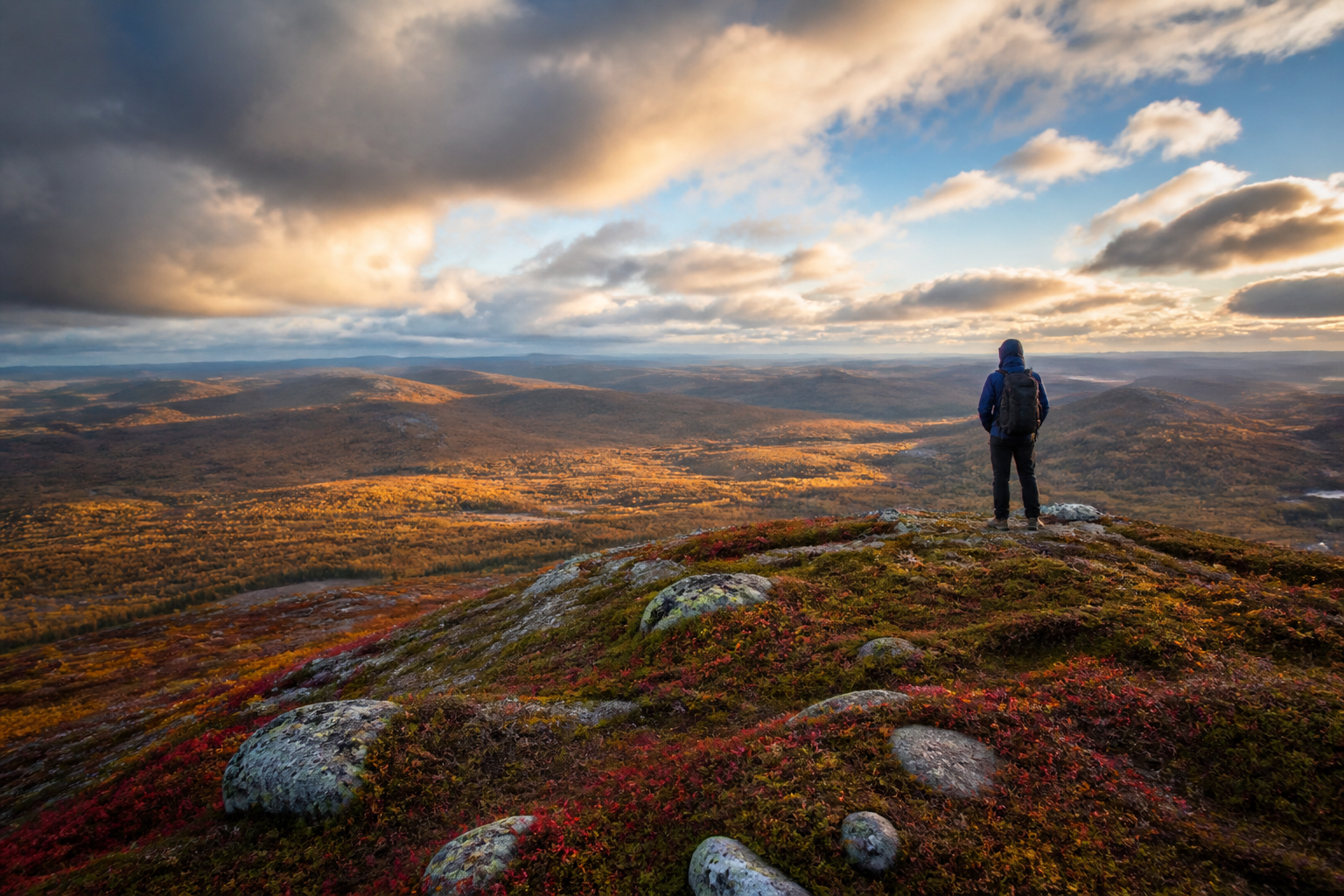
Here in Lapland, we have a special place in our hearts for the rolling fells and vast, silent landscapes of Pallas-Yllästunturi National Park. It’s not just Finland’s third-largest national park; it’s a place where you can feel the ancient rhythm of the north and, according to the World Health Organization, breathe the cleanest air on the planet. This is the real Lapland, raw and beautiful.
Whether you dream of hiking under the Midnight Sun or snowshoeing beneath the Northern Lights, this park delivers. It stretches over 100 kilometres, connecting the fells of two distinct areas: the lively resort hub of Ylläs in the south and the serene, remote fells of Pallas in the north. We're here to give you the local's guide on how to experience it all, from legendary multi-day treks to quiet afternoon strolls.
Why This National Park is So Special
Pallas-Yllästunturi holds a unique place in Finnish culture. It’s one of our two oldest national parks, established in 1938, and its landscape is the inspiration for countless paintings and poems. The heart of the park is its chain of fells, ancient, rounded mountains worn smooth by glaciers. Unlike the jagged peaks you might see elsewhere, our fells are gentle giants, accessible yet commanding respect.
The air quality here is monitored continuously at the Sammaltunturi station, and it’s consistently ranked as the cleanest in any inhabited area worldwide. When you take a deep breath on top of a fell, you are literally breathing pristine arctic air. This combination of epic landscapes, rich cultural history, and pure nature makes Pallas-Yllästunturi National Park a destination we're incredibly proud of.
Getting There & Navigating the Park
The main gateway to the park is Kittilä Airport (KTT), which has good connections from Helsinki. From Kittilä, you’ll want to rent a car—it’s the only practical way to explore the vast area.
- For the Ylläs Area (South): Drive about 45 minutes from the airport to the villages of Äkäslompolo or Ylläsjärvi. These villages sit on either side of the Yllästunturi fell and serve as fantastic bases with plenty of accommodation, restaurants, and rental shops.
- For the Pallas Area (North): It's a longer, more scenic drive, about 1.5 hours north from Kittilä. The main hub here is the Lapland Hotels Pallas and the Pallastunturi Visitor Centre, which feel much more remote and quiet than Ylläs.
An airport bus runs from Kittilä to both Ylläs and Pallas, but its schedule is tied to flight arrivals and can be infrequent. For flexibility, a car is king. In summer, the scenic “Maisematie” road connects Ylläs and Pallas, offering incredible views along the way.
The Legendary Hike: Hetta-Pallas Trail
If you're a serious hiker, this is the one. The Hetta-Pallas trail is Finland's oldest and most famous marked hiking route, a 55-kilometre (34-mile) journey across the heart of the national park. It typically takes 3 to 4 days to complete, leading you over several stunning fells and through quiet forests.
- Route: The trail runs between the village of Hetta in Enontekiö and the Pallastunturi Visitor Centre.
- Best Time: Mid-June to late September. Before mid-June, expect significant snowmelt and mud. September offers the spectacular “ruska” autumn colours but colder nights.
- Accommodation: The trail is dotted with open wilderness huts (free, first-come-first-served, basic bunks) and reservable wilderness huts (book in advance for around €15-€20 per person/night via the Eräluvat website). Booking is highly recommended in peak season (July-August).
- Local Tip: The trail starts (or ends) with a boat crossing over Lake Ounasjärvi in Hetta. You can't walk around it. The boat ride costs about €15 per person and is a lovely, calming way to begin your adventure. Check the boat schedule in advance, as it doesn't run all night!
Best Day Hikes from the Ylläs Area
Don't have 4 days? The Ylläs side of the park is packed with brilliant, accessible day hikes.
1. Varkaankuru Nature Trail (3 km loop): This is a perfect introduction for families or anyone wanting a gentle walk. The trail follows a beautiful, lush gorge filled with rare plants that thrive in its unique microclimate. Duckboards keep your feet dry, and information signs tell the story of the gorge's geology. It’s an easy 1-hour walk starting near the Ylläs Nature Centre Kellokas.
2. Tuomikuru Trail (3.5 km loop): A slightly more challenging but hugely rewarding hike. This route takes you into a rugged, steep-sided gorge with a campfire and lean-to shelter at the bottom—a perfect spot for a break. The final climb out of the gorge gives you a great taste of the fell landscape. Expect it to take around 2 hours.
3. Kesänkijärvi Trail (6 km loop): Circle the stunning, clear Kesänkijärvi lake. The trail is mostly flat and easy, with fantastic views of the surrounding fells (Kesänkitunturi and Kellostapuli) reflected in the water. There's a great lean-to shelter and a café (Kesängin Keidas, check opening times) on the route, making it a perfect half-day trip.
Top Day Hikes from the Pallas Area
The Pallas fells feel higher, windier, and more epic. The trees disappear sooner, leaving you on the vast, open tundra.
1. Taivaskeronkierros Trail (9 km loop): This is the crown jewel of Pallas. The trail takes you to the summit of Taivaskero, which at 809 meters is the highest point in the entire national park. The 360-degree view from the top is breathtaking. This is also where the symbolic Olympic flame for the 1952 Helsinki games was lit using the Midnight Sun. The hike is moderate and takes about 3-4 hours. Be prepared for wind!
2. Palkaskeronkierros Trail (7 km loop): A slightly shorter but equally beautiful option. This trail takes you to the summit of Palkaskero, offering incredible views back towards the main Pallas fell chain. It's a great choice if you're short on time or if the weather on Taivaskero looks too rough. It's a fantastic spot for photography, especially during sunset or sunrise.
Winter in Pallas-Yllästunturi: Skiing & Snowshoeing
Come winter, the park transforms into a snowy paradise. While the hiking trails disappear under metres of snow, a new network of trails opens up.
Cross-Country Skiing: Ylläs boasts one of the world's most extensive cross-country ski networks, with over 330 km of groomed tracks, many of which run through the national park. You can ski through silent, snow-laden forests and up onto the fells. Trackside cafes offer a warm welcome with hot berry juice and pastries. A day's rental for a full ski set will cost around €30-€40.
Snowshoeing: If skiing isn't your thing, snowshoeing is the perfect way to explore. It lets you go off the beaten path and experience the deep silence of the winter forest. Many marked snowshoe trails exist, especially around Ylläs and Pallas. A day's rental for snowshoes and poles is about €20-€25.
Honest Trade-off: Winter hiking (with just boots) is very limited. You really need skis or snowshoes to move around effectively and safely. Also, be aware of the short daylight hours from December to January.
Chasing the Northern Lights
Pallas-Yllästunturi National Park is one of the best places in Lapland to see the Aurora Borealis. The lack of light pollution means the sky is incredibly dark. Your best chances are from September to late March on clear nights.
Our top tip is to simply get away from the village lights. Drive to a parking area on the Maisematie road or snowshoe a short way up a fell. The open tops of the fells provide an unobstructed, 360-degree view of the sky. Apps like "My Aurora Forecast" are useful, but the best method is to just dress warmly, pack a thermos of something hot, and be patient. Remember, while you might visit the famous Santa Claus Village for festive magic, the true magic of a Lapland winter is a silent night under the dancing auroras.
Park Etiquette: How to Be a Good Visitor
We operate under a principle called "Everyman's Rights," but national parks have specific rules to protect their fragile nature.
- Stay on the Path: In the fragile fell tundra, even a few footsteps can leave a mark for decades. Please stick to the marked trails.
- Pack It In, Pack It Out: There are no rubbish bins on the trails. You must carry all of your waste back out with you.
- Fires: Only make fires in designated campfire sites, and use the firewood provided sparingly. During a forest fire warning (common in summer), all open fires are forbidden.
- Check the Weather: The weather on the fells can change in minutes. A sunny day can turn into a windy, cold, and foggy ordeal. Always check the forecast and be prepared with extra layers, a map, and a compass (don't rely solely on your phone!). The
112 Suomiapp is excellent for safety, as it can pinpoint your location for emergency services.
Practical Questions for Your Trip
When is the absolute best time to visit Pallas-Yllästunturi National Park? For hiking and green landscapes, late June to August is prime time with the Midnight Sun. For the stunning autumn 'ruska' colours, the second week of September is usually the peak. For snow, Northern Lights, and winter sports, February and March offer a great balance of snow depth and daylight.
Do I need a guide for hiking? For the marked day trails in summer, absolutely not. The paths are well-maintained and easy to follow. For the multi-day Hetta-Pallas trail, you can do it independently if you're an experienced hiker. For off-trail or winter expeditions, we strongly recommend hiring a local guide for safety.
Are there bears or wolves in the park? Yes, the park is a habitat for large predators like bears, wolves, wolverines, and lynx. However, they are extremely shy and avoid humans at all costs. The chances of you seeing one are incredibly slim. You are far more likely to see reindeer, which wander freely everywhere!
What kind of facilities are available on the trails? The park is well-equipped with a network of wilderness huts, lean-to shelters (laavu), designated campfire sites with firewood, and dry toilets. There are no shops or running water on the trails, so you must be self-sufficient and purify water from streams or lakes.
Can I fly a drone in the national park? Generally, flying drones is restricted in Pallas-Yllästunturi National Park to protect wildlife and the peace of other visitors. There are some specific areas and conditions where it might be allowed, but you must check the latest regulations on the official national park website (luontoon.fi) before you even think about launching one.
Is the park accessible for people with mobility issues? Accessibility is improving. Several trails, particularly around the visitor centres, are designed to be accessible. For example, the Varkaankuru trail in Ylläs and the area around the Pallastunturi Visitor Centre have sections suitable for wheelchairs or strollers. Always check the specific trail details on the national park website.
Buddy's Take
There's a feeling you get when you stand on top of Taivaskero, with nothing but the wind in your ears and a hundred kilometres of rolling fells stretching to the horizon. It’s a mix of humility and profound freedom. This isn't a park you just 'see'; it's one you feel. It’s the crunch of lichen under your boots, the taste of cloudberries picked by the trail, and the deep, silent cold of a winter's night. We locals return again and again, not just for the hikes, but for the sense of peace it gives us. We hope you’ll come and find your own piece of that peace here with us.
Book your Lapland trip
- 🏨 Stay — Compare hotels, cabins and glass igloos in Lapland
- ✈️ Fly — Find flights to Rovaniemi and Lapland
- 🚗 Drive — Compare rental cars for Lapland winter roads
Some links on this page are affiliate links. Booking through them costs you nothing extra and helps keep Lapland Buddy free.
Frequently asked questions
When is the absolute best time to visit Pallas-Yllästunturi National Park?
For hiking and green landscapes, late June to August is prime time with the Midnight Sun. For the stunning autumn 'ruska' colours, the second week of September is usually the peak. For snow, Northern Lights, and winter sports, February and March offer a great balance of snow depth and daylight.
Do I need a guide for hiking?
For the marked day trails in summer, absolutely not. The paths are well-maintained and easy to follow. For the multi-day Hetta-Pallas trail, you can do it independently if you're an experienced hiker. For off-trail or winter expeditions, we strongly recommend hiring a local guide for safety.
Are there bears or wolves in the park?
Yes, the park is a habitat for large predators like bears, wolves, wolverines, and lynx. However, they are extremely shy and avoid humans at all costs. The chances of you seeing one are incredibly slim. You are far more likely to see reindeer, which wander freely everywhere!
What kind of facilities are available on the trails?
The park is well-equipped with a network of wilderness huts, lean-to shelters (laavu), designated campfire sites with firewood, and dry toilets. There are no shops or running water on the trails, so you must be self-sufficient and purify water from streams or lakes.
Can I fly a drone in the national park?
Generally, flying drones is restricted in Pallas-Yllästunturi National Park to protect wildlife and the peace of other visitors. There are some specific areas and conditions where it might be allowed, but you must check the latest regulations on the official national park website (luontoon.fi) before you even think about launching one.
Is the park accessible for people with mobility issues?
Accessibility is improving. Several trails, particularly around the visitor centres, are designed to be accessible. For example, the Varkaankuru trail in Ylläs and the area around the Pallastunturi Visitor Centre have sections suitable for wheelchairs or strollers. Always check the specific trail details on the national park website.