Journal
Our Ultimate Guide to Ice Fishing in Lapland
Experience the quiet thrill of a true Arctic tradition with our ultimate guide to ice fishing in Finnish Lapland, from drilling the hole to frying your catch.
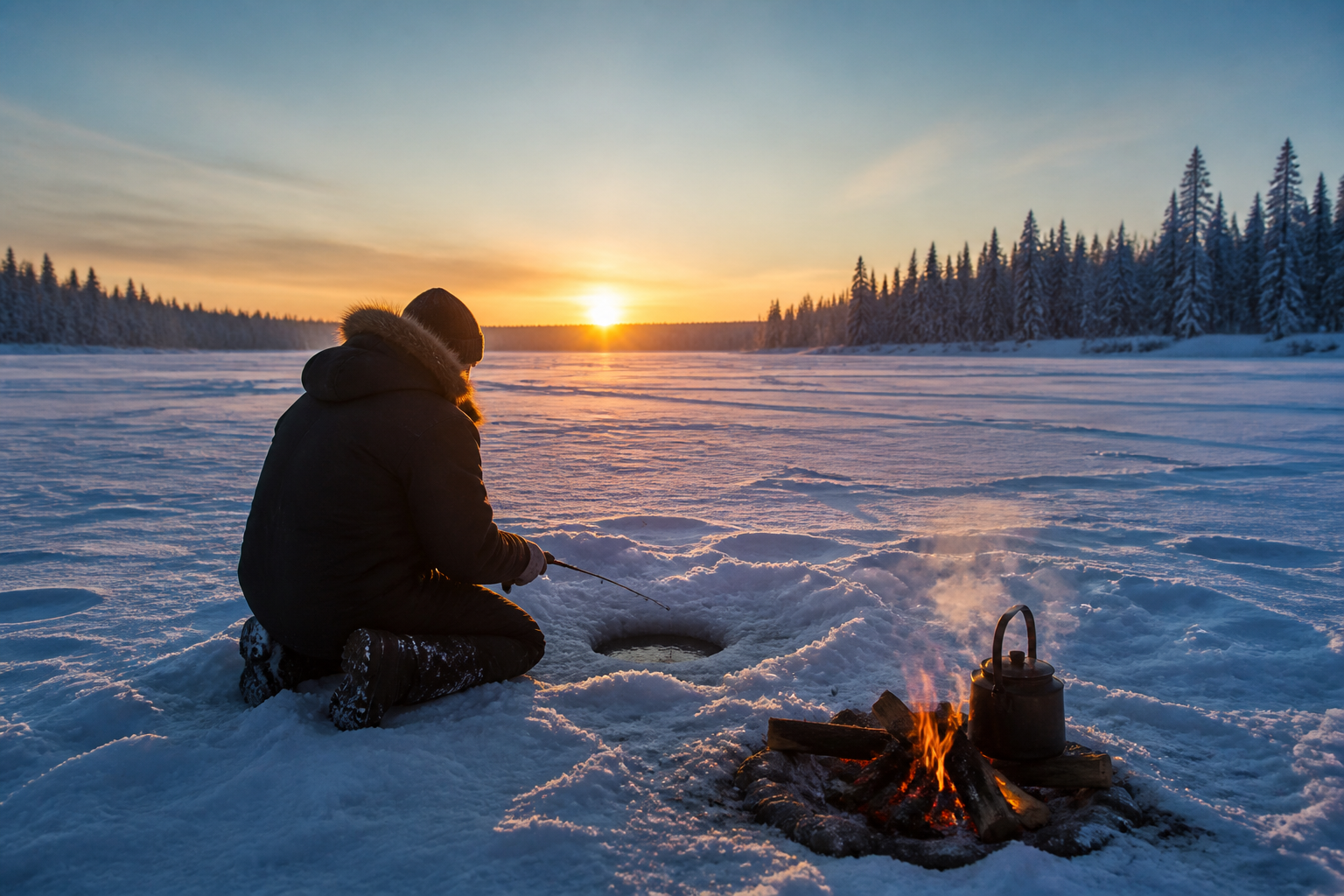
There's a quiet magic to ice fishing in Lapland that you won't find on a husky sled or snowmobile tour. It’s the sound of the wind sweeping across a frozen lake, the crunch of your boots on the snow, and the sudden, electric tug on your line that breaks the profound silence. It's a deep connection to the nature and traditions that define life up here.
For us locals, ice fishing—or pilkki, as we call it—is a favourite winter pastime. It’s part meditation, part hunt, and always an excuse to spend a day outdoors with a flask of hot berry juice. Forget the bustling crowds at the Santa Claus Village for a moment; this is where you’ll find the true, peaceful soul of Lapland.
What's So Special About Ice Fishing, Anyway?
It’s a fair question! You’re sitting on a little stool, staring at a hole in the ice, in the middle of a frozen landscape. But that's precisely the point. Ice fishing isn't just about catching fish. It's about disconnecting from the noise of modern life and tuning into the subtle rhythms of the Arctic.
It’s the satisfaction of drilling your own hole through 50 centimetres (20 inches) of solid ice. It's the moment of awe when you pull a shimmering perch or a beautiful grayling from the dark water into the bright, snowy world. And if you go with a guide, it often ends with your catch sizzling over an open fire minutes later. It’s simple, rewarding, and quintessentially Lappish.
When to Go: The Lapland Ice Fishing Season
Timing is everything. You can't just show up in November and expect to walk on water. The ice needs to be safely thick, which means the prime ice fishing season runs from late January to late April.
- January - February: Deep winter. The days are short, the cold is crisp, and the ice is thick. The fish can be a bit sluggish in the cold water, but the polar night atmosphere is unforgettable. You'll be fishing under ethereal twilight skies.
- March - April: This is our favourite time. The spring sun, or kevät-aurinko, returns with force. The days are long and bright, and the warmth energizes the fish, making them more active and likely to bite. Fishing in a t-shirt on a sunny April day is a classic Lapland experience, but don't forget the sunscreen—the reflection off the snow is intense!
A word of caution: Never, ever go on the ice in early winter (Nov-Dec) or late spring (May) unless you are with a local guide who knows the specific waterbody. Ice thickness can be dangerously unpredictable during these times.
The Gear You Absolutely Need (and What You Can Rent)
Staying warm is rule number one. Rule number two is having the right tools. If you’re on a guided tour, they’ll provide everything. If you’re a seasoned angler going DIY, here’s the checklist.
Clothing (The Layering System is Key):
- Base Layer: Merino wool. It wicks moisture and stays warm even if you sweat a little drilling holes.
- Mid Layer: A thick fleece or a light down jacket. This is your primary insulation.
- Outer Layer: A windproof and waterproof insulated shell (a good ski suit works perfectly). Many tour providers give you a thermal overall, which is fantastic.
- Extremities: This is critical. You need warm, waterproof winter boots, thick wool socks, a warm hat (pipo), and good gloves or mittens. We often bring a lighter pair of gloves for handling the line and a thick pair of mittens to wear over them.
Fishing Gear:
- Ice Auger (Kaira): A hand-cranked drill for making the hole. A standard 15-centimetre (6-inch) diameter is perfect.
- Ice Fishing Rod (Pilkki): These are tiny, simple rods, often just a handle with a sensitive tip to detect bites.
- Jigs and Bait: Small, colourful jigs are the go-to lure. Some are tipped with a natural bait like a maggot or waxworm for extra temptation. For perch, small, bright jigs are king.
- Ice Skimmer: A small ladle with holes to scoop slush and ice out of your hole.
- Stool: A small, portable camp stool will save your back.
Getting Your Permit: The Non-Negotiable Step
This is important, so please pay attention! Unlike some countries, you can't just fish anywhere for free in Finland. The "everyman's right" applies to angling with a simple hook and line in summer, but ice fishing with jigs requires a permit.
There are two main things you need to know:
Fisheries Management Fee (kalastonhoitomaksu): If you are between 18 and 69 years old, you must pay this national fee. It covers general lure fishing (including ice fishing) in most lakes and rivers across Finland. The cost is very reasonable:
- €6 for one day
- €16 for one week
- €47 for the entire year You can buy it easily online from the Finnish Forest Administration's website, Eräluvat.fi. Keep a digital or printed copy with you.
Local Water Permits: Some specific bodies of water, especially those stocked with trout or char, may require an additional local permit. However, for general ice fishing for perch and pike on large, natural lakes, the national fee is often sufficient.
Buddy's Tip: If you book a guided tour, the guide will handle all the necessary permits. It's the easiest and most worry-free way to ensure you're fishing legally.
Our Favourite Lakes for Ice Fishing
Lapland has thousands of lakes. Where you go depends on what you want to catch and how much of an adventure you're up for.
Near Rovaniemi: Norvajärvi or the Kemijoki River: For those staying in Rovaniemi, these are fantastic, accessible options. Norvajärvi is a classic perch lake, perfect for a short trip and a high chance of success. The vast Kemijoki River, which flows through the city, also offers great spots for big pike and perch.
The Giant: Lake Inarijärvi: This is the holy grail. The third-largest lake in Finland, Lake Inari is a vast, wild, and stunningly beautiful inland sea dotted with over 3,000 islands. It’s famous for its beautiful Arctic char (rautu), brown trout, and grayling. It’s a challenging place; its size means you need a local guide to find the hot spots. The reward, however, is fishing in one of Europe's last great wilderness areas.
The Alpine Beauty: Lake Kilpisjärvi: Up in the northwestern "arm" of Finland, Kilpisjärvi offers a completely different landscape. Surrounded by treeless fells, it feels like you're on top of the world. This is prime territory for Arctic char. Due to its remote location and specific conditions, going with a local guide here is almost essential, but unforgettable.
How to Actually Ice Fish: A 5-Step Guide
It looks simple, and it is, but there's a technique to it.
- Drill the Hole: Find a promising spot (your guide will know). Plant the auger, lean into it, and start cranking. It’s a bit of a workout, especially through thick late-winter ice!
- Clear the Slush: Use your ice skimmer to scoop out all the ice chips and slush from the hole, leaving clean, dark water.
- Set the Depth: Drop your jig into the water until you feel it hit the bottom. Reel it up 30-50 cm (1-2 feet). Perch often feed near the lakebed.
- Jig It: This is the pilkki part. Use your wrist to create a small, rhythmic lift-and-drop motion. A sharp flick up, then let the jig flutter back down. This mimics a wounded baitfish and attracts predators.
- Be Patient: Let the jig sit still for a few seconds between jigging patterns. The bite is often a subtle 'tick' or a slight dead weight on the line. When you feel it, give a firm (but not violent) upward tug to set the hook and reel it in!
DIY vs. Guided Tour: An Honest Comparison
This is a major decision for most visitors. Let's break it down honestly.
DIY Ice Fishing:
- Pros: Complete freedom, much cheaper if you have your own gear, immense sense of accomplishment.
- Cons: You need to rent or buy gear, have a car for transport, purchase the correct permits, and—most importantly—have no idea where the fish are. You could spend a cold day catching nothing. Safety is also entirely your responsibility.
- Best for: Experienced anglers who have ice-fished before and are willing to do the research.
Guided Ice Fishing Tour:
- Pros: Everything is included—transport, thermal clothing, all gear, permits, and a guide who knows where the fish are. They teach you the technique and often cook the catch over a fire. It's safe, educational, and has a much higher success rate.
- Cons: It's more expensive. A typical 3-4 hour tour can cost between €90 and €150 per person.
- Best for: First-timers, families, and anyone who wants a guaranteed, hassle-free, and authentic experience.
FAQ: Your Ice Fishing Questions Answered
Q: How cold does it really get out on the ice? A: It can be very cold, easily -15°C to -25°C (-5°F to -13°F). However, with the proper layers and thermal suit provided by tours, you'll be surprisingly comfortable. The lack of wind on a calm day makes a huge difference.
Q: Do I need any previous fishing experience? A: Absolutely not. Ice fishing is one of the most beginner-friendly forms of fishing. A guide will have you set up and fishing in minutes. Your main job is to stay warm and patient.
Q: Can we eat the fish we catch? A: Yes, usually! This is one of the best parts. Most guides will happily cook any suitably sized perch or grayling over an open fire right on the ice. Fresh fish doesn't get any fresher than that.
Q: Is ice fishing safe for children? A: Yes, it’s a great family activity! Kids love drilling the holes (with help) and the excitement of pulling a fish up. Guides are excellent at keeping them engaged and safe. Just make sure they are dressed extra warm.
Q: What is the most common fish to catch? A: By far, the most common catch is the European perch (ahven). They are feisty, beautiful, and delicious when pan-fried in butter. While everyone dreams of a big Arctic char, you should be thrilled with a catch of fresh perch.
Buddy's Take
There are many ways to experience the Lappish winter, but few are as genuine as ice fishing. It’s a day of quiet contemplation punctuated by moments of pure excitement. It’s a skill, a tradition, and a meal all rolled into one. Whether you choose the independence of a DIY trip or the comfort of a guided tour, we promise the experience will stick with you long after the feeling has returned to your toes. So pack your warmest socks, grab a flask of something hot, and come find your moment of peace on the ice. You might just find it's the highlight of your trip to Lapland.
Book your Lapland trip
- 🏨 Stay — Compare hotels, cabins and glass igloos in Lapland
- 🚕 Transfer — Book a fixed-price airport taxi
- 🦌 Do — Browse husky, reindeer and aurora tours
Some links on this page are affiliate links. Booking through them costs you nothing extra and helps keep Lapland Buddy free.
Frequently asked questions
How cold does it really get out on the ice?
It can be very cold, easily -15°C to -25°C (-5°F to -13°F). However, with the proper layers and thermal suit provided by tours, you'll be surprisingly comfortable. The lack of wind on a calm day makes a huge difference.
Do I need any previous fishing experience?
Absolutely not. Ice fishing is one of the most beginner-friendly forms of fishing. A guide will have you set up and fishing in minutes. Your main job is to stay warm and patient.
Can we eat the fish we catch?
Yes, usually! This is one of the best parts. Most guides will happily cook any suitably sized perch or grayling over an open fire right on the ice. Fresh fish doesn't get any fresher than that.
Is ice fishing safe for children?
Yes, it’s a great family activity! Kids love drilling the holes (with help) and the excitement of pulling a fish up. Guides are excellent at keeping them engaged and safe. Just make sure they are dressed extra warm.
What is the most common fish to catch?
By far, the most common catch is the European perch (ahven). They are feisty, beautiful, and delicious when pan-fried in butter. While everyone dreams of a big Arctic char, you should be thrilled with a catch of fresh perch.