Päiväkirja
Lapland Packing List Winter 2026-2027: The Ultimate Guide
Heading to Lapland this winter? Our ultimate packing list breaks down exactly how to layer for Arctic cold, what gear to rent vs. buy, and the common mistakes to avoid.
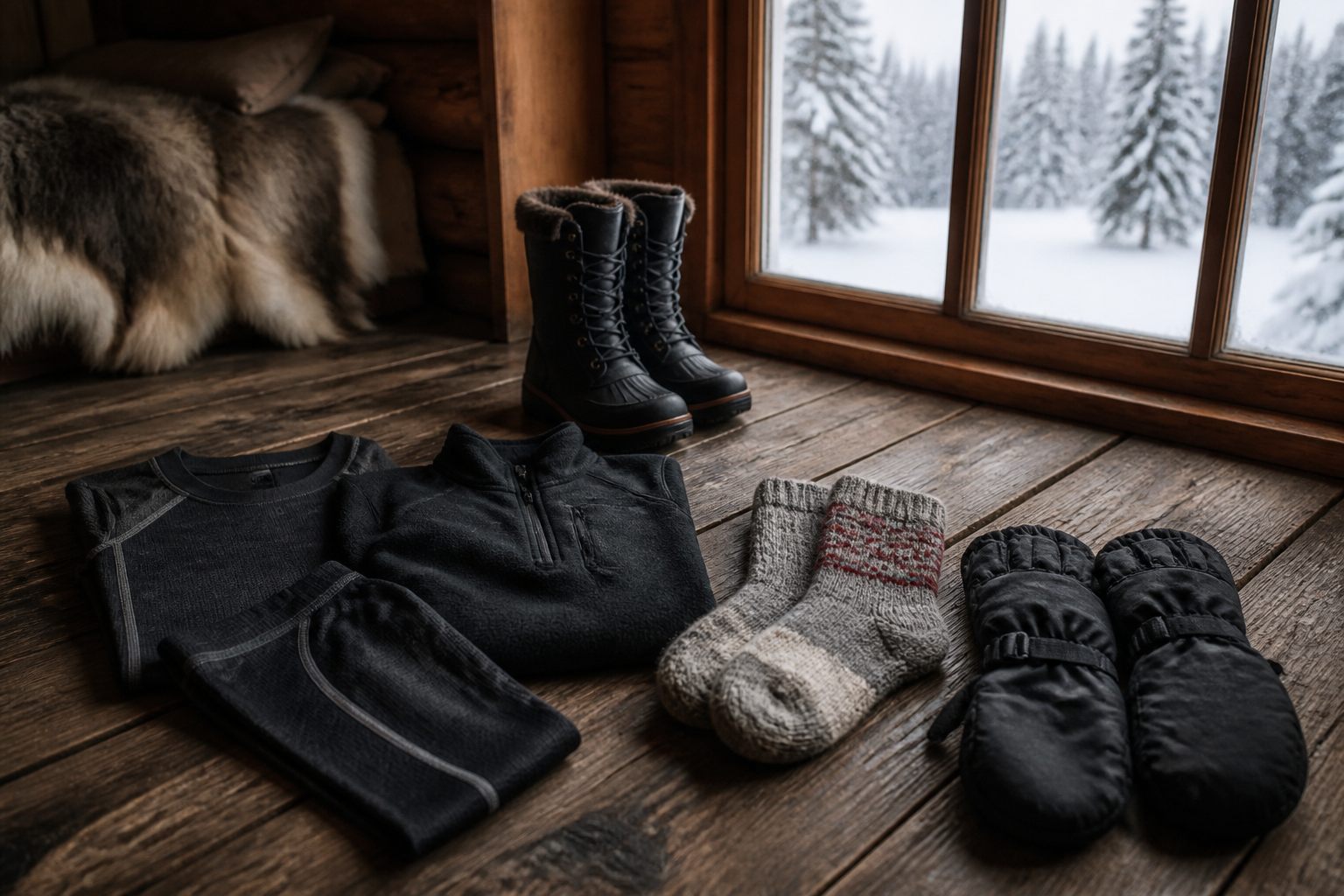
We get it. The thought of packing for a place where temperatures can plummet to -30°C (-22°F) can be more intimidating than facing a grumpy reindeer. You’re dreaming of husky sleds and the Northern Lights, but your mind is stuck on frostbite and a suitcase full of useless clothes. Take a deep breath of that crisp, imaginary Arctic air. We live here, and we’ve got you covered—literally.
Getting your clothing right is the single most important thing you can do to guarantee a magical Lapland adventure. Being warm and dry isn't just about comfort; it's about freedom. It’s the difference between joyfully making snow angels under the stars and shivering in your cabin, missing the magic. This guide is our local secret, the ultimate Lapland packing list for the 2026-2027 winter season, focused on the simple, foolproof art of layering.
The Golden Rule of Arctic Dressing: Layering is Everything
Forget that one gigantic, bulky jacket you think you need. The key to staying warm in the Arctic isn't bulk; it's air. By wearing multiple, thinner layers, you trap air between them, creating a personal insulation system that your body heats up. It’s far more effective and gives you the flexibility to adapt. If you get too warm during a snowshoe hike, you can remove a layer. When you stop to watch for the aurora, you can add it back on.
We live by a simple three-layer system:
- Base Layer: Wicks moisture away from your skin.
- Mid-Layer: Insulates by trapping your body heat.
- Outer Layer: Protects you from wind, snow, and wetness.
Think of it as building a tiny, perfect house for your body. Let's build it together.
Layer 1: The Base Layer (Your Second Skin)
This is your most important layer, sitting directly against your skin. Its only job is to move sweat away from your body to keep you dry. If your skin is wet, you will get cold, no matter what else you're wearing. This is why the material you choose is critical.
- Material: Merino wool is the undisputed champion. It's incredibly warm for its weight, breathes well, and, most importantly, stays warm even when it gets a bit damp. It's also naturally antibacterial, so you can wear it for a few days without it getting smelly. For a more budget-friendly option, look for synthetic base layers made from polypropylene or polyester. The one rule: absolutely no cotton. Cotton is your enemy in the cold; it absorbs sweat like a sponge and pulls heat from your body.
- What to Pack: Plan for one set (long-sleeved top and long-john style bottoms) for every 2-3 days of your trip. You can air them out overnight in your dry, warm accommodation.
Layer 2: The Mid-Layer (The Insulation)
This is your furnace. The mid-layer's job is to trap the warm air your body generates. This is where you have some flexibility based on the temperature and your activity level.
- Material: Fleece is the workhorse of mid-layers. It's warm, durable, quick-drying, and relatively inexpensive. A standard fleece jacket or sweater is perfect. For extra warmth on bitterly cold days, a lightweight, packable down or synthetic-fill jacket (like those from brands like Patagonia or Arc'teryx) is an amazing, versatile piece of kit. It can serve as a super-warm mid-layer or as a standalone jacket for walking around town on a milder day.
- What to Pack: We recommend bringing at least two mid-layers. A medium-weight fleece jacket is a must. A second, lighter fleece or a packable puffy jacket is a fantastic addition for flexibility.
Layer 3: The Outer Layer (Your Arctic Shield)
This is your armour against the elements. It needs to be windproof and waterproof (or at least highly water-resistant). Its main job is to protect the insulating layers underneath from getting wet or being compromised by wind.
- What to Pack: You need one insulated, waterproof winter jacket and one pair of insulated, waterproof winter trousers (often called salopettes or ski pants). Look for jackets with a good hood, and pants that are reinforced at the ankle. Many of the thermal suits provided by activity companies are all-in-one overalls, which are fantastic as they prevent any snow from getting in at the waist.
- Honest Trade-off: This is the most expensive and bulkiest part of your wardrobe. As we'll discuss below, this is the one set of items we almost always recommend renting here in Lapland.
Don't Forget Your Extremities: Hats, Gloves, Socks & Boots
Your core might be toasty, but if your hands and feet are frozen, you'll be miserable. Protecting your extremities is just as important as the three-layer system.
- Head: A warm hat (beanie/toque) made of wool or fleece that fully covers your ears is non-negotiable. For very cold days, especially during activities like a husky safari, a balaclava or a neck gaiter (like a Buff) is a game-changer for protecting your face and neck from windburn.
- Hands: Use a two-glove system. Start with a thin pair of liner gloves (merino or synthetic) that allow you dexterity for using your phone or camera. Over these, wear a pair of thick, insulated, waterproof mittens. Mittens are significantly warmer than gloves because your fingers share warmth.
- Feet & Boots: Your feet are your foundation. Pack thick wool socks—again, no cotton. Bring more pairs than you think you need. Your boots should be waterproof, insulated, and rated for cold temperatures (ideally -30°C or colder). Brands like Sorel or Baffin are excellent. Local Tip: Buy your boots at least a half-size larger than your normal shoe size. This allows room for thick socks and creates a pocket of air that acts as extra insulation. Tight boots restrict blood flow and lead to cold feet.
To Buy or To Rent? A Practical Cost Breakdown (2026 Prices)
This is the million-dollar—or rather, hundred-euro—question. Equipping a whole family with Arctic-grade gear can cost a fortune.
What to Rent: The Outer Layer (thermal suit/overall) and Boots. Nearly every tour operator and resort in places like Rovaniemi, Levi, or Saariselkä offers rental packages. The gear is specifically designed for local conditions, it's incredibly warm, and it saves you a huge amount of money and luggage space. You can also browse Lapland activities to see what gear might be included.
- Cost Analysis: Renting a full set (thermal overall, boots, sometimes outer gloves and a wool hat) typically costs €20-€35 per person, per day. Often, this gear is included free of charge for the duration of a specific activity, like a reindeer sleigh ride or a snowmobile tour.
- Purchase Cost: A quality insulated jacket and pant set can easily cost €400-€900+. Good Arctic-rated boots are another €150-€250.
What to Buy: Your Base Layers, Mid-Layers, and Socks. These items are personal, sit close to your skin, and are much more affordable. You can also use them for any future cold-weather activities. We also strongly recommend buying your own hat, balaclava, and liner gloves.
Our Verdict: For any trip of two weeks or less, renting your outer gear is the smartest, most practical, and most cost-effective choice. Buy your own personal layers for comfort and hygiene.
What NOT to Pack for a Lapland Winter
Packing the right things is only half the battle. Here's what to leave at home.
- Jeans & Cotton: We've said it before, but it bears repeating. Denim and cotton are useless in the cold. They have zero insulating properties and become dangerously cold when wet.
- Fashion Boots / Trainers: Anything that isn't waterproof and insulated (like Uggs, sneakers, or leather dress boots) will be ruined and will leave your feet dangerously cold and wet.
- An Umbrella: It's completely ineffective against wind-driven snow. Your waterproof hood is all you need.
- Too Many 'Normal' Outfits: You'll spend most of your time in your thermal gear. For evenings, one or two cozy sweaters and comfortable trousers are plenty. Lapland is very casual; comfort is king.
Beyond the Layers: Essential Extras
- Skincare: A good lip balm (with SPF, as the sun reflecting off snow is strong) and a heavy-duty face/hand moisturizer are essential. The air is extremely dry.
- Electronics: Cold kills batteries. Bring a portable power bank and keep your phone in an internal pocket close to your body heat.
- Headlamp: In the heart of winter (December-January), daylight is scarce. A headlamp is invaluable, especially if you're staying in a cabin or hunting for the Northern Lights away from city lights.
- Swimsuit: Don't forget it! The Finnish sauna is a national treasure and the perfect way to warm up after a day in the cold. Many hotels and cabins, including the famous Santa Claus Village, have facilities. You can also check hotel availability in Lapland for your trip.
- Hand & Foot Warmers: These little chemical heat packs are inexpensive, light, and can be a real lifesaver for your fingers and toes during long, cold nights spent waiting for the aurora to dance.
Book your Lapland trip
- 🏨 Stay — Compare hotels, cabins and glass igloos in Lapland
- 🦌 Do — Browse husky, reindeer and aurora tours
Some links on this page are affiliate links. Booking through them costs you nothing extra and helps keep Lapland Buddy free.
Usein kysyttyä
How many layers should I wear indoors in Lapland?
You'll be surprised how warm it is inside! Finnish buildings are extremely well-insulated and heated. You will be perfectly comfortable in just your base layer and a light shirt or sweater. The main challenge is quickly delayering when you come inside from the cold.
Are my normal ski clothes good enough for Lapland?
It depends. Standard ski gear is often designed for temperatures around -5°C to -15°C and high-output activity. While your jacket might work as an outer shell, it may not have enough insulation for standing still at -25°C. We strongly recommend renting the local thermal suits, which are warmer and built for Arctic conditions, not just ski resorts.
What do kids need to wear in Lapland?
The same layering principle applies, but it's even more critical for children as they lose heat faster. All-in-one thermal snowsuits are the best option for kids, as they prevent snow from getting in. Always rent the outer gear for them. Mittens are far superior to gloves for keeping small hands warm, and a well-fitting balaclava is essential.
Can I buy winter gear in Lapland if I forget something?
Yes, larger towns like [Rovaniemi](/place/rovaniemi) and resorts like [Levi](/place/levi) have sports and department stores that sell high-quality winter clothing. However, it will be very expensive. It's much more cost-effective to arrive prepared with your personal layers and plan to rent the outer suit. Don't rely on buying essential gear upon arrival.
Do I need special camera gear for the cold?
The main issue is battery life. Cold drains batteries incredibly fast, so bring at least one or two spares and keep them in a warm inner pocket. When bringing a camera from the cold into a warm building, put it in a sealed plastic bag first to let it warm up slowly. This prevents condensation from forming inside the lens and electronics.