Päiväkirja
Driving in Lapland Winter: A 2026-2027 Safety Guide
Thinking of renting a car for your Lapland trip? Our 2026-2027 guide demystifies winter driving, from studded tires to reindeer on the road, so you can explore with confidence.
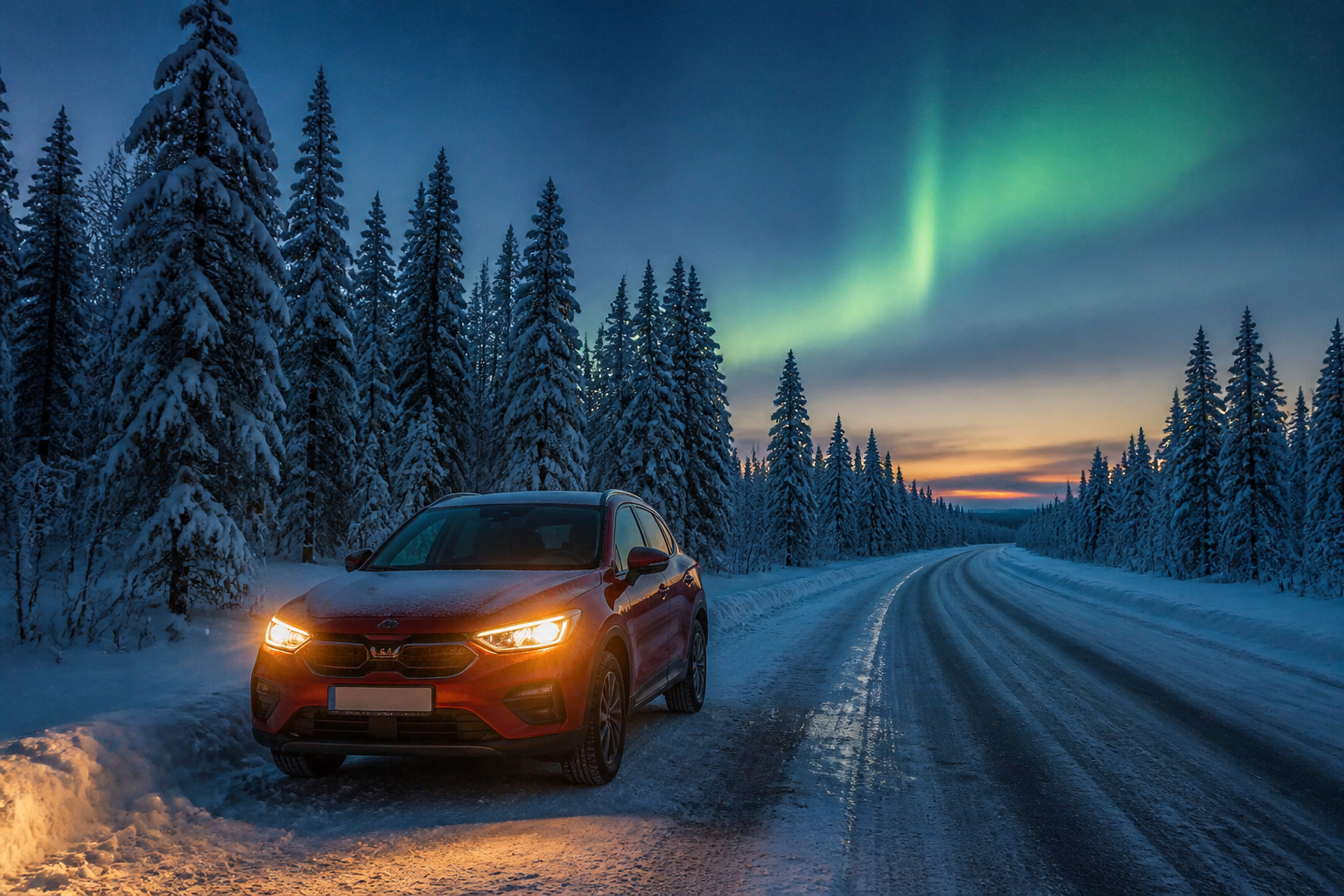
We get it. The idea of driving in a landscape that looks like a scene from Frozen can be intimidating. You see pictures of roads blanketed in white and imagine sliding into a snowbank. It’s one of the biggest questions we hear from travellers planning their own Lapland adventure: is it safe to drive yourself?
Here’s the honest, local answer: yes, it absolutely is. In fact, for those with a spirit of adventure, renting a car is the single best way to experience the magic of Lapland. The freedom to chase the Northern Lights, find a secluded snowy viewpoint, or simply travel on your own schedule is priceless. Our cars and roads are built for this, and with a little knowledge, you'll be navigating our winter wonderland like a local.
Why Rent a Car? The Freedom is Worth It
Organized tours are great, but they operate on a strict schedule. With your own car, you're the master of your itinerary. See a herd of reindeer by the road? You can pull over safely and watch. Is the aurora forecast suddenly amazing? You can drive away from the city lights of Rovaniemi to a dark sky spot without waiting for a tour bus. You can explore the vast, quiet landscapes between hubs like Levi and Ylläs, areas that most visitors never see.
A car transforms your trip from a checklist of activities into a true exploration. It allows you to stay in a cozy, remote cabin, do your own grocery shopping (a great way to save money!), and experience the immense, peaceful silence of the Arctic on your own terms. Trust us, the freedom far outweighs the initial nerves.
Your Secret Weapon: Understanding Studded Tires
Let's talk about the single most important piece of technology for winter driving: studded tires. You might have heard of winter tires, but these are a step beyond. Studded tires have small metal pins embedded in the tread that act like tiny claws, gripping into ice and hard-packed snow with incredible traction.
By law in Finland, cars must use winter tires from December 1st to the end of February, but in Lapland, the season is much longer. Any car you rent between October and April will, without question, come equipped with studded tires. It's not an optional extra; it's standard. When you first drive, you'll hear a slight crunching or clicking sound on clear asphalt—that's the studs doing their job. On snow and ice, they provide a feeling of control that is deeply reassuring. You don't need to be a rally driver; the tires do most of the work for you.
The Engine Block Heater: Your Car's Winter Coat
When you park your rental car at your hotel or cabin, you'll notice a strange-looking electrical outlet on a post nearby. In the trunk or passenger footwell of your car, you'll find a thick black cable. This is for the engine block heater, and it's essential when temperatures drop below -15°C (5°F).
Extreme cold makes engine oil thick like honey, making it very difficult for the car to start. The block heater is a simple heating element that warms the engine and its fluids. About 1-2 hours before you plan to drive, you just plug the cable from the front of your car (there's a small flap on the grille) into the power post. Most posts have a timer dial you can set. It’s a simple, routine part of our daily life in winter, and it ensures your car will start reliably, even on the coldest morning.
Navigating the Roads: Speed Limits and Conditions
Lapland’s main roads, like the E75 that runs north from Rovaniemi past Saariselkä, are extremely well-maintained. Plows run constantly. However, they don't plow them down to bare asphalt. A layer of hard-packed, grippy snow is left on the surface, which is the perfect texture for studded tires.
One thing to be aware of is that winter speed limits are reduced. On major highways where the summer limit is 100 km/h, the winter limit is typically 80 km/h. This is for your safety. Your number one rule should be to drive to the conditions. If snow is blowing and visibility is low (a 'whiteout'), slow down. Leave a much larger gap than you normally would between you and the car in front. The goal isn't to get there fast; it's to get there safely while enjoying the incredible scenery.
The Reindeer Hazard: How to Drive Safely Around Our Furry Friends
This is not a myth; it's a genuine, everyday hazard in Lapland. Reindeer are semi-wild and roam freely. They are not scared of cars and will often cross the road or even just stand in the middle of it. They are particularly active at dusk and dawn and can be very difficult to see against a snowy backdrop.
You'll see yellow, diamond-shaped reindeer warning signs everywhere. When you see one, stay alert. The most important rule: if you see one reindeer, slow right down, because there are almost certainly more nearby. They travel in herds. A collision can be dangerous for you and fatal for the animal, not to mention damaging to your rental car. Drive defensively, scan the sides of the road, and give them the respect they deserve.
Choosing Your Rental Car & Understanding 2026 Insurance
Most major rental companies (Hertz, Avis, Sixt, Europcar) have desks at the main Lapland airports like Rovaniemi (RKV) and Kittilä (KTT). While a standard 2WD car like a VW Golf is perfectly fine for main roads, we often recommend a small or mid-size SUV (like a Toyota RAV4 or similar). The extra ground clearance can be helpful in deeper snow, and the higher driving position improves visibility.
Now, for the important part: insurance. The standard Collision Damage Waiver (CDW) included with your rental will have a high excess (deductible). This is the amount you have to pay out-of-pocket if there's damage, and it can be anywhere from €1,000 to €2,500. Given the unique risks like ice and reindeer, we strongly recommend purchasing the rental company's top-tier, zero-excess insurance. It might add €25-€35 per day to your rental cost, but it buys you complete peace of mind. Knowing that a cracked windshield from a kicked-up stone or a fender-bender on ice won't cost you €2,000 makes the entire trip more relaxing.
Your Pre-Drive Rental Car Checklist
Before you drive away from the rental agency, do this quick 5-minute check. It will save you potential headaches later.
- [✓] Confirm Studded Tires: Physically look at the tires. You should see the little metal studs. (For rentals between late October and April).
- [✓] Locate the Essentials: Find the ice scraper and snow brush. It must be included. Also, locate the engine block heater cable (usually in a bag in the trunk).
- [✓] Check Washer Fluid: Ask the agent to confirm the windshield washer fluid is a winter blend that won't freeze. It should be.
- [✓] Document Condition: Do a slow walk around the car and take photos/videos of any existing scratches or dings on your phone. This protects you from being blamed for pre-existing damage.
- [✓] Learn the Comforts: Take a second to find the controls for heated seats, the heated steering wheel (a true luxury!), and the front/rear defrosters. You'll be glad you did!
Frequently Asked Questions
Q: Do I need a 4x4 (four-wheel drive) car in Lapland? A: It's a nice-to-have but not essential. Studded tires on a standard front-wheel-drive car provide excellent traction for 99% of the driving you'll do on main roads and to popular attractions. A 4x4 primarily helps when accelerating from a stop in deep snow or if you get stuck, but it doesn't help you brake faster. Good tires and sensible speeds are more important.
Q: What happens if I hit a reindeer? A: Firstly, pull over to a safe spot and turn on your hazard lights. You are legally required to report any accident involving a reindeer to the Finnish emergency number, 112. They will handle the situation from there. Do not approach an injured animal. This is also where having zero-excess insurance is crucial, as you can then report the damage to your rental company without financial stress.
Q: Is an International Driving Permit (IDP) required in Finland? A: For most visitors with a license issued in a Latin alphabet (e.g., UK, USA, Canada, Australia, EU countries), your home country's license is sufficient for renting a car. However, an IDP is an official translation and is never a bad idea to carry for extra peace of mind. Always check the specific rules for your country before you travel.
Q: Can I rent a car in Rovaniemi and drop it off in Ivalo? A: Yes, one-way car rental in Lapland is very common and a great way to structure a road trip through Lapland. You can fly into Rovaniemi and fly out of Ivalo (the airport for the Saariselkä area), or vice-versa. Expect to pay a one-way drop-off fee, which typically ranges from €100 to €250, so be sure to budget for it.
Q: Are there electric cars for rent in Lapland in winter? A: Availability is increasing, but we advise caution for a winter road trip. Extreme cold can reduce an EV's battery range by 30-40%. While charging stations are being added along main routes, they can be sparse in more remote areas. For a first-time winter visitor, we believe a petrol, diesel, or hybrid vehicle currently offers a more predictable and worry-free experience.
Buddy's Take
Look, we live here. We drive these roads from October to April, taking our kids to school, going to the grocery store, and heading out into the forest. It's normal for us, and it can be normal for you, too. Driving in Lapland in Winter isn't just about getting from A to B; it's part of the Arctic experience. The sight of the sun rising over a silent, snow-covered forest is something you'll only get from behind the wheel. So please, don't let fear hold you back. Rent the car, get the full insurance, take it slow, and unlock a layer of Lapland that will stay with you forever. You're about to have the road trip of a lifetime. For official information about traffic safety in Finland, you can consult Traficom. If you're looking for more general tourism information for the region, Visit Finland provides excellent resources.
Usein kysyttyä
Do I need a 4x4 (four-wheel drive) car in Lapland?
It's a nice-to-have but not essential. Studded tires on a standard front-wheel-drive car provide excellent traction for 99% of the driving you'll do on main roads and to popular attractions. A 4x4 primarily helps when accelerating from a stop in deep snow or if you get stuck, but it doesn't help you brake faster. Good tires and sensible speeds are more important.
What happens if I hit a reindeer?
Firstly, pull over to a safe spot and turn on your hazard lights. You are legally required to report any accident involving a reindeer to the Finnish emergency number, 112. They will handle the situation from there. Do not approach an injured animal. This is also where having zero-excess insurance is crucial, as you can then report the damage to your rental company without financial stress.
Is an International Driving Permit (IDP) required in Finland?
For most visitors with a license issued in a Latin alphabet (e.g., UK, USA, Canada, Australia, EU countries), your home country's license is sufficient for renting a car. However, an IDP is an official translation and is never a bad idea to carry for extra peace of mind. Always check the specific rules for your country before you travel.
Can I rent a car in Rovaniemi and drop it off in Ivalo?
Yes, one-way rentals are very common and a great way to structure a road trip through Lapland. You can fly into Rovaniemi and fly out of Ivalo (the airport for the Saariselkä area), or vice-versa. Expect to pay a one-way drop-off fee, which typically ranges from €100 to €250, so be sure to budget for it.
Are there electric cars for rent in Lapland in winter?
Availability is increasing, but we advise caution for a winter road trip. Extreme cold can reduce an EV's battery range by 30-40%. While charging stations are being added along main routes, they can be sparse in more remote areas. For a first-time winter visitor, we believe a petrol, diesel, or hybrid vehicle currently offers a more predictable and worry-free experience.