Päiväkirja
Best Time to See Northern Lights in Lapland (2026-2027)
Forget the myths—we're sharing our local, data-driven secrets for the absolute best time to see the Northern Lights in Finnish Lapland.
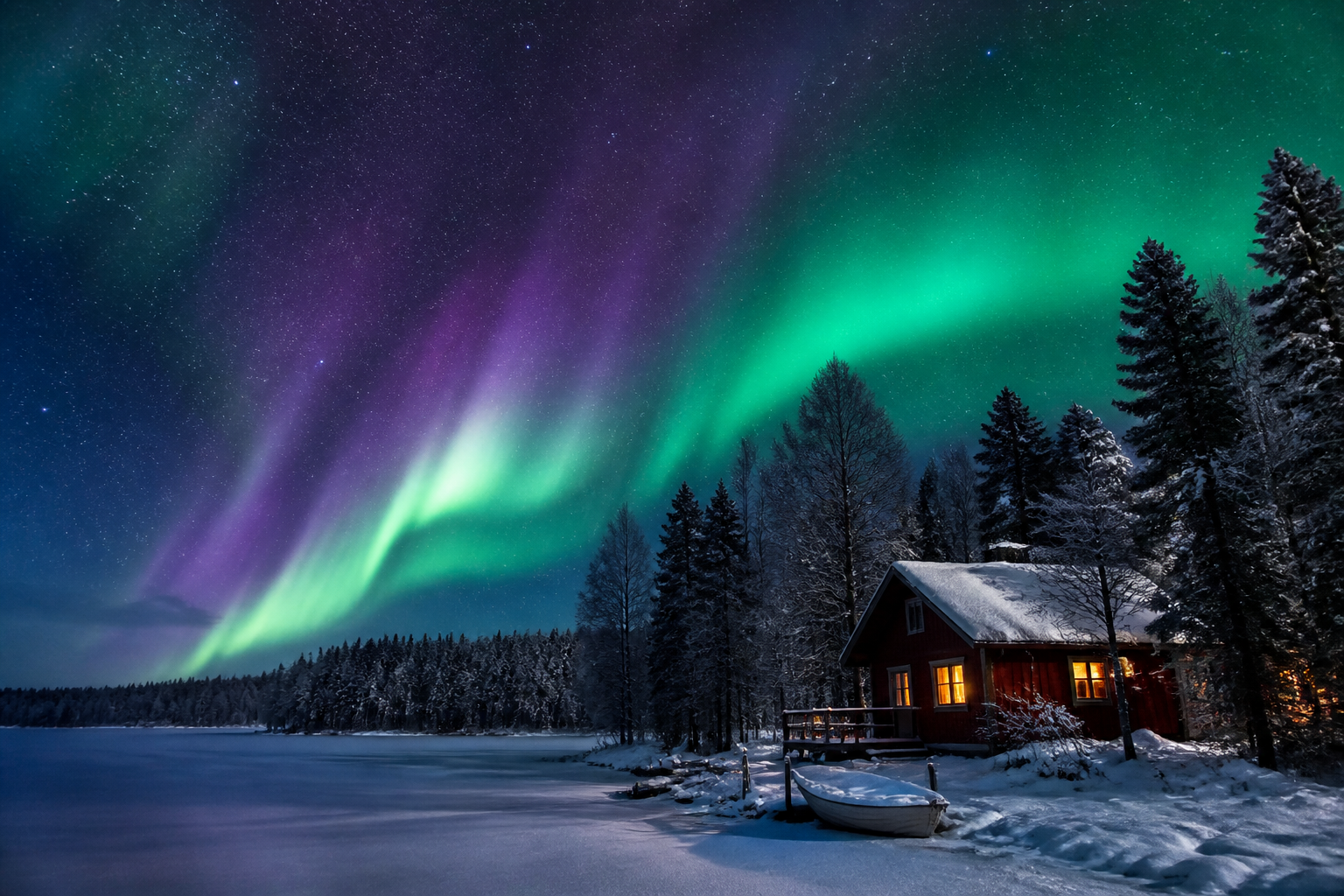
Here in Lapland, we have a special relationship with the revontulet, the 'fox fires' you know as the Northern Lights. We’ve seen them countless times, yet the moment that green glow begins to dance across the sky, everything stops. It’s a primal, breathtaking experience that no photo can truly capture, but we want to help you try.
So many visitors arrive in the heart of winter expecting a nightly celestial show, only to be met with cloudy skies. That's why we’ve put together this honest, practical guide. Forget the generic advice. We're diving into the data, the local secrets, and the real-world tips to give you the best possible chance of witnessing the aurora during your 2026-2027 trip.
When is the Absolute Best Time to See the Northern Lights in Lapland?
Let's get straight to it. While the Northern Lights are technically active from late August to early April, the statistically best months are September/October and March. This surprises many people who assume the darkest winter months of December and January are superior.
The reason is science. Around the autumn and spring equinoxes, the Earth's magnetic field is oriented in a way that makes it more receptive to solar winds. This can lead to more frequent and intense geomagnetic storms, which are the engine of the aurora. In our experience, the shows in September and March are often more dynamic and colourful.
- September/October: The landscape isn't yet buried in snow, and the lakes are often unfrozen. This means you can capture incredible photos of the aurora reflecting in the dark, still water. The temperatures are also milder, ranging from +5°C to -5°C, making the long waits more comfortable. The downside? No classic snowy Lapland activities.
- March: This is our favourite. You get the benefit of the spring equinox's increased solar activity plus a deep, reliable snowpack for all the winter fun. The days are getting longer and sunnier, but the nights are still long and dark. It’s the best of both worlds, though temperatures can still drop to a brisk -15°C or lower.
Debunking the Myth: Why December & January Aren't Always the Best
We know, this goes against most travel brochures. December and January are the most popular months for visiting Lapland, thanks to the festive season around Santa Claus Village and the magical kaamos (polar night), where the sun doesn't rise above the horizon.
The darkness is indeed a huge plus—you can theoretically see the lights any time of day if they're active. However, these months are statistically the cloudiest in Finnish Lapland. Nothing is more frustrating for an aurora chaser than seeing alerts for a massive solar storm on their app, only to have a thick blanket of clouds blocking the view. If your trip is short, you're rolling the dice on the weather. Don't get us wrong, a snowy December trip is magical, but if the aurora is your #1 priority, you're statistically better off targeting the equinox months.
Location, Location, Location: Where to Go for Dark Skies
Light pollution is the aurora's worst enemy. Even a small town's glow can wash out a faint display. While staying in a city like Rovaniemi is convenient, you absolutely must get out of the city centre for a proper viewing experience. You can also check hotel availability in Lapland to plan your stay.
Here’s our breakdown of where to go:
- Near Rovaniemi: The top of Ounasvaara hill is a decent, accessible spot. For truly dark skies, you need to drive at least 15-20 minutes out of town. The shores of the Kemijoki river, away from streetlights, are a good option. Many guided tours from Rovaniemi have secret spots they use.
- Levi/Ylläs: These popular ski resorts are smaller than Rovaniemi, so it's easier to escape the lights. In Levi Ski Resort, simply walking to the edge of the village or taking a short taxi ride towards a frozen lake can be enough. Ylläs is even more spread out, making it fantastic for finding dark corners. If you're wondering which resort is best, check out our guide on Ylläs vs Levi.
- The Far North (Inari, Utsjoki, Kilpisjärvi): This is the premier league of aurora chasing in Finland. The region of Inari-Saariselkä is sparsely populated and lies directly under the auroral oval. Here, on a clear night, your chances are as high as they get—some say 3 out of 4 nights. The trade-off is that these locations are more remote and require more travel time and planning. For a complete guide to this incredible destination, see our Inari Finland: Your 2026-2027 Guide to the Far North. If you're weighing your options for this incredible destination, our guide on Inari vs Saariselkä: Which to Choose in 2026-2027? can help you decide.
Understanding the Aurora Forecast: Your Essential Apps
Don't just stand outside and hope. We use forecasting apps to decide if it's worth gearing up for a long, cold night. Sitting in a warm cabin is much better than freezing for no reason!
Download an app like My Aurora Forecast & Alerts before your trip. Here’s what to look at:
- Kp-index: This is the most famous metric. It’s a scale from 0 to 9 that measures global geomagnetic activity. In Northern Lapland, a Kp of 2-3 can be visible. A Kp of 4+ can be spectacular. But don't fixate on it! A low Kp with good local conditions can still produce a beautiful show.
- Bz Component: This is the pro tip. It’s a measure of the solar wind's magnetic field direction. If the Bz is pointing south (a negative number), it's like opening a door for solar particles to enter our atmosphere. A strong, negative Bz is a fantastic sign, even if the Kp is low.
- Cloud Cover Forecast: The most important short-term factor. Your app should have a cloud map. Look for openings. Sometimes driving 30km east or west is the difference between seeing everything and seeing nothing.
How We Chase the Lights: DIY vs. Guided Tours
Should you go it alone or book a tour? Both have their merits.
DIY Aurora Hunt:
- Pros: Total freedom. You can stay out as long as you want and go wherever you please. It's also much cheaper if you have a rental car.
- Cons: You're responsible for everything—monitoring forecasts, finding a safe, dark place to park, and navigating icy roads in the dark. It can be stressful if you're not used to winter driving.
Guided Aurora Tour:
- Pros: The guides are experts. They spend every day monitoring space weather and local cloud patterns. They know the best, most secluded spots and will often drive long distances to find a clear patch of sky. They provide thermal overalls, hot drinks, and snacks, which makes a huge difference. You can just relax and enjoy the show.
- Cons: The cost. Expect to pay between €95 and €160 per person for a 3-4 hour minibus tour. Specialist tours (like snowmobile or photography tours) can be more. You're also on their schedule.
For a first-timer, we highly recommend a guided tour on your first night to get your bearings. If you're flying into Rovaniemi, you might want to book an airport transfer for ease.
Gearing Up: What to Wear for a Night Under the Stars
This is not an exaggeration: being cold will ruin your experience faster than anything else. You will be standing still for long periods in sub-zero temperatures. Layering is non-negotiable.
- Base Layer: Merino wool thermals (top and bottom). Avoid cotton at all costs, as it holds sweat and makes you cold.
- Mid Layer: A fleece jacket or a light down vest. This traps your body heat.
- Outer Layer: A high-quality, insulated and windproof winter jacket and trousers (ski pants are great).
- Feet: Wool socks (two pairs if needed) and insulated, waterproof winter boots with room for your toes to wiggle.
- Hands & Head: A warm hat (beanie/pipo) that covers your ears is essential. For hands, we swear by mittens over gloves. They keep your fingers together and much warmer. Hand warmers are a cheap and brilliant accessory.
Check out our full guide on what to pack for a Lapland winter for more details.
Capturing the Magic: Basic Camera Settings for Aurora Photography
Seeing your first aurora photo appear on your camera screen is a thrill. Modern smartphones with night mode can get surprisingly good results, but for the best shots, a DSLR or mirrorless camera is key.
Here are your starting settings. You will need to adjust them based on the brightness of the aurora.
- Must-Have: A sturdy tripod. You cannot do this handheld.
- Mode: Manual (M).
- Lens: As wide as possible (e.g., 14-24mm).
- Aperture: As wide as your lens allows (e.g., f/1.8, f/2.8, f/4). This lets in the most light.
- Shutter Speed: Start with 10 seconds. For a fast-moving aurora, you might drop to 3-5 seconds to capture the texture. For a faint, slow aurora, you might need 15-25 seconds.
- ISO: Start at 1600. If your picture is too dark, increase it to 3200. Try not to go much higher or the photo will become grainy.
- Focus: Set your lens to manual focus and focus on a very distant star or light. This is the hardest part. Many photographers find infinity on their lens, then pull back just a tiny bit.
Pro tip: Bring a spare battery and keep it in a warm inside pocket. The cold drains batteries incredibly fast.
Buddy's Take
Chasing the Northern Lights is an adventure, not a guarantee. It's a mix of science, patience, and a healthy dose of luck. Some people see them on their first night; others try for a week with no success. Our best advice is to embrace the whole experience. Plan a trip filled with other wonderful Lapland activities—husky sledding, meeting reindeer, enjoying a smoky sauna—and think of the aurora as the most incredible bonus imaginable. When you finally see that green ribbon unfurl across the Arctic sky, all the planning and waiting will melt away. It's a moment of pure magic, and we hope you get to experience it.
Book your Lapland trip
- 🏨 Stay — Compare hotels, cabins and glass igloos in Lapland
- 🚕 Transfer — Book a fixed-price airport taxi
- 🚗 Drive — Compare rental cars for Lapland winter roads
Some links on this page are affiliate links. Booking through them costs you nothing extra and helps keep Lapland Buddy free.
Usein kysyttyä
What is the KP-index and how important is it?
The Kp-index measures global geomagnetic activity on a scale of 0-9. While a higher Kp (3+) increases your chances of a good show, it's not the only factor. We've seen beautiful lights with a Kp of 2 when local conditions and other solar wind data (like a strong negative Bz) are favorable. Don't cancel your hunt just because the Kp is low!
Can I see the Northern Lights from Rovaniemi?
It is possible, but not ideal. The city lights of [Rovaniemi](/place/rovaniemi) create significant light pollution that washes out all but the most intense auroras. For the best experience, you need to travel at least 15-20 minutes outside the city to find a dark location, like a frozen lake or riverbank.
Is a full moon bad for seeing the aurora?
A full moon acts like a giant, natural light polluter. It can make the sky brighter and wash out fainter auroras. However, a very strong aurora will still be visible. The moon can also beautifully illuminate the snowy landscape for your photos. We wouldn't cancel a trip because of a full moon, but a new moon phase is definitely a bonus.
How long do the Northern Lights usually last?
It varies wildly. A substorm can appear, dance intensely for 10-20 minutes, and then fade away completely. Other times, a faint green arc might linger in the sky for hours. The best displays often come in waves. If you see them fade, don't leave immediately—wait another 30-60 minutes to see if another wave comes through.
What are my chances of seeing the lights in a 3-night trip?
It heavily depends on your location, the time of year, and luck with the weather. In northernmost Lapland (like Inari or Utsjoki) during March or September, your chances are quite high, perhaps 60-75% if you have clear skies. In Rovaniemi in December, your chances are lower due to higher cloud cover. A week-long trip significantly improves your odds.