Päiväkirja
Saana Hike Guide 2026: How to Hike Finland's Icon
Ready to conquer one of Finland's most iconic fells? Our local's guide to the Saana hike has everything you need for an unforgettable Lapland adventure.
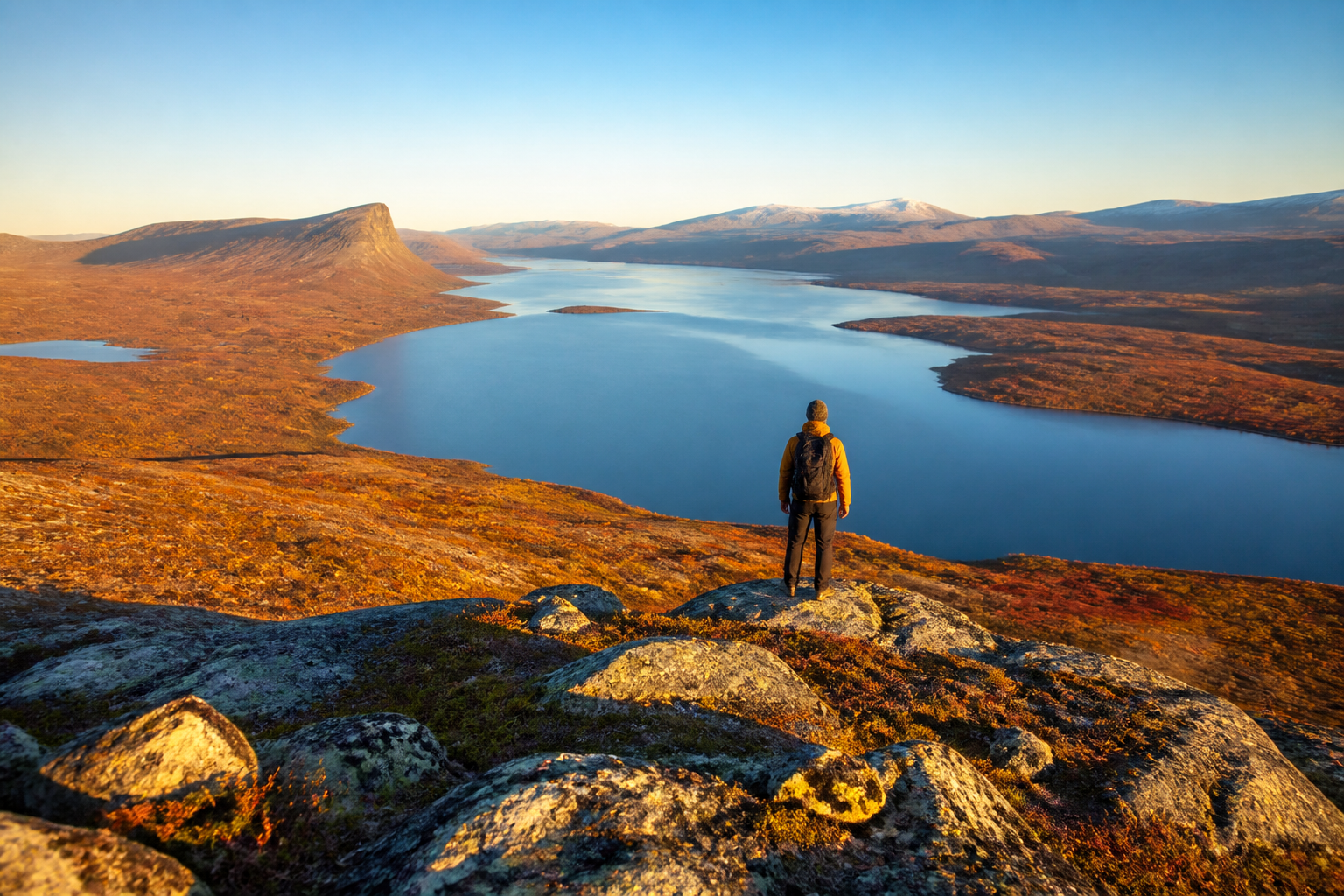
The first time you drive into the village of Kilpisjärvi, you can't miss it. Rising from the shore of the vast lake like a giant sleeping beast, Saana fell dominates the horizon. Its shape is so distinct, so unlike any other fell in Lapland, that it feels less like a part of the landscape and more like a deliberate landmark placed there by ancient gods.
For us locals, Saana (Sámi: Sána) is more than just a mountain; it's a sacred site, a weather vane, and a constant, reassuring presence. Hiking to its summit is a rite of passage, a journey that rewards every drop of sweat with some of the most breathtaking views in all of Finland. This isn't just another walk in the park—it's an experience that connects you to the very heart of the Arctic. So, lace up your boots. We're going to guide you, step-by-step, to the top.
What Makes the Saana Hike So Special?
Saana stands at 1,029 meters (3,376 feet) above sea level, but its true magic isn't just in its height. It’s one of the most culturally and biologically significant fells in Finland. The Sámi have considered it a sacred place for centuries, a powerful link between the human and spirit worlds. When you walk this trail, you're treading on ancient ground.
Geologically, it's a marvel. Part of the Scandinavian Mountains, its composition is older and different from most of Finland, which is why it stands out so dramatically. From the summit, your gaze sweeps across the deep blue of Lake Kilpisjärvi, over to the mountains of Sweden and Norway. You're in the Käsivarsi Wilderness Area, Finland's 'arm,' a remote and wild corner of Lapland. The sheer scale of the Arctic tundra unfolds beneath you, a humbling and unforgettable sight.
Choosing the Right Season: Summer vs. Autumn
Timing your Saana hike is crucial for the best experience. While you can technically visit year-round, the main hiking season is from June to October.
Summer (June – early August): This is the season of the Midnight Sun. You can hike at any hour of the day or night, bathed in a soft, ethereal light. The trail is lush and green, with hardy arctic flowers dotting the landscape. The main trade-off? Mosquitos. They can be relentless, especially in the birch forest at the start of the trail. Be prepared with good repellent.
Autumn (late August – September): This is our favourite time. The mosquitos have vanished, and the landscape explodes into ruska—the Finnish term for autumn foliage. The tundra floor turns into a tapestry of fiery reds, deep oranges, and brilliant yellows. The air is crisp and clean. The first snows might dust the summit in late September, adding another layer of beauty. The only downside is shorter days, so plan to start your hike in the morning.
Winter hiking on Saana is only for experienced arctic adventurers with proper snowshoes or skis, avalanche safety gear, and knowledge of the conditions. The trail is not maintained and can be dangerous.
The Saana Trail: A Step-by-Step Guide
The main trail is an 8-kilometre (5-mile) round trip. While not long, the elevation gain makes it a solid workout. Expect it to take between 3 and 5 hours, depending on your fitness and how long you linger at the top.
Starting Point: The trail begins from a large, free parking area just off the main E8 road, north of the Kilpisjärvi village centre. It's well-signposted.
Phase 1: The Birch Forest Walkway The first kilometre is a gentle start. You'll walk on duckboards and a gravel path through a beautiful, gnarled mountain birch forest. This part is relatively flat and allows you to warm up your legs before the real work begins.
Phase 2: Conquering the Stairs of Saana This is what Saana is famous for. After the forest, the ascent begins with a formidable set of stone stairs. To protect the fragile tundra from erosion, Nepalese Sherpas were hired to build these incredible steps. There are around 780 of them, and they are steep. This is the most physically demanding part of the hike. Take your time, catch your breath, and turn around to admire the view as you climb. It gets better with every step.
Phase 3: The Rocky Plateau to the Summit Once you conquer the stairs, you'll reach a wide, rocky plateau. The trail is less defined here but marked with orange-topped poles. The gradient eases significantly, becoming a steady but manageable walk over scree and ancient rock. The wind often picks up here, so this is a good place to pull on that windproof jacket. The summit is marked by a large cairn and a mailbox containing the summit logbook. Sign your name and take a moment—you've earned it.
How Difficult is the Saana Hike, Really?
We would classify the Saana hike as moderately challenging. You don't need any technical climbing skills, but a good level of general fitness is required. The main challenge is the sustained cardio workout of the stone stairs.
Anyone who can comfortably walk up several flights of stairs and handle uneven, rocky terrain can complete this hike. We've seen active families with children (we'd recommend 8 years and up) and retirees in their 70s make it to the top. The key is to go at your own pace.
The honest trade-off is this: you will sweat, your legs might ache, and you'll probably question your life choices halfway up the stairs. But the feeling of accomplishment and the 360-degree panorama from the summit makes it worth it ten times over. It’s a challenge with a world-class reward.
What to Pack: Your Essential Saana Checklist
The weather in the fells can change in an instant. Proper gear isn't just for comfort; it's for safety.
- Footwear: Sturdy hiking boots with good ankle support are non-negotiable. The terrain is rocky and uneven. Do not attempt this in trainers.
- Clothing: Dress in layers. A moisture-wicking base layer, a fleece mid-layer, and a waterproof/windproof shell jacket. Even on a sunny day, the summit can be cold and windy.
- Water: Bring at least 1.5 litres of water per person. There is no water source on the trail.
- Snacks: High-energy snacks are a must. We always pack Finnish chocolate (Fazerin Sininen!), nuts, and a small sandwich.
- Navigation: While the trail is well-marked, a map and compass (or a GPS app on your fully charged phone) is always a good idea.
- Safety: A small first-aid kit with blister plasters is wise. Let someone know your hiking plan and estimated return time.
- Extras: A camera, sunglasses, a warm hat, and gloves (even in summer). And in June/July, a bottle of the strongest mosquito repellent you can find.
Local Tip: Hike Saana Under the Midnight Sun
For a truly magical Lapland experience, hike Saana at night during the Midnight Sun period (from late May to late July). Starting your hike around 9 PM means you’ll have the trail almost to yourself. The golden, perpetual twilight casts an otherworldly glow on the landscape.
Watching the 'sun' hover above the Norwegian mountains from the summit at 1 AM is a core memory you'll never forget. It’s quiet, peaceful, and profoundly beautiful. Just remember to pack extra warm layers, as temperatures drop even when the sun is out, and tell someone where you're going.
Beyond Saana: Combine Your Hike with Other Adventures
Kilpisjärvi is the adventure capital of 'Lapland's arm,' and the Saana hike is just the beginning.
- Three-Country Cairn: After conquering Saana, take the M/S Malla boat across Lake Kilpisjärvi and take the short 3km walk to the point where Finland, Sweden, and Norway meet. It's the most peaceful border crossing in the world.
- Malla Strict Nature Reserve: This is Finland's oldest nature reserve, and the trail to the Three-Country Cairn passes right through it. It's known for its unique flora and the beautiful Kitsiputous Falls.
- Santa Claus Village: While it's a long drive away in Rovaniemi, many visitors combine a far-north adventure with a stop to see the man himself on their way up or down.
Costs, Parking, and Facilities (2026 Prices)
One of the best things about hiking in Finland is our 'everyman's right' (jokamiehenoikeudet), which guarantees free access to nature.
- Cost: The hike is completely free. There are no entrance fees or permits required for the Saana trail.
- Parking: There is a large, free parking lot at the trailhead. It can get busy during the peak weeks of July, but you can usually find a spot.
- Facilities: You'll find toilets and information at the Kilpisjärvi Nature Centre (Luontokeskus), located a short drive south of the trailhead. There are no toilets or water points on the trail itself. Please pack out everything you pack in and leave no trace.
Usein kysyttyä
How long does the Saana hike take?
The 8 km (5 mile) round trip usually takes between 3 to 5 hours. This includes time for breaks and enjoying the view from the summit. Your exact time will depend on your fitness level and pace.
Is the Saana hike suitable for children?
Yes, for active children who are used to walking, we'd say from about 8 years old. The main challenge is the long set of stone stairs, which can be tiring for little legs. It's not suitable for strollers or very young children.
Do I need special gear to hike Saana in summer?
You don't need technical climbing equipment. However, sturdy hiking boots with ankle support are essential due to the rocky and uneven terrain. We also strongly recommend windproof/waterproof clothing, as weather can change rapidly.
When is the best month to hike Saana?
For the best balance of good weather, amazing colours, and no mosquitos, we recommend late August to mid-September. This is the 'ruska' or autumn foliage season, and it's absolutely spectacular.
Can you see the Northern Lights from Saana?
Yes, it's an incredible spot for watching the Aurora Borealis from late August onwards. However, hiking the trail in the dark is dangerous and only recommended for experienced hikers with powerful headlamps and knowledge of the terrain.