Päiväkirja
Pyhä-Luosto National Park: A Hiker's Ultimate Guide
From sacred gorges to ancient forests, our local's guide reveals the best hikes, wilderness huts, and practical tips for exploring Pyhä-Luosto National Park.
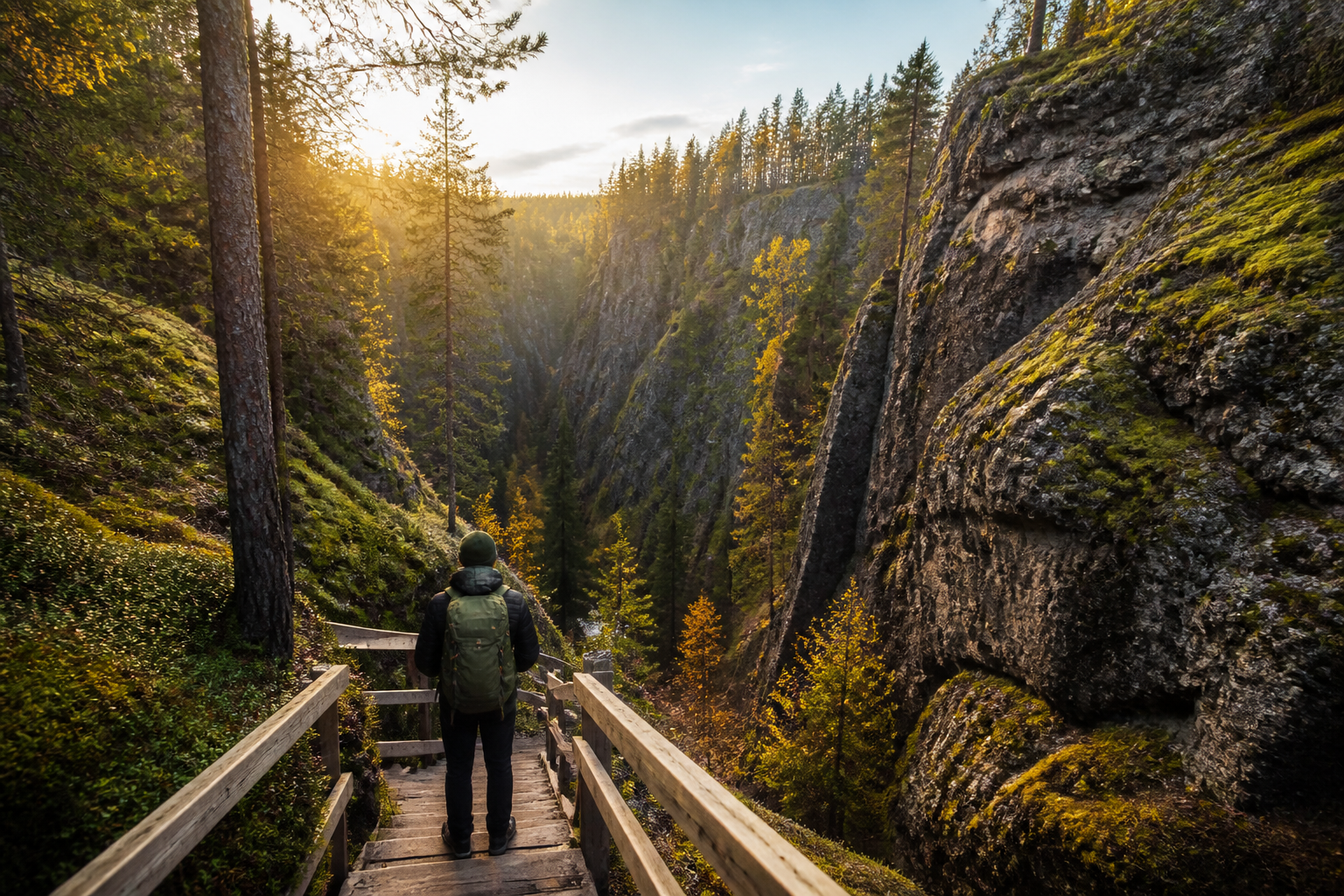
Here in Lapland, some places just have a different kind of energy. Pyhä-Luosto National Park is one of them. It's not just a collection of trees and hills; it’s a place that feels ancient and alive. This chain of fells, some of the oldest in the world, holds stories of the Forest Sámi who considered them sacred, and its deep gorges whisper of the ice age that carved them.
Whether you’re planning a multi-day trek or a short, scenic walk, Pyhä-Luosto delivers. We've spent countless hours on these trails in every season, and we want to share the practical, honest advice you need to experience it for yourself. Forget generic guides; this is how we locals do Pyhä-Luosto National Park. Let’s get our boots on and explore.
Why We Love Pyhä-Luosto (And You Will Too)
Pyhä-Luosto is Finland’s oldest national park, and it feels like it. The park is defined by a 35-kilometre chain of quartzite fells, worn down by time into gentle, rounded peaks. This isn't a place of sharp, dramatic mountains, but of quiet, enduring strength. The forests here are special—gnarled, old-growth pines stand like sentinels, some having seen centuries pass.
What truly sets it apart is its spiritual significance. The fells, particularly Pyhätunturi, were sacred sites (seita) for the Sámi people. Places like the stunning Isokuru Gorge were used for rituals, and that powerful, peaceful atmosphere remains. It's a park with a soul, connecting you not just to nature, but to a deep history. It’s also incredibly well-managed, with clear trails, helpful visitor centres, and a fantastic network of huts.
When to Visit? The Four Seasons of Pyhä-Luosto
Choosing the right season is crucial, as each offers a completely different park. There's no single 'best' time; it all depends on what you want to do.
Summer (June – August): The time of the Midnight Sun. The trails are clear of snow, the landscape is a vibrant green, and the days are endless. This is peak hiking season. The trade-off? Mosquitoes. They are no joke, especially in July. Come prepared with good repellent and a head net if you're sensitive. But for 24/7 daylight hiking, it's magical. If you're looking for other ways to experience the magic of the Midnight Sun, check out our guide to Lapland summer activities.
Autumn (September – October): Our personal favorite for hiking. Mid-September brings ruska, when the fells and forests explode into incredible shades of yellow, orange, and red. The air is crisp, the mosquitoes are gone, and the landscape is breathtaking. The weather can be unpredictable, with rain and even the first snowfall by late October, but the beauty is worth it.
Winter (November – April): A true winter wonderland. The park is buried under a thick blanket of snow, and the trees are heavy with it (tykky). Hiking is replaced by snowshoeing and cross-country skiing on marked winter trails. The days are short and the nights are long, making it a prime time to hunt for the Northern Lights away from village light pollution. It requires proper gear and preparation, but the silence and beauty are profound.
Spring (May):1: The 'shoulder season' and the one we'd honestly recommend avoiding for trail activities. The snow is melting, turning trails into a slushy, muddy, and icy mess. It’s a messy transition period between the winter and summer worlds.
Our Top 4 Day Hikes for Every Skill Level
Pyhä-Luosto has a trail for everyone. Always start your visit at the Pyhätunturi Visitor Centre Naava to get the latest trail conditions and a physical map.
The Easy Introduction: Tunturiaapa Nature Trail (7 km loop) Perfect for families or a gentle start. This trail takes you across one of the park’s beautiful aapa mires (a type of peatland) on sturdy wooden duckboards. It's mostly flat and offers a different perspective from the fell-top views. There's a birdwatching tower along the way, perfect for spotting wading birds in the summer. It’s a peaceful, accessible walk that showcases Lapland's wetland ecosystems.
The Unmissable Icon: Isokuru Gorge Trail (approx. 5.5 km) If you only do one walk, make it this one. Isokuru is one of Finland’s deepest gorges, a 220-meter-deep ravine carved during the ice age. The trail leads you down a long flight of wooden stairs to the gorge floor. Because of its sacred history and fragile environment, you must stay on the marked path. No dogs are allowed on this specific trail. At the end, you'll find the Pyhänkaste waterfall, a sacred Sámi site. The scale and silence of the gorge are humbling.
The Lapland Classic: Karhunjuomalampi Trail (10 km loop) This is the quintessential Lapland day hike. It combines fell scenery, old forests, and a beautiful wilderness pond, Karhunjuomalampi ('Bear's Drinking Pond'). The trail has some elevation gain but is very manageable. Halfway through, you’ll find the Karhunjuomalampi open wilderness hut, a perfect spot to stop, make a fire, and eat your lunch. It gives you a great taste of everything the park has to offer in a single loop.
The Rewarding Challenge: Noitatunturi Fell Trail (14.5 km loop) For seasoned hikers looking for a workout and the best views. Noitatunturi ('Witch Fell') is the highest peak in the park. The climb is steep and rocky in places, but the 360-degree panorama from the top is absolutely worth the effort. On a clear day, you can see the entire fell chain stretching towards Luosto. This is a full-day affair, so pack plenty of water and food.
The Big One: Hiking the 35km Pyhä-Luosto Trail
For the truly adventurous, trekking the entire length of the fell chain is an unforgettable experience. This 35 km trail connects the Pyhätunturi and Luosto ski resorts and is typically done over two days with an overnight stay in a wilderness hut.
The route takes you over several fells, through ancient forests, and across open wetlands. The scenery is constantly changing. The most common plan is to spend the night near the halfway point. You have two main options there:
- Huttuloma Open Wilderness Hut: Free, first-come, first-served. Basic bunk beds, a wood stove, and a dry toilet. You need your own sleeping bag and mat.
- Huttujärvi Reservable Hut: A short walk from the main trail. You must book a spot in advance via the Eräluvat web store for about €15 per person. This guarantees you a bed, which is a huge relief in the busy season.
Local Tip: You can hike it in either direction. A bus service connects Luosto and Pyhä, so you can hike one way and take the bus back to your car or accommodation.
Sleeping in the Wild: A Guide to Huts & Shelters
The Finnish hut system is one of the best things about our national parks. It allows you to travel light and experience the wilderness comfortably.
- Open Wilderness Huts (Autiotupa): Free and open to everyone for a night or two. They are a shared space. Hut etiquette is key: the last to arrive gets priority if it's full, chop new firewood to replace what you use, and leave the hut cleaner than you found it. Karhunjuomalampi is a classic example.
- Reservable Huts (Varaustupa): As mentioned, these require booking and payment (around €12-€15/night). They offer a guaranteed bunk and are often a bit more comfortable. Essential for peace of mind during peak seasons like August and September.
- Lean-to Shelters (Laavu): Three-sided wooden shelters with a fireplace in front. You'll find them scattered along the trails. They are intended for breaks—making a fire, grilling sausages, or sheltering from rain—not for overnight stays, unless you are a very experienced and well-equipped outdoor enthusiast.
Winter in the Park: Snowshoeing & Skiing
Come winter, Pyhä-Luosto transforms. The hiking trails disappear under snow, and a new network of winter trails opens up. The main activities are cross-country skiing and snowshoeing. You can rent all the necessary equipment in Pyhä or Luosto villages.
Snowshoeing allows you to explore the deep, silent forests at a slow pace. Following a marked trail to a laavu for a campfire lunch is a perfect Lapland day. For skiers, the park maintains a vast network of groomed tracks for both classic and skate skiing, ranging from easy loops to demanding routes over the fells. And with the dark, clear nights, the park is an ideal location to see the Northern Lights dance overhead.
Don't Miss: The Lampivaara Amethyst Mine
Right in the middle of the national park, atop Lampivaara fell, is a unique attraction: Europe’s only active amethyst mine that welcomes visitors. What makes it special is its commitment to sustainability; the gems are dug by hand, not with heavy machinery.
A visit includes a fascinating talk about geology and history, followed by the chance to dig for your own lucky amethyst. You can keep whatever you find that fits in your closed fist! In summer, you can hike up to the mine. In winter, you travel there in a giant snow vehicle called a 'Pendolino'. It’s a fantastic experience for all ages. Tickets are around €28 for adults.
Practicalities: Getting There and Getting Around
- Getting There: The park is about a 90-minute drive north of Rovaniemi. If you don't have a car, the 'SkiBus' runs daily between Rovaniemi city/airport and the Pyhä-Luosto area.
- Get a Map: Your first stop should be the Visitor Centre Naava in Pyhä. The staff are incredibly knowledgeable, they have the latest updates on trail conditions (e.g., if a trail is flooded or closed), and you can buy a proper, waterproof trail map.
- Gear Up: Sturdy, waterproof hiking boots are non-negotiable. The terrain is rocky and can be wet. Dress in layers, as the weather on the fells can change in an instant. In summer, bring bug spray. In autumn and winter, bring a headlamp.
Frequently Asked Questions
--- END ---
Book your Lapland trip
- 🏨 Stay — Compare hotels, cabins and glass igloos in Lapland
- ✈️ Fly — Find flights to Rovaniemi and Lapland
- 🚕 Transfer — Book a fixed-price airport taxi
Some links on this page are affiliate links. Booking through them costs you nothing extra and helps keep Lapland Buddy free.
--- END ---
Usein kysyttyä
How far is Pyhä-Luosto National Park from Rovaniemi?
Pyhä-Luosto is located about 130 kilometers (80 miles) north of Rovaniemi. The drive typically takes around 1 hour and 30-45 minutes by car. There is also a daily bus connection, often called the SkiBus, which takes a bit longer.
Do I need to pay to enter the national park?
No, like all national parks in Finland, there is no entrance fee for Pyhä-Luosto. You are free to hike the trails and use the open wilderness huts and lean-to shelters at no cost. You only pay for things like bus transport, guided tours, or booking a spot in a reservable hut.
Can I bring my dog to Pyhä-Luosto?
Yes, dogs are welcome in the national park but must be kept on a leash at all times to protect the wildlife. The one major exception is Isokuru Gorge, where dogs are not allowed at all due to the area's sacred history and fragile nature. Dogs are also generally not allowed inside the wilderness huts.
Are there bears or wolves in the park?
Yes, Pyhä-Luosto is a wilderness area and home to large predators like bears, wolves, and wolverines. However, they are extremely shy and do everything they can to avoid humans. Sightings are incredibly rare, and it is considered very safe to hike in the park. Just be sure to store food properly on overnight trips.
Is Pyhä-Luosto suitable for families with young children?
Absolutely! While there are challenging trails, there are also many family-friendly options. The Tunturiaapa Nature Trail (7 km) is mostly on flat duckboards and is great for kids. The area around the Visitor Centre Naava also has short, easy paths perfect for little legs.