Päiväkirja
Kilpisjärvi Without a Car: A 2026-2027 Guide
Thinking of visiting the remote beauty of Kilpisjärvi without a car? We'll show you exactly how to get there and explore this Arctic wonderland, completely stress-free.
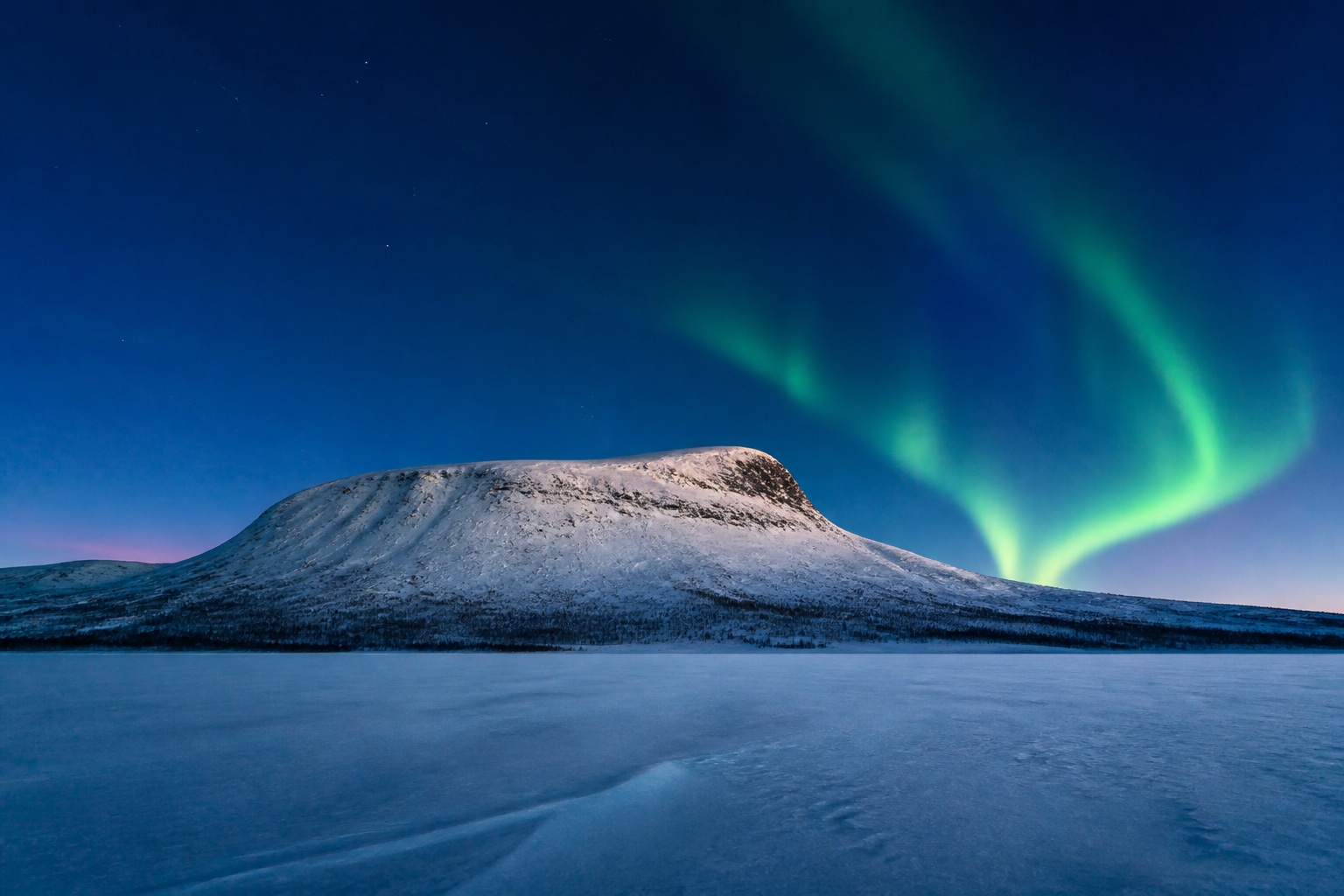
Dreaming of the vast, white landscapes of the far north-west, where Finland meets Sweden and Norway? We're talking about Kilpisjärvi, a place of epic fells and profound silence. The first thing many people wonder is, "How on Earth do I get there, and do I need a car?" It feels like the edge of the world, and in many ways, it is.
But we're here to tell you a local secret: not only is it possible to visit Kilpisjärvi without a car, but it's one of the best ways to experience it. A car-free journey forces you to slow down, rely on the local rhythms, and truly soak in the Arctic environment. Forget the stress of icy roads and navigation; let’s plan an adventure where the journey is as magnificent as the destination.
The Big Question: Is a Car-Free Kilpisjärvi Trip Realistic?
Yes, absolutely. Let’s get this out of the way first. While a car offers flexibility, it's far from essential. The key is smart planning. The village of Kilpisjärvi is small and stretched out along one main road, but the solutions for getting there and getting around are surprisingly robust.
Your strategy will be a combination of long-distance buses, your own two feet, and, most importantly, the brilliant local tour operators who have built their services around picking you up from your accommodation. For the 2026-2027 season, the connections are reliable and well-established. You just need to know how to connect the dots, and that's what we're here for.
Step 1: The Journey North – Getting to Kilpisjärvi
Your adventure begins with getting to this remote corner of Lapland. You have two main gateways: Rovaniemi (or Kolari/Kittilä) in Finland, or Tromsø in Norway. Both are excellent options with their own unique character.
From Finland:
- Train: Take the classic VR night train from Helsinki to Rovaniemi or Kolari. It’s a comfortable, scenic way to travel north. Kolari is closer, but Rovaniemi has more bus connections.
- Flight: Fly into Kittilä (KTT) or Rovaniemi (RVN). These are the main tourist airports in Finnish Lapland.
From Norway:
- Flight: Fly into Tromsø (TOS). This is often the most direct route for international visitors and offers stunning coastal mountain scenery on the way.
From these hubs, a comfortable long-distance bus is your final leg.
The Finnish Route: Bus from Rovaniemi or Kittilä
This is the classic overland journey through the heart of Lapland. The main operator is Eskelisen Lapin Linjat, a company that has been driving these roads for decades. You can book tickets online via their website or Matkahuolto.
- From Rovaniemi: The bus journey takes approximately 6-7 hours. It sounds long, but think of it as a scenic tour. You’ll watch the landscape transform from pine forests to rolling fells and finally to the stark, treeless tundra of the ‘käsivarsi’ (the ‘arm’ of Finland). The bus makes a few stops along the way for coffee and a leg stretch. A one-way ticket for the 2026-2027 winter season will cost around €70-€85.
- From Kittilä Airport: You can also catch a bus from Kittilä. The journey is shorter, around 4 hours. However, you must align your flight's arrival with the bus schedule, which can be less frequent. Check the timetables carefully!
Local Tip: The bus stops at several points in Kilpisjärvi. Know the name of your hotel or cabin (e.g., Kilpisjärven Retkeilykeskus, Santa's Chalets Rakka) and ask the driver to stop at the nearest point. They are used to it!
The Arctic Route: A Scenic Hop from Tromsø, Norway
For many, this is the most spectacular way to arrive. After landing in Tromsø, a city surrounded by fjords and mountains, you can take a bus directly to Kilpisjärvi. The journey is only about 2.5-3 hours and the scenery is jaw-dropping.
Two companies typically operate this route during the winter season (from December to March):
- The Arctic Route: This is a dedicated tourist bus designed for this connection. It’s comfortable and timed to connect with flights. A one-way ticket costs approximately €80-€95.
- Eskelisen: The Finnish bus company often runs a cross-border service as well.
This route is perfect if you want to combine the rugged Norwegian coast with the Finnish fells. You cross an international border without even noticing, deep inside the Arctic Circle.
Life in the Village: What You Can Reach on Foot
Once you're in Kilpisjärvi, your own two feet are your primary mode of transport for daily needs. The village lies along the E8 highway next to the vast, frozen Lake Kilpisjärvi. The main services are clustered in a couple of areas.
- The 'Village Centre': Here you'll find the K-Market Kilpishalli, the only supermarket. It’s surprisingly well-stocked with everything from groceries to souvenirs and basic outdoor gear. The Alko (liquor store) is inside the market. A couple of restaurants and the Neste gas station are also here.
- The Hiking Centre (Retkeilykeskus): Located further south, this is a hub for accommodation, a restaurant, and the starting point for the trail up the iconic Saana Fell.
Depending on where you stay, you might have a 1-3 km walk to the supermarket. In winter, this walk is an experience in itself! Just be sure to wear warm layers, a headlamp for the polar night, and shoes with good grip. The road has a walking path, but it can be icy.
Your Activity Hub: How Tours Solve the Transport Puzzle
This is the most important piece of the car-free puzzle. You are not here just to walk to the shop; you are here for Arctic adventures! And for that, you don’t need a car at all.
Nearly every organized activity in Kilpisjärvi includes transfers. When you book a husky safari, a snowmobile tour, or a guided Northern Lights hunt, the operator will pick you up from your hotel or cabin door and drop you back afterward. This is standard practice.
Companies like Kilpisjärven Tunturimajat, Lapland Safaris, or local providers will have your accommodation details and will handle all the logistics. This means you can focus entirely on the excitement of the activity, whether it's mushing dogs through a silent forest or chasing auroras across a frozen lake.
Summer Secret: The M/S Malla Boat to the Three Borders
If you're visiting between late June and September, your key to adventure is the M/S Malla. This boat takes you across the beautiful Lake Kilpisjärvi to Koltalahti, near the entrance of Malla Strict Nature Reserve.
From the drop-off point, it’s an easy 3 km walk to the Three-Country Cairn, the point where Finland, Sweden, and Norway meet. It's a surreal experience to walk around a concrete marker and cross three international borders in under 30 seconds!
The boat trip itself is a highlight, offering breathtaking views of [Saana Fell](/place/saana-fell] and the Swedish mountains across the water. The boat typically runs a few times a day. For summer 2026, expect a round-trip ticket to cost around €40-€50. You can also choose to walk back through the nature reserve (a 11 km hike) for a full day's adventure.
Winter Wonders by Sled: Reaching the Three-Country Cairn
In winter, the lake freezes solid and the M/S Malla is tucked away. So how do you reach the Three-Country Cairn? By snowmobile, of course!
You can’t simply rent a snowmobile and drive there yourself. Instead, you join a guided snowmobile safari. The track across the frozen lake is a marked public route, but going with a guide is the safest and most common way.
Another fantastic option is the snowmobile sleigh shuttle. Several local providers offer a service where you sit cozily in a large sleigh pulled by a guide's snowmobile. They drive you across the lake to the cairn, give you time for photos, and bring you back. This is a great, less physically demanding option. Expect to pay around €90-€120 per person for a sleigh trip in the 2026-2027 season.
The Honest Trade-Offs: Pros and Cons of Going Car-Free
We believe in honesty, so let’s lay it all out.
The Pros:
- Lower Cost & Less Hassle: You save a significant amount on car rental, insurance, and fuel. No need to worry about winter tires, engine block heaters, or navigating icy roads in a blizzard.
- Deeper Immersion: You experience the Arctic environment more intimately. A walk to the shop in -20°C is an adventure, not a chore. You are more in tune with the weather and the light.
- Eco-Friendlier: Relying on shared buses and your own feet reduces your carbon footprint.
- Simplicity: Your days are structured around your planned activities. It removes the pressure of constantly deciding 'where to next?'
The Cons:
- Less Spontaneity: You can’t just decide to drive to a random spot for photos or explore a remote side road. Your movements are tied to bus schedules and tour timings.
- Reliance on Schedules: You must plan your arrival and departure around the bus timetables. Missing the once-a-day bus can be a major issue.
- The Grocery Run: If you're self-catering in a cabin far from the K-Market, carrying groceries back in the snow can be a challenge. A backpack is essential!
Practical FAQ for a Car-Free Kilpisjärvi Trip
We get these questions all the time, so here are some quick answers.
Q1: What's the best time of year to visit Kilpisjärvi without a car?
Both winter and summer are fantastic. In winter (December-April), the tour-based ecosystem makes it incredibly easy to be car-free. In summer (late June-September), the long days and the M/S Malla boat make hiking and exploring straightforward.
Q2: How much does the bus from Rovaniemi to Kilpisjärvi cost?
As of the 2026-2027 season, expect a one-way ticket to be in the range of €70-€85. It's always cheaper to book in advance online via the Matkahuolto or Eskelisen Lapin Linjat websites.
Q3: Can I see the Northern Lights in Kilpisjärvi without a car?
Absolutely! Kilpisjärvi has some of the highest aurora-sighting statistics in Finland. You can simply walk a few hundred metres away from your hotel's lights to a darker spot by the lake. For the best experience, we recommend a guided tour where an expert will drive you (by minibus or snowmobile) to the best viewing spots with no light pollution.
Q4: Do I need to book my bus and tours far in advance?
Yes, we strongly recommend it. The buses can fill up, especially during peak season (Christmas, New Year's, and the March-April spring-winter period). Activities like husky sledding have limited capacity and often sell out weeks or even months in advance. Plan ahead to avoid disappointment.
Buddy's Take
Look, we live here, and while many of us own cars for daily life, we see visitors have incredible, profound experiences in Kilpisjärvi without one. A car-free trip isn't a limitation; it's a different kind of freedom. It’s the freedom from logistics, the freedom to be present, and the freedom to let the Arctic lead the way. You'll board a bus in the city and step off in a world of silent, snow-covered fells. You'll walk under the Northern Lights and let local guides share their passion and their backyard with you. It’s an adventure that is 100% possible and one we promise you will never forget.
Usein kysyttyä
What's the best time of year to visit Kilpisjärvi without a car?
Both winter and summer are fantastic. In winter (December-April), the tour-based ecosystem makes it incredibly easy to be car-free. In summer (late June-September), the long days and the M/S Malla boat make hiking and exploring straightforward.
How much does the bus from Rovaniemi to Kilpisjärvi cost?
As of the 2026-2027 season, expect a one-way ticket to be in the range of €70-€85. It's always cheaper to book in advance online via the Matkahuolto or Eskelisen Lapin Linjat websites.
Can I see the Northern Lights in Kilpisjärvi without a car?
Absolutely! Kilpisjärvi has some of the highest aurora-sighting statistics in Finland. You can simply walk a few hundred metres away from your hotel's lights to a darker spot by the lake. For the best experience, we recommend a guided tour where an expert will drive you (by minibus or snowmobile) to the best viewing spots with no light pollution.
Do I need to book my bus and tours far in advance?
Yes, we strongly recommend it. The buses can fill up, especially during peak season (Christmas, New Year's, and the March-April spring-winter period). Activities like husky sledding have limited capacity and often sell out weeks or even months in advance. Plan ahead to avoid disappointment.