Päiväkirja
Ice Hotel Lapland: What It's Really Like to Sleep Inside
Ever wondered if you'd freeze sleeping in an ice hotel in Lapland? We're sharing the honest, practical truth about this once-in-a-lifetime Arctic experience.
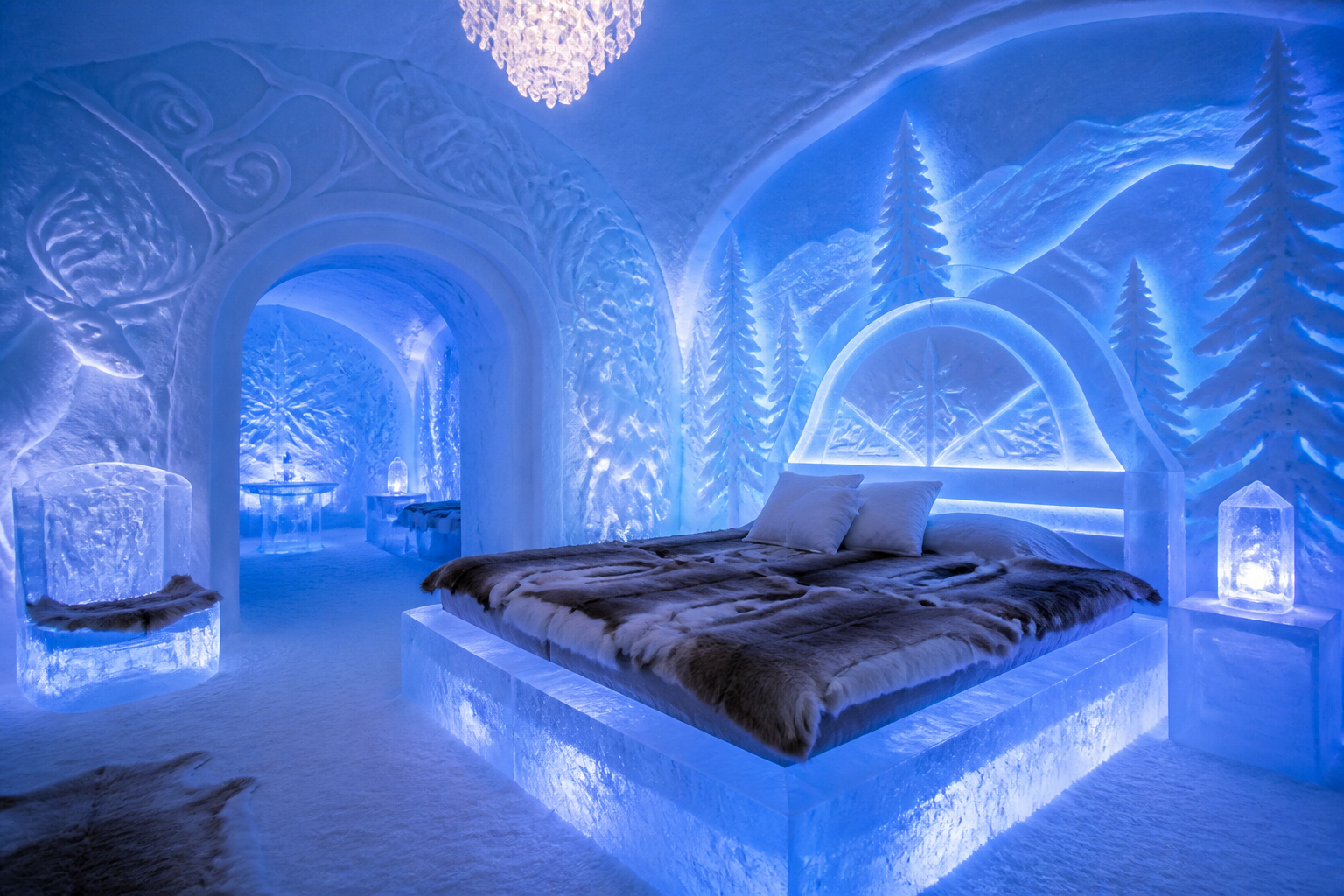
We get asked this question all the time: “Is it really possible to sleep in a hotel made of ice?” The idea is magical, something straight out of a fairy tale. You see the pictures of glowing blue walls, intricate snow carvings, and beds covered in reindeer furs, and it’s hard not to be captivated.
But let’s be honest, you’re also wondering if you’ll turn into an icicle by morning. As your local guides here in Lapland, we want to take you beyond the glossy photos. We’re here to share the real, practical, and slightly chilly truth about spending a night in an ice hotel. It’s an incredible experience, but it’s one you need to be prepared for. So grab a warm drink, and let’s talk about what it’s really like.
What Exactly Is a Lapland Snow Hotel?
First, a little clarification. You’ll hear the terms “ice hotel” and “snow hotel” used almost interchangeably, and for good reason. These incredible structures are built fresh every year using a mixture of both. The main building blocks are made from “snice” – a man-made, densely packed snow that is much stronger than natural powder. The decorative elements, like sculptures, windows, tables, and even drinking glasses, are carved from crystal-clear ice harvested from nearby rivers and lakes.
Every winter, around November when the temperatures consistently drop below freezing, teams of architects and artists get to work. They build these frozen palaces from scratch, each with a new theme. One year it might be mythical Lappish creatures, the next it might be inspired by a fantasy epic. This means that even if you’ve visited before, the experience will be completely new the next time. By late March or early April, as the spring sun gets stronger, the hotels are left to melt back into the rivers they came from.
Choosing Your Frozen Room: Lapland's Top Spots
You have a few fantastic options here in Finnish Lapland, each offering a slightly different flavour of this Arctic experience. For more options, you can check out other Hotels in Lapland.
- Arctic SnowHotel & Glass Igloos in Rovaniemi: Located about 30 minutes from the city centre and the famous Santa Claus Village, this is a brilliant choice. What we love about this place is the combination. You can spend one night in a SnowHotel room for the adventure, and then move to one of their glass igloos to hunt for the Northern Lights from the comfort of a warm bed. They have an ice bar, an ice restaurant, and a fantastic snow sauna—a must-try!
- SnowVillage in Kittilä: Tucked between the popular ski resorts of Ylläs and Levi, SnowVillage is known for its sheer scale and ambition. Each year, they use around 20 million kilos of snow and 350,000 kilos of ice to create a complex with rooms, suites, a restaurant, a bar, and even a chapel. Their themes are often spectacular; they once had an official collaboration to create a Game of Thrones-themed hotel that was simply breathtaking.
There are others, like the beautiful Kemi SnowCastle, but these two are the most popular and accessible choices for most visitors to Finnish Lapland. You can find more information about destinations and activities in the region on the Visit Rovaniemi website.
The Check-In: Preparing for a Night on Ice
Checking into an ice hotel isn’t like a normal hotel. You don’t just get a keycard and head to your room. When you arrive, you’ll typically leave your main luggage in a separate, warm building. This building is your home base—it has the reception, lockers, showers, toilets, and often a lounge or restaurant.
After you're settled, a guide will give you a full tour of the snow hotel itself, explaining how it was built and showing you the art. Most importantly, they give you a briefing on how to sleep comfortably and safely. They explain the gear, how to use the sleeping bag, and what to do if you get cold (which is rare, but they have a backup plan!). This tour is essential, so pay close attention. It turns the stay from a novelty into a fascinating experience.
Your Room: A Sub-Zero Work of Art
Walking into your room for the first time is a moment you won't forget. The silence is the first thing you notice—the thick snow walls absorb sound, creating a deep, peaceful quiet. The air is crisp and dry, and you can see your breath. The temperature inside the hotel stays at a constant -0°C to -5°C (32°F to 23°F), regardless of how cold it gets outside.
Your bed is a block of ice or snow, but don't panic! It’s covered with an insulated mattress and, typically, reindeer hides for extra insulation and a touch of Lappish authenticity. The walls are often adorned with beautiful carvings or reliefs that glow from soft, embedded lighting. It feels like you're sleeping inside a sculpture.
How You Actually Stay Warm
This is the million-dollar question! The secret isn't the room; it's the gear. The hotel provides you with a high-quality, arctic-grade thermal sleeping bag designed for temperatures far colder than what you’ll experience inside. Before you get in, you change into your sleeping clothes in the warm building.
The key is layering. We always advise guests to wear a base layer of merino wool or a technical synthetic fabric (never cotton!). On top of that, a light fleece layer is good. You’ll also want warm wool socks and a beanie or balaclava, which the hotel usually provides.
You slip into the sleeping bag liner, then into the main sleeping bag, and zip it up. Within minutes, your body heat warms the air inside the bag, creating a surprisingly toasty cocoon. Most people are shocked by how warm they feel. The only part of you exposed to the cold air is a small part of your face.
The Cold, Hard Truth About Toilets & Showers
Here’s the part we need to be very honest about. There are no en-suite bathrooms. All toilets, showers, and saunas are located in that separate, heated service building we mentioned earlier. This is for obvious plumbing reasons!
This means that if you need the toilet in the middle of the night, you have to mentally prepare yourself. You’ll need to unzip your cozy sleeping bag, put on your boots (which you keep beside your bed), walk through the silent, frozen corridors of the hotel, and go outside to the warm building. It's a definite trade-off and the single biggest inconvenience. Most people just try to make sure they go right before they tuck in for the night!
More Than Just a Bed: Ice Bars and Frozen Dinners
An ice hotel is an entire destination, not just a room. The ice bar is a highlight for everyone. The bar itself is carved from ice, the tables are ice, and your drinks are often served in glasses made entirely of ice. It’s a fun, social experience, and holding a solid ice glass is a unique thrill.
Many also have an ice restaurant where you can have a three-course meal. You'll sit on wooden benches covered in furs at tables made of ice. The food is served hot, of course, and it's a gourmet experience. It's pricey, but the contrast of eating a hot, delicious meal in a frozen environment is unforgettable. And for those looking for a truly unique wedding, most snow hotels have an ice chapel where you can get married.
Is an Ice Hotel Stay Worth the Price?
Let's talk cost. A night in a standard snow room typically costs between €150 and €350 per person, per night, often including breakfast and the sleeping gear. Elaborate suites with more intricate carvings will cost more. This is significantly more expensive than a standard hotel room, so is it worth it?
Our view is this: you are not paying for a comfortable night’s sleep. You are paying for a once-in-a-lifetime Arctic art experience. It's an adventure. For this reason, we almost always recommend that visitors stay for just one night. Combine your ice hotel stay with a few nights in a cozy log cabin or a regular hotel. This gives you the best of both worlds: the unforgettable adventure, followed by the comfort of a warm room and a private bathroom. For a comprehensive guide to planning your trip, consider checking out Lapland Buddy.
The Best Time to Visit an Ice Hotel
The season is short and dictated by nature. The hotels typically open in mid-to-late December and close at the end of March or the beginning of April.
- December-January: This is the heart of winter. The days are short (the Polar Night), the temperatures are coldest, but the snow is usually at its best, creating a magical, blue-tinged world. It's a great time for a cozy, festive feel and good chances of chasing the Northern Lights.
- February-March: The days get longer and sunnier, and the temperatures become slightly milder. This is a fantastic time for outdoor activities. You get the snow hotel experience combined with beautiful, bright winter landscapes. It's often considered the best all-around time to visit Lapland. You can find local weather forecasts from the Finnish Meteorological Institute.
Whenever you choose to come, booking far in advance is absolutely essential, especially around Christmas, New Year's, and school holidays in February. If you're ready to plan your trip, you can also check hotel availability in Lapland or browse Lapland activities.
Book your Lapland trip
- 🏨 Stay — Compare hotels, cabins and glass igloos in Lapland
- 🦌 Do — Browse husky, reindeer and aurora tours
Some links on this page are affiliate links. Booking through them costs you nothing extra and helps keep Lapland Buddy free.
Usein kysyttyä
Is it safe to sleep in an ice hotel?
Yes, it is very safe. The structures are expertly built and monitored. The hotel provides arctic-grade sleeping bags and a full safety briefing. The indoor temperature is stable at around -5°C, and there is always a warm building nearby with staff on duty 24/7.
Can children stay in a snow hotel?
Generally, yes, but it depends on the child and the hotel's policy. Most hotels recommend a minimum age of around 5-6 years. It's best suited for children who are adventurous and not afraid of the cold. Always check directly with the hotel before booking with young children.
What should I pack for one night in an ice hotel?
You only need a small overnight bag. Pack thermal long underwear (merino wool is best), a fleece mid-layer, warm wool socks, and a warm hat. Bring your toiletries for the shower in the morning. Leave your main luggage in the storage provided.
Will my phone work, and how do I charge it?
Your phone will work, but the extreme cold will drain the battery very quickly. To prevent this, keep it inside your sleeping bag with you overnight. There are no power outlets in the ice rooms, so make sure your devices are fully charged beforehand or bring a power bank. You can charge devices in the warm service building.
Do I really need to book an ice hotel in advance?
Absolutely, yes. These hotels are incredibly popular and have a limited number of rooms and a short season. For peak dates like Christmas, New Year's, and Valentine's Day, you should book 6-12 months in advance. For other dates, booking 3-5 months ahead is a good idea.
Lisää kysymyksiä?
Kysy Buddylta suoraan — ilmaisia ja välittömiä vastauksia Rovaniemestä ja Lapista.
Avaa Lapland Buddy