Journal
Ethical Husky Sledding in Lapland: A 2026 Guide
Experience the magic of a husky safari with a clear conscience by learning how to choose a truly ethical operator in Finnish Lapland.
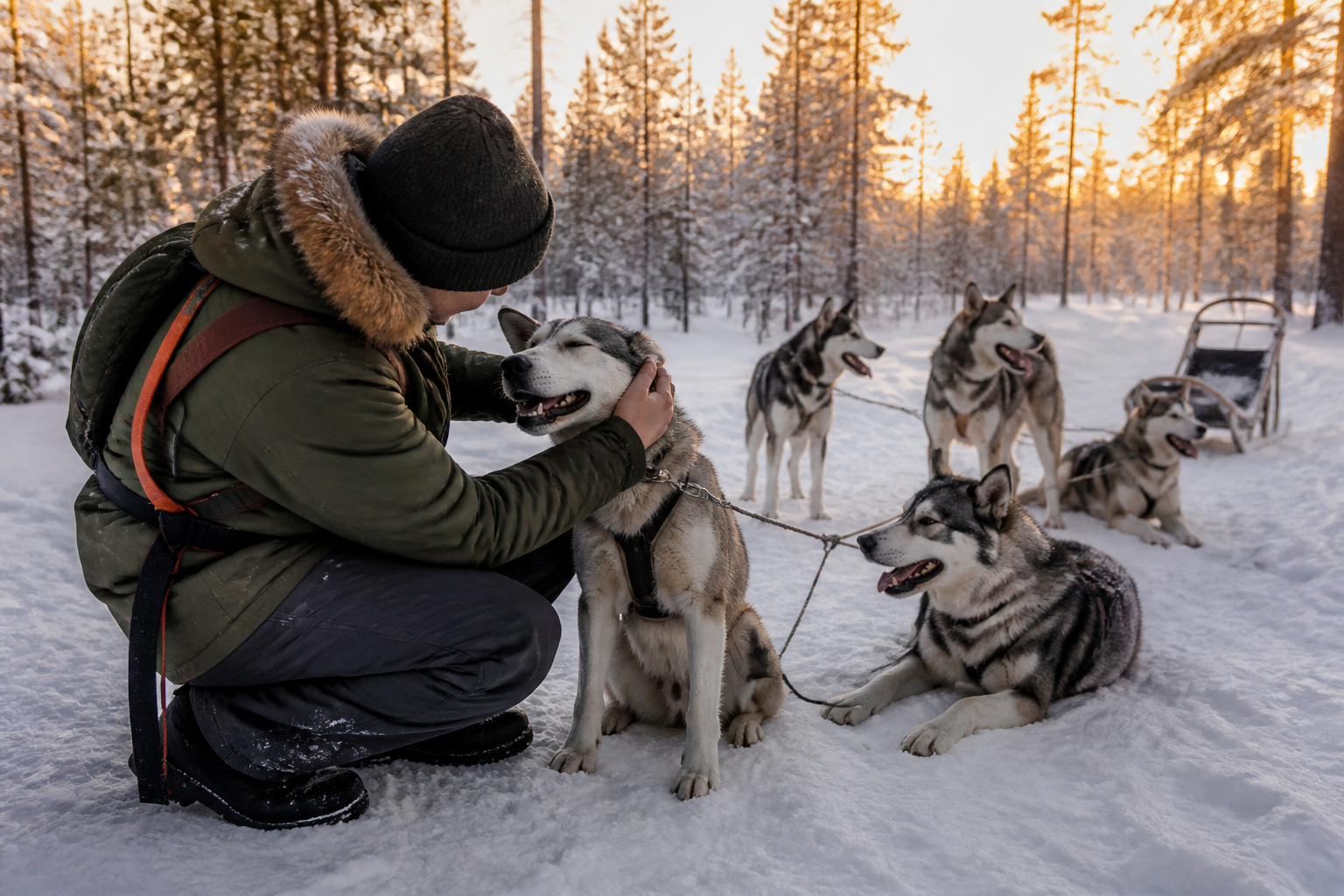
Here in Lapland, the sound of happy dogs and a sled gliding over snow is pure magic. We see the joy on our visitors' faces as they mush a team of huskies through a silent, snow-covered forest. It’s an experience that connects you to the Arctic wilderness in a way few others can.
But we also know that you, our guests, are thinking more deeply about your travels. You’re asking the important questions, and the biggest one we hear is: "Is husky sledding ethical?" We love this question. It shows you care. The honest answer is: it depends entirely on where you go. This guide is our promise to help you tell the difference and make a choice that feels as good as the adventure itself.
What Does "Ethical" Husky Sledding Actually Mean?
When we talk about "ethical" farms, we're looking at a holistic approach to the dogs' lives, not just their working hours. These aren't just assets; they're family members and elite athletes. A truly responsible kennel is built on a foundation of respect that covers their entire lives, from puppyhood to a dignified retirement.
Here’s what we look for:
- Living Conditions: Dogs should have clean, dry, and spacious enclosures, not be on short chains 24/7. Look for large, fenced running areas where dogs can socialize and play when they aren't working.
- Health & Nutrition: A diet formulated for active sled dogs is crucial and expensive. Vets should be involved regularly for check-ups, vaccinations, and dental care—not just for emergencies.
- Work & Rest: The dogs should be genuinely excited to run, but not overworked. Ethical farms carefully monitor each dog, ensure proper rest days, and never run them in conditions that are too warm (anything above 0°C can be risky).
- Retirement: This is a big one. Ask: what happens when a dog is too old to pull a sled? The best kennels have a "forever home" promise. The dogs retire on-site, enjoying a relaxed life as kennel elders, or are re-homed as pets to loving families (often the guides themselves!).
Your Checklist: 7 Questions to Ask Before You Book
To empower you, we've put together a checklist. Don't be shy about emailing a tour operator and asking these questions directly. A good farm will be proud to answer them.
- Can I visit the kennels and meet the dogs off-duty? Transparency is the #1 sign of an ethical operator. They should be happy to show you where the dogs live, sleep, and play.
- What happens to your dogs when they retire? Look for a clear and caring retirement plan.
- How many dogs do you have, and how many guides work with them? A low dog-to-human ratio suggests more individual care and attention.
- How large are the sled teams, and do guests drive their own? Smaller teams (4-6 dogs) for guest sleds are common and manageable. It shows they aren't just loading up for maximum power.
- What is your policy on running dogs in warm weather? A responsible farm will cancel tours if temperatures rise too close to freezing, as a dog's health comes first.
- Are your dogs socialized? Happy, well-cared-for huskies are typically friendly, curious, and enjoy a good scratch behind the ears from visitors.
- Do you breed your own puppies? If so, how do they ensure a responsible breeding program without creating more dogs than they can care for for life?
Red Flags: Signs of a Bad Husky Operator
Just as there are green flags, there are definite red ones. If you see any of these, we strongly recommend you walk away.
- Prices that seem too good to be true. A €50 husky ride is a major red flag. The costs of ethical care (food, vet bills, proper housing) mean a quality tour will cost a minimum of €120.
- Dogs kept on short chains permanently. This is an outdated and cruel practice that leads to stress and physical ailments.
- Dirty kennels or dogs that appear underweight, injured, or listless. The dogs should be energetic and look healthy and robust.
- Dogs that seem fearful or shy away from human contact. This can be a sign of poor socialization or mistreatment.
- No access to the kennel area. If they only let you see the dogs when they are harnessed to the sled, ask yourself what they might be hiding.
- High-pressure sales and large, impersonal groups. This often points to a volume-based business model where individual animal welfare can be overlooked.
Our Vetted Picks: 3 Responsible Husky Farms in Lapland
We would only recommend operators we would happily send our own families to. These farms live and breathe their dogs' welfare. (Note: These are representative examples; always do your own research based on our checklist!)
1. Arctic Paws Family (Near Rovaniemi) This small, family-run kennel about 25 minutes from Santa Claus Village is a perfect example of ethical tourism. They have around 50 Alaskan huskies, and they know every single one by name and personality.
- What makes them special: Their 'Kennel Visit First' policy. Every tour starts with a comprehensive tour of the kennels and a talk about their philosophy. You meet the dogs before you even see a sled.
- Tours & Price: Their most popular is the "Mushing Morning," a 10-12 km self-drive safari. It costs around €165 per adult for a 3-hour experience, including the kennel tour and hot drinks.
2. Silent Forest Sledders (Near Levi) Located deep in the forests outside of Levi, this operator focuses on the dogs' natural love of running long distances. They are for the more adventurous visitor.
- What makes them special: They have a strict "no-retiree-left-behind" policy. Their oldest dogs, some 15+ years old, live comfortably in a heated 'seniors' building with a dedicated play yard. They also limit tours to two per day to ensure dogs get ample rest.
- Tours & Price: They offer a half-day "Forest Trailblazer" (20-25 km) for about €220 per person. They also run two-day overnight wilderness trips starting at €850.
3. Tundra Tails Kennel (Ivalo / Saariselkä Area) This kennel in the far north, near Saariselkä, prides itself on its dog-first culture. The guides are professional mushers who compete in races, so their standards for dog care and fitness are exceptionally high.
- What makes them special: The dog-to-guest ratio is excellent. For a group of 8 guests, they will have at least 3-4 guides on site to help, instruct, and ensure the dogs' wellbeing.
- Tours & Price: Their "Aurora Chaser" evening safari is a magical 2.5-hour experience costing around €195 per person. You learn about the dogs, sled through the dark, and hope for the Northern Lights.
Self-Drive vs. Musher-Driven: Which is Better for the Dogs?
This is a common question, and there's no single right answer. A self-driven sled, where you control the brake and steering, can actually be better for the dogs on flat or uphill terrain. Why? Because you can use your own leg power to help push the sled, lightening their load. An ethical operator will give you clear instructions on how to do this.
A sled driven by a professional musher is not inherently worse. It's often necessary for very long or technically difficult trails. The key factor is not who is driving, but the total weight on the sled and the health of the team pulling it. A good operator will never overload a sled, whether it's driven by a guest or a guide.
The Price of Ethics: Why Responsible Tours Cost More
It can be tempting to book the cheapest tour you find online. We urge you to resist. Let's be honest about the economics: a cheap husky tour is a direct sign that corners are being cut, and it's almost always at the expense of the dogs.
Think about the year-round costs for a kennel of 80 dogs:
- High-quality food: Thousands of euros per month.
- Veterinary care: Regular check-ups, vaccinations, and emergency treatments can run into the tens of thousands annually.
- Housing: Building and maintaining large, clean, and stimulating enclosures is a huge investment.
- Staffing: Paying skilled guides a fair, year-round wage to care for the dogs.
- Retirement Care: Providing for a dog for 5-8 years after it stops earning money.
When you pay €150–€250 for a half-day tour, you're not just paying for a 2-hour sled ride. You are investing in the lifelong wellbeing of these incredible animals. You are voting with your wallet for a sustainable and compassionate industry.
Practical FAQ for Your Husky Adventure
Q: Is husky sledding cruel to the dogs? A: It is not inherently cruel. These husky breeds have been bred for thousands of years to run in the cold; it is what they love to do. However, it can be cruel if the operator does not provide proper care, nutrition, rest, and retirement. Choosing an ethical farm is the key.
Q: How old do you have to be to drive a husky sled? A: Most operators require the driver of a sled to be 16 or 18 years old. Children are warmly welcomed as passengers, usually sitting in the sled wrapped in warm blankets. Always check the specific age requirements with the tour provider.
Q: What should I wear for a husky safari? A: Layers, layers, layers! We can't stress this enough. Start with a thermal base layer (merino wool is best), add a fleece or wool mid-layer, and finish with a windproof and waterproof outer jacket and trousers. Most good operators provide these outer layers, along with boots, thick socks, a warm hat, and mittens. Don't wear your fancy city coat!
Q: Can I pet the huskies? A: At a good farm, absolutely! The dogs are usually very excited and vocal before a run, so it's best to let the guides handle them then. But after the safari, they are relaxed and love attention. The guides will show you which dogs are most friendly and will encourage you to give them a thank-you cuddle and a scratch.
Q: When is the best time of year for husky sledding? A: The season runs from late November to mid-April, whenever there is reliable snow cover. The dogs are happiest in the coldest months (December to March) when temperatures are well below freezing. Responsible farms will not operate if it gets too warm, so be wary of anyone offering tours in October or May. You can find more unique Lapland experiences when you browse Lapland activities.
Buddy's Take
There is nothing in the world like the quiet rush of a husky sled. It’s a connection to nature, to these amazing animals, and to the history of Lapland. And that feeling is a thousand times better when you know, deep in your heart, that the dogs pulling you are happy, healthy, and loved. They aren't just giving you a ride; they're sharing their passion with you. By doing your research and choosing wisely, you become part of a community that ensures these incredible athletes get the life they deserve. Choose well, and the memory will warm you for a lifetime. If you need to check hotel availability in Lapland, we've got you covered.
Book your Lapland trip
- 🚗 Drive — Compare rental cars for Lapland winter roads
- 🦌 Do — Browse husky, reindeer and aurora tours
- 🏨 Stay — Compare hotels, cabins and glass igloos in Lapland
Some links on this page are affiliate links. Booking through them costs you nothing extra and helps keep Lapland Buddy free.
Frequently asked questions
Is husky sledding cruel to the dogs?
It is not inherently cruel. These husky breeds have been bred for thousands of years to run in the cold; it is what they love to do. However, it can be cruel if the operator does not provide proper care, nutrition, rest, and retirement. Choosing an ethical farm is the key.
How old do you have to be to drive a husky sled?
Most operators require the driver of a sled to be 16 or 18 years old. Children are warmly welcomed as passengers, usually sitting in the sled wrapped in warm blankets. Always check the specific age requirements with the tour provider.
What should I wear for a husky safari?
Layers, layers, layers! We can't stress this enough. Start with a thermal base layer (merino wool is best), add a fleece or wool mid-layer, and finish with a windproof and waterproof outer jacket and trousers. Most good operators provide these outer layers, along with boots, thick socks, a warm hat, and mittens. Don't wear your fancy city coat!
Can I pet the huskies?
At a good farm, absolutely! The dogs are usually very excited and vocal before a run, so it's best to let the guides handle them then. But after the safari, they are relaxed and love attention. The guides will show you which dogs are most friendly and will encourage you to give them a thank-you cuddle and a scratch.
When is the best time of year for husky sledding?
The season runs from late November to mid-April, whenever there is reliable snow cover. The dogs are happiest in the coldest months (December to March) when temperatures are well below freezing. Responsible farms will not operate if it gets too warm, so be wary of anyone offering tours in October or May.